Theopolis Logo

Writing

Explore our collection of theological essays, biblical studies, and reflections on faith and culture.

See all
tanner-mardis-xuxghzhibn4-unsplash-1-2
Biblical Studies

Tweets-turned-Notes on the Bible’s Chronology

Summary In what follows, I will consider the “year-stamps” employed in Scripture, i.e., statements of the form, “Such-and-such an event took place in the Xth year of Y.” In the process, I will suggest some ways in which the Biblical narrative might relate to events in the extra-Biblical world, though…

by James BejonJuly 16, 2019
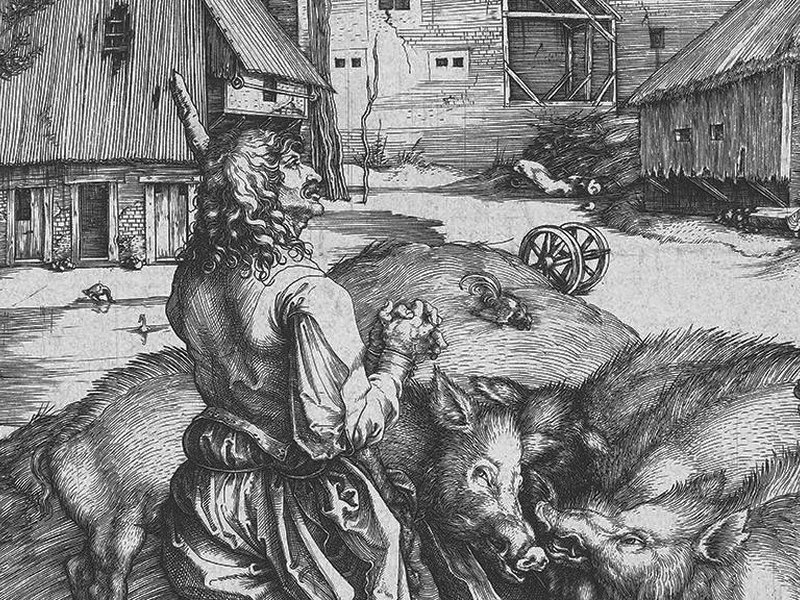
durer-prodigal-son-2
Luke

Perspectives on the Prodigal, (Part 2)

In the first essay on the parable of the Prodigal Son, I suggested that the problems commentators and others encounter in interpreting Jesus three-part parable are not accidental. These are not just problems in our ignorance of cultural background. They are intentional features of the stories —stories designed to poke…

by Ralph Allan SmithJuly 11, 2019
durer-prodigal-son-2
Luke

Perspectives on the Prodigal, (Part 1)

The story of the Prodigal Son is perhaps the most well-known story in the Bible. As others have observed, it may also be one of the most misunderstood. In two short essays, I will point out features of this story that are commonly neglected, aspects of Jesus’ parable that might…

by Ralph Allan SmithJuly 9, 2019
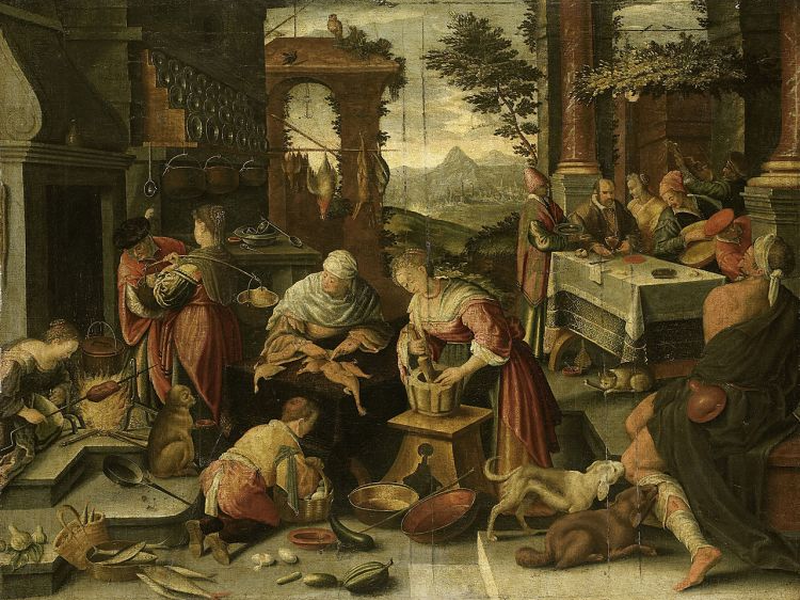
de-rijke-man-en-de-arme-lazarus-by-jacopo-da-ponte-16th-century
Luke

Lazarus and the Rich Man

The parable of Lazarus and the nameless rich man is not an independent story. It is part of a long context that begins in Luke 15:1, where Jesus is eating with tax collectors and sinners and the scribes and Pharisees grumble. In response to their hardheartedness, Jesus tells a three-part…

by Ralph Allan SmithJuly 4, 2019
aaron-burden-uynrnfdkjwg-unsplash
Luke

Everybody has Dropsy - Luke 14:1-24

The Bible is written so that even when a reader cannot pick up on what might be deeper or more detailed aspects of a text, there is virtually always a message to be heard. In the ancient world, where the “reader” of Scripture would likely be a church official facing…

by Ralph Allan SmithJuly 2, 2019
communion
Biblical Theology

Fruit Trees and Grain Plants

The distinction between garden (or vineyard) and field begins in Genesis 2. This relates to the ordering of the formless world. Plants of the field are contrasted with the garden planted by God in Genesis 2:5&8. Later on, under the Old Covenant the Israelites will be required to keep their…

by James B. JordanJune 27, 2019

Showing page 77 of 309

See all

Showing page 8 of 43

See all

Nine lives?

Few people today work at the same job throughout their 40 or so years of working life, and many economists and sociologists have pondered the effects of this development. No doubt there is something lost. But there is also gain. Rosenstock-Huessy suggests that, due to technical efficiencies, doctors can stuff…

January 6, 2007
History

Resurrected texts

When the young Yves Congar visited Lutheran theologians and pastors in Germany in 1930, he learned that Lutheran perceptions of Catholicism were largely shaped by Dostoevsky’s Grand Inquisitor, of which Congar had never heard. Today, it would be impossible for a sophisticated theologian like Congar to reach his mid-20s without…

January 6, 2007
Philosophy

Peirce and signs

Menand offers a useful summary of Peirce’s views on signs, in a way that highlights both similarities and differences with Derrida. Peirce taught a notion of differance : “The meaning of a representation,” he wrote, “can be nothing but a representation. In fact, it is nothing but the representation itself…

January 5, 2007
Philosophy

Pragmatism

In his very readable The Metaphysical Club (2001), Louis Menand gives a number of pithy summaries of pragmatism, its sources, its varieties, and its fundamental beliefs. The common attitude or idea among pragmatists has been “an idea about ideas.” Whatever their differences, pragmatists “all believed that ideas are not ‘out…

January 5, 2007

Between, and child actors

Everyone lives between times, and is the intersection of past and future. Everyone is always already taught, and always anticipating or actually teaching and ruling. Rosenstock-Huessy writes, “‘He’ never exists, but is always between two times, two ages, as son and father, layman and expert, the end of one era…

January 5, 2007

Double Procession

No generation ought to be determined by the spirit of the sons. As a matter of simple fact, the world is never occupied by a single generation. For a generation to be healthy, the spirit of the sons must mingle with the spirit of the fathers. The Spirit must proceed…

January 5, 2007

Showing page 1740 of 2212

Browse by Category

In Medias Res

Your weekly digest for all things Theopolis.

Donate

Theopolis is nearly 100% donor-supported. Consider joining us on our mission.