
Theopolis Logo

Writing

Explore our collection of theological essays, biblical studies, and reflections on faith and culture.

See all
giammarco-zeh-ljawhtg-unsplash
Biblical Horizons

OPEN BOOK: Views and Reviews

Isaac E. Mozeson, The Word: The Dictionary that Reveals the Hebrew Sources of English (Northvale, NJ: Jacob Aaronson Inc., 1995), 310 pp. Reviewed by James B. Jordan. Once there was only one language in the world, the language God spoke to Adam. At the Tower of Babel, there came to…

by James B. JordanJune 28, 1996
tim-wildsmith-j6jv-mkdzqs-unsplash
Esther

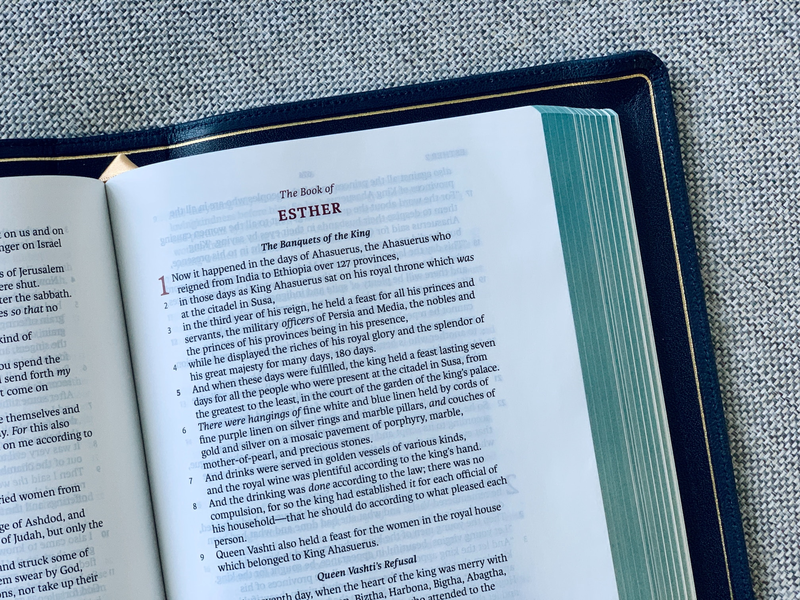
Esther: Historical & Chronological Comments (IV)

2. The Setting of the Book of Esther A. Xerxes (continued from previous issue) Ezra 6:14 says that the Jews finished building "according to the command of the God of Israel and the decree of Cyrus and Darius and Artaxerxes king of Persia." The problem with this verse is that…

by James B. JordanJune 28, 1996

ales-krivec-4mibe6zg5r0-unsplash
Acts

Jesus and Amalek

This essay goes with our previous study of the Amalek pattern back in Biblical Horizons No. 2. Since many do not have this essay, entitled "The Battle of Gog and Magog," let me cite the relevant paragraphs: Note in Genesis 12-15 that Abram moves into the land after escaping Pharaoh…

by James B. JordanJune 28, 1996
aaron-burden-1ebsmyrau-s-unsplash
Proverbs

The Strange Woman

Proverbs 7:6-23 is one of several passages early in the Proverbs in which Solomon warns his son about the wiles and dangers of the "strange woman." It is certainly quite proper to take these as straightforward warnings against sexual sins, and these are certainly warnings that need to be impressed…

by Peter LeithartJune 27, 1996
jan-kahanek-g3o5ztrk2e4-unsplash
Biblical Studies

Some Observations

1. In Luke 4:20 we read that after Jesus finished reading from Isaiah, "the eyes of all in the synagogue were fixed upon Him." This is usually taken in a psychological sense: They were amazed at Jesus somehow. I suggest that, as always, a merely psychological reading is a modern…

by James B. JordanMay 28, 1996
tim-wildsmith-j6jv-mkdzqs-unsplash
Esther

Esther: Historical & Chronological Comments (III)

2. The Setting of the Book of Esther Up to now we have assumed what we must prove, that the king in Esther is Darius the Great. While Biblical chronologists have usually taken this position, commentators on the book of Esther have often taken others as the king. One view,…

by James B. JordanMay 28, 1996

Showing page 265 of 309

See all

Showing page 8 of 43

See all
Art

Museums, Agents of relativism

Aesthetic consciousness - the capacity to abstract the aesthetic component in all perception, so as to view everything “aesthetically” - also implies, Gadamer argues, a particular notion of simultaneity. Because it abstracts the aesthetic value of the work, and downplays or ignores all other aspects of an aesthetic object, the…

January 4, 2007
Art

Art and appearance

After Kant, and especially after Kant’s romantic disciples, art came to be viewed as a matter of beautiful appearance, consciously defined in contrast to practical reality. This had not always been the Western conception of art. Gadamer comments, “Traditionally the purpose of ‘art,’ which also includes all conscious transformation of…

January 3, 2007
History

Unintended consequences

In 1439, representatives of Eastern and Western churches met in Florence to heal the schism of 1054. An agreement was reached, but it remained a paper agreement only. But the event had enormous consequences for the future of the Western world. Because of the good will this ecumenical meeting produced,…

January 3, 2007

Politics of sleep

Still on Rosenstock-Huessy: “How could we enjoy a restful sleep without social peace? The Gestapo in many countries changes man back to the deer whose sleep is perfunctory and scanty.” No political theory, or sociology, can be complete if it does not “include those who must wake when we are…

January 3, 2007

The limits of loyalty

Rosenstock-Huessy cites Josiah Royce’s The Philosophy of Loyalty as an example of a reductive view of human life. Royce rightly emphasizes the importance of loyalty, but then “could not resist the temptation to explain everything in terms of this one power which essentially binds us to the past.” But the…

January 3, 2007
American Religion

Christian America

Rosenstock-Huessy again: He writes that Christian conversion always involves a break with an old way of life, a breach with old loyalties and commitments, and a “verification” of that experience by an induction into a new people, “formerly overlooked or even despised, who now enable us to strengthen experience into…

January 3, 2007

Showing page 1742 of 2212

Browse by Category

In Medias Res

Your weekly digest for all things Theopolis.

Donate

Theopolis is nearly 100% donor-supported. Consider joining us on our mission.