Theopolis Logo

Writing

Explore our collection of theological essays, biblical studies, and reflections on faith and culture.

See all
tanner-mardis-xuxghzhibn4-unsplash-1-2
Biblical Studies

Tweets-turned-Notes on the Bible’s Chronology

Summary In what follows, I will consider the “year-stamps” employed in Scripture, i.e., statements of the form, “Such-and-such an event took place in the Xth year of Y.” In the process, I will suggest some ways in which the Biblical narrative might relate to events in the extra-Biblical world, though…

by James BejonJuly 16, 2019
durer-prodigal-son-2
Luke

Perspectives on the Prodigal, (Part 2)

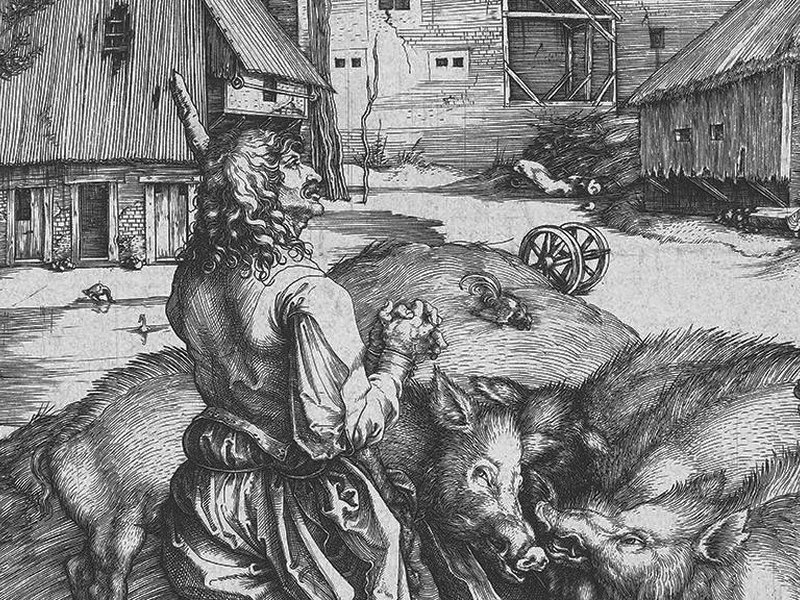
In the first essay on the parable of the Prodigal Son, I suggested that the problems commentators and others encounter in interpreting Jesus three-part parable are not accidental. These are not just problems in our ignorance of cultural background. They are intentional features of the stories —stories designed to poke…

by Ralph Allan SmithJuly 11, 2019
durer-prodigal-son-2
Luke

Perspectives on the Prodigal, (Part 1)

The story of the Prodigal Son is perhaps the most well-known story in the Bible. As others have observed, it may also be one of the most misunderstood. In two short essays, I will point out features of this story that are commonly neglected, aspects of Jesus’ parable that might…

by Ralph Allan SmithJuly 9, 2019
de-rijke-man-en-de-arme-lazarus-by-jacopo-da-ponte-16th-century
Luke

Lazarus and the Rich Man

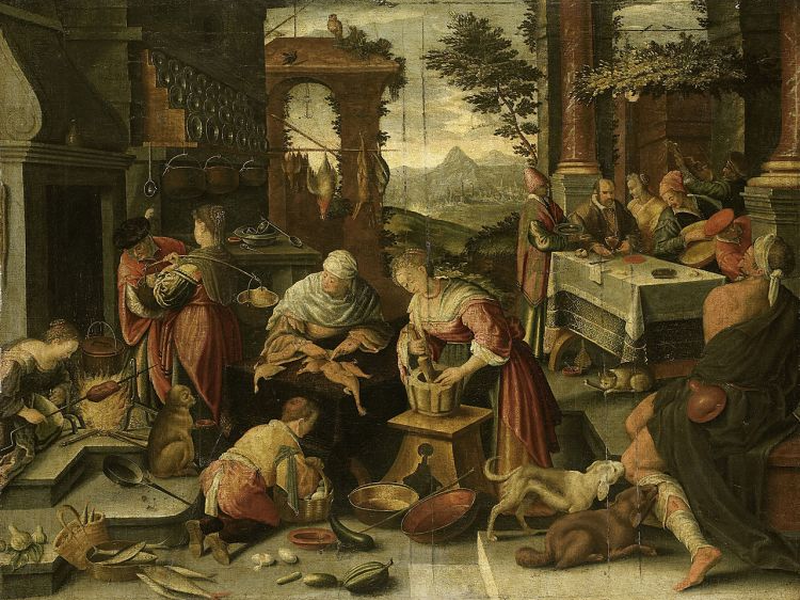
The parable of Lazarus and the nameless rich man is not an independent story. It is part of a long context that begins in Luke 15:1, where Jesus is eating with tax collectors and sinners and the scribes and Pharisees grumble. In response to their hardheartedness, Jesus tells a three-part…

by Ralph Allan SmithJuly 4, 2019
aaron-burden-uynrnfdkjwg-unsplash
Luke

Everybody has Dropsy - Luke 14:1-24

The Bible is written so that even when a reader cannot pick up on what might be deeper or more detailed aspects of a text, there is virtually always a message to be heard. In the ancient world, where the “reader” of Scripture would likely be a church official facing…

by Ralph Allan SmithJuly 2, 2019
communion
Biblical Theology

Fruit Trees and Grain Plants

The distinction between garden (or vineyard) and field begins in Genesis 2. This relates to the ordering of the formless world. Plants of the field are contrasted with the garden planted by God in Genesis 2:5&8. Later on, under the Old Covenant the Israelites will be required to keep their…

by James B. JordanJune 27, 2019

Showing page 77 of 309

See all

Showing page 8 of 43

See all
Art

Museums, Agents of relativism

Aesthetic consciousness - the capacity to abstract the aesthetic component in all perception, so as to view everything “aesthetically” - also implies, Gadamer argues, a particular notion of simultaneity. Because it abstracts the aesthetic value of the work, and downplays or ignores all other aspects of an aesthetic object, the…

January 4, 2007
Art

Art and appearance

After Kant, and especially after Kant’s romantic disciples, art came to be viewed as a matter of beautiful appearance, consciously defined in contrast to practical reality. This had not always been the Western conception of art. Gadamer comments, “Traditionally the purpose of ‘art,’ which also includes all conscious transformation of…

January 3, 2007
History

Unintended consequences

In 1439, representatives of Eastern and Western churches met in Florence to heal the schism of 1054. An agreement was reached, but it remained a paper agreement only. But the event had enormous consequences for the future of the Western world. Because of the good will this ecumenical meeting produced,…

January 3, 2007

Politics of sleep

Still on Rosenstock-Huessy: “How could we enjoy a restful sleep without social peace? The Gestapo in many countries changes man back to the deer whose sleep is perfunctory and scanty.” No political theory, or sociology, can be complete if it does not “include those who must wake when we are…

January 3, 2007

The limits of loyalty

Rosenstock-Huessy cites Josiah Royce’s The Philosophy of Loyalty as an example of a reductive view of human life. Royce rightly emphasizes the importance of loyalty, but then “could not resist the temptation to explain everything in terms of this one power which essentially binds us to the past.” But the…

January 3, 2007
American Religion

Christian America

Rosenstock-Huessy again: He writes that Christian conversion always involves a break with an old way of life, a breach with old loyalties and commitments, and a “verification” of that experience by an induction into a new people, “formerly overlooked or even despised, who now enable us to strengthen experience into…

January 3, 2007

Showing page 1742 of 2212

Browse by Category

In Medias Res

Your weekly digest for all things Theopolis.

Donate

Theopolis is nearly 100% donor-supported. Consider joining us on our mission.