Theopolis Logo

Writing

Explore our collection of theological essays, biblical studies, and reflections on faith and culture.

See all
tanner-mardis-xuxghzhibn4-unsplash-1-2
Biblical Studies

Tweets-turned-Notes on the Bible’s Chronology

Summary In what follows, I will consider the “year-stamps” employed in Scripture, i.e., statements of the form, “Such-and-such an event took place in the Xth year of Y.” In the process, I will suggest some ways in which the Biblical narrative might relate to events in the extra-Biblical world, though…

by James BejonJuly 16, 2019
durer-prodigal-son-2
Luke

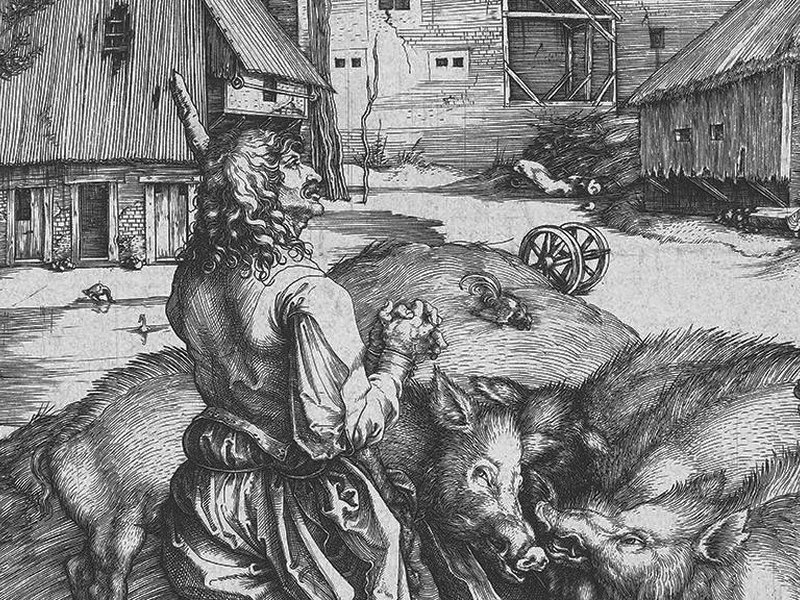
Perspectives on the Prodigal, (Part 2)

In the first essay on the parable of the Prodigal Son, I suggested that the problems commentators and others encounter in interpreting Jesus three-part parable are not accidental. These are not just problems in our ignorance of cultural background. They are intentional features of the stories —stories designed to poke…

by Ralph Allan SmithJuly 11, 2019
durer-prodigal-son-2
Luke

Perspectives on the Prodigal, (Part 1)

The story of the Prodigal Son is perhaps the most well-known story in the Bible. As others have observed, it may also be one of the most misunderstood. In two short essays, I will point out features of this story that are commonly neglected, aspects of Jesus’ parable that might…

by Ralph Allan SmithJuly 9, 2019
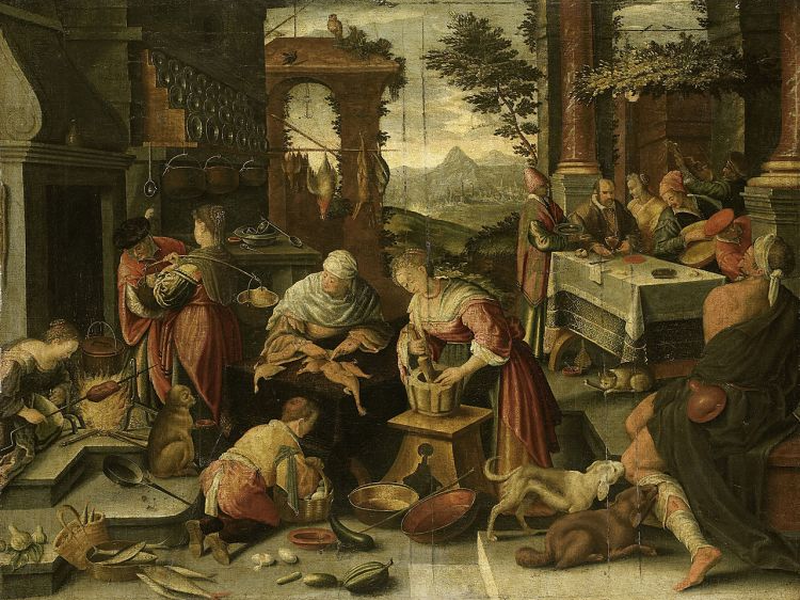
de-rijke-man-en-de-arme-lazarus-by-jacopo-da-ponte-16th-century
Luke

Lazarus and the Rich Man

The parable of Lazarus and the nameless rich man is not an independent story. It is part of a long context that begins in Luke 15:1, where Jesus is eating with tax collectors and sinners and the scribes and Pharisees grumble. In response to their hardheartedness, Jesus tells a three-part…

by Ralph Allan SmithJuly 4, 2019
aaron-burden-uynrnfdkjwg-unsplash
Luke

Everybody has Dropsy - Luke 14:1-24

The Bible is written so that even when a reader cannot pick up on what might be deeper or more detailed aspects of a text, there is virtually always a message to be heard. In the ancient world, where the “reader” of Scripture would likely be a church official facing…

by Ralph Allan SmithJuly 2, 2019
communion
Biblical Theology

Fruit Trees and Grain Plants

The distinction between garden (or vineyard) and field begins in Genesis 2. This relates to the ordering of the formless world. Plants of the field are contrasted with the garden planted by God in Genesis 2:5&8. Later on, under the Old Covenant the Israelites will be required to keep their…

by James B. JordanJune 27, 2019

Showing page 77 of 309

See all

Showing page 8 of 43

See all

Ritual and Ceremony

The terms “ceremony” and “ritual” became sneer-words nearly as soon as they were introduced into English and other European languages, according to Edward Muir’s Ritual in Early Modern Europe (Cambridge, 2005): “Around the turn of the sixteenth century, as Thomas Greene has persuasively shown, ‘a kind of crisis confronted the…

December 1, 2006

Re-creation

Richard Davidson, writing in the Andrews University Seminary Studies (Spring 2004), shows that the restoration of the world after the flood follows the creation week: 1. Spirit/wind, Gen 1:2; 8:1 2. Division of waters, 1:6-8; 8:1-5 3. Dry land and plants, 1:9-13; 8:5-12 4. Lights, 1:14-19; 8:13-14 5. Animals (birds…

December 1, 2006

Thoughts on Jonah

Some random thoughts on Jonah, inspired by a conversation with my student, Brillana McLean. 1) The first chapters of Jonah seem to follow something of an exit-and-return story. Jonah gets in a boat and crosses some water; he is cast out and is swallowed by the waters and by a…

November 30, 2006
Uncategorized

Sermon notes, First Advent

INTRODUCTION Individual angels, particularly the angel of Yahweh, appear regularly in the Old Testament (Genesis 16:7, 11; Exodus 14:19; Numbers 22:23-24; Judges 13:3; 2 Kings 1:3, 15). Occasionally, individual angels are named (Daniel 8:16; 10:13, 21). Far less frequently, groups of angels appear (Genesis 19:1 [a pair]; 28:12; 32:1; Job…

November 30, 2006
Philosophy

Nietzsche and Foucault

If postmodern theorists are Marxists, they are Marxists of a particular stripe, in that their Marxism is crossed by Nietzschean pessimism. They believe that power struggles are at the center of history but no longer believe that these power struggles will end in an ideal classless society. Revelations concerning the…

November 30, 2006
Literature

Rise of fictionality

Novels, we say, are long prose fictions, but general the terms of that definition are left unexamined. What is “prose” after all? What, Catherine Gallagher wants to ask, is fiction? And how did fictionality become established as the matter-of-factly defining characteristic of the novel. It is often assumed that “fiction”…

November 27, 2006

Showing page 1757 of 2212

Browse by Category

In Medias Res

Your weekly digest for all things Theopolis.

Donate

Theopolis is nearly 100% donor-supported. Consider joining us on our mission.