Theopolis Logo

Writing

Explore our collection of theological essays, biblical studies, and reflections on faith and culture.

See all
james-coleman-qej5dhl4mwq-unsplash
Galatians

Getting the Galatian Heresy Right

Misunderstanding “Galatianism” has caused several problems in the Reformed church. Because circumcision is at issue in the Galatian epistle, some have fallen into thinking that ritual per se, rather than anything uniquely Mosaic or Jewish, is the object of Paul’s critique. Likewise, his polemic against “works of the law” is…

by Rich LuskJune 6, 2003

screenshot-2023-09-21-at-3-59-23-pm
Romans

Jewish Rejection of the Gospel

Many texts in the NT become more perspicuous if we keep in mind the possibility — and indeed ubiquity — of Gentile God-fearers in the Old Covenant. After the special covenant with Israel is set up, Gentiles are not altogether excluded from the hope of salvation. Israel’s special status in…

by Rich LuskJune 6, 2003
aaron-burden-1ebsmyrau-s-unsplash
Ephesians

An X-File

I was once trying to get a sermon out of Ephesians 1.12-14 and it seemed obvious that I should look for two parallel statements both ending with the phrase, “to the praise of his glory.” Paul here begins talking about two groups of people (“you” and “we”), and he later…

by Mark HorneJune 5, 2003
screenshot-2023-12-12-at-10-36-28-am-2
New Perspective on Paul

The PCA and the New Perspective on Paul

WHY A DENOMINATION WITH SOUTHERN PRESBYTERIAN ROOTS SHOULD CAREFULLY CONSIDER THE “NEW PERSPECTIVE ON PAUL” In my denomination, the PCA, we are continually haunted by the sins of our racist Southern past. It has become an annual rite at General Assembly for the issue to be addressed one way or…

by Rich LuskJune 5, 2003
screenshot-2023-09-21-at-3-59-23-pm
Justification

The Centrality of Justification

Recent debates over whether or not, “justification is central” to Paul’s theology have reminded me of a sermon I once heard by a Presbyterian seminary student. This African American student challenged his audience on the sin of racism and the ways it might manifest itself among us. Like any good…

by Mark HorneJune 5, 2003
charles-hodge-islandora6062_crop_0
Ecclesiology

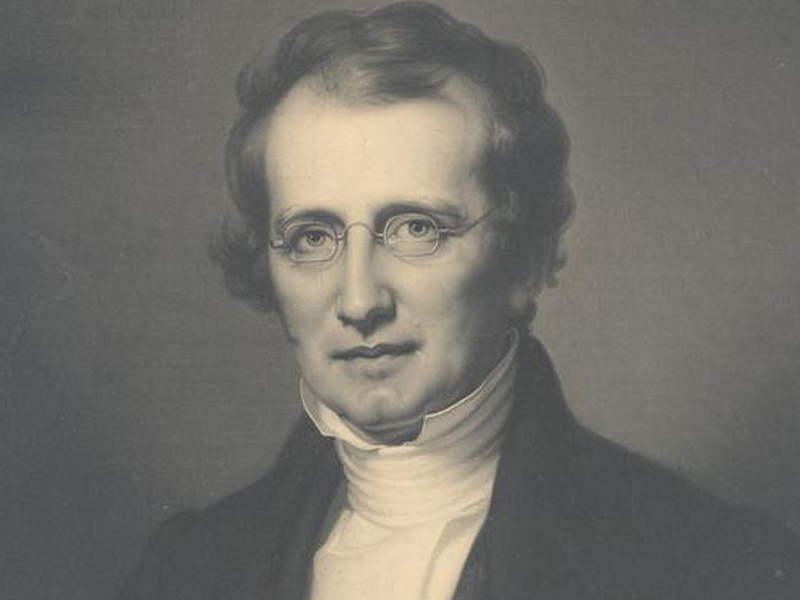
Charles Hodge’s Deficient Idea of the Church

In Charles Hodge’s 1853 article, “Idea of the Church,” his stated aim is to analyze the idea of the Church proposed in the Apostles’ Creed, in which, “the Church is declared to be “the Communion of the Saints.” He writes: The conception of the Church as the communion of saints…

by Mark HorneJune 5, 2003

Showing page 231 of 309

See all

Showing page 8 of 43

See all
Philosophy

Hermeneutics v. Semiology

According to Michel Foucault, what Marx, Nietzsche, and Freud introduce is an age of interpretation. He develops one of the implications of this by suggesting there is a “fierce war” between semiology and hermeneutics, between treating words as signs and treating them as interpretations. Nietzsche in particular, Foucault claims, develops…

August 26, 2006
Literature

Shakespeare and Bible

Steven Marx’s Shakespeare and the Bible (Oxford, 2000), purports to be the “first book to explore the pattern and significance” of Shakespeare’s biblical allusions. Perhaps. The results are mixed. Each chapter of Marx’s book attempts to show structural, plot, and thematic parallels between a section of Scripture and a play…

August 26, 2006
Literature

Ubiquitous Shakespeare

Exploring Lake Superior in 1840, one Charles W Penny wrote, “We read the Bible I dare say much more than we would have done had we been in Detroit. Shakespeare was duly honoured, as he is every day when we travel. When on the water, some one of the party…

August 26, 2006

Divine Love

The Persons of the Trinity live out an eternal round of self-sacrificing love. If a proof text is needed, John 15 supplies it. 1) Jesus says, “as the Father loved Me, I have also loved you” (v. 9). Jesus’ love for the disciples is modeled on the Father’s for Him.…

August 26, 2006

Queen of the Sciences

John Stuart Mill declared at the beginning of his book on logic that “Logic is the common judge and arbiter of all particulars investigations. It does not undertake to find evidence, but to determine whether it has been found. Logic neither observes, nor invents, nor discovers; it judges.”

August 24, 2006
History

New

Hans Jonas writes in an essay on technological and scientific advance that one of the key cultural shifts in the sixteenth and seventeenth centuries was a, well, new understanding of “new,” and a corresponding revision of traditional ways of thinking about history: “A sign of this spreading mood is the…

August 24, 2006

Showing page 1804 of 2212

Browse by Category

In Medias Res

Your weekly digest for all things Theopolis.

Donate

Theopolis is nearly 100% donor-supported. Consider joining us on our mission.