Theopolis Logo

Writing

Explore our collection of theological essays, biblical studies, and reflections on faith and culture.

See all
tanner-mardis-xuxghzhibn4-unsplash-1-2
Biblical Studies

Tweets-turned-Notes on the Bible’s Chronology

Summary In what follows, I will consider the “year-stamps” employed in Scripture, i.e., statements of the form, “Such-and-such an event took place in the Xth year of Y.” In the process, I will suggest some ways in which the Biblical narrative might relate to events in the extra-Biblical world, though…

by James BejonJuly 16, 2019
durer-prodigal-son-2
Luke

Perspectives on the Prodigal, (Part 2)

In the first essay on the parable of the Prodigal Son, I suggested that the problems commentators and others encounter in interpreting Jesus three-part parable are not accidental. These are not just problems in our ignorance of cultural background. They are intentional features of the stories —stories designed to poke…

by Ralph Allan SmithJuly 11, 2019
durer-prodigal-son-2
Luke

Perspectives on the Prodigal, (Part 1)

The story of the Prodigal Son is perhaps the most well-known story in the Bible. As others have observed, it may also be one of the most misunderstood. In two short essays, I will point out features of this story that are commonly neglected, aspects of Jesus’ parable that might…

by Ralph Allan SmithJuly 9, 2019
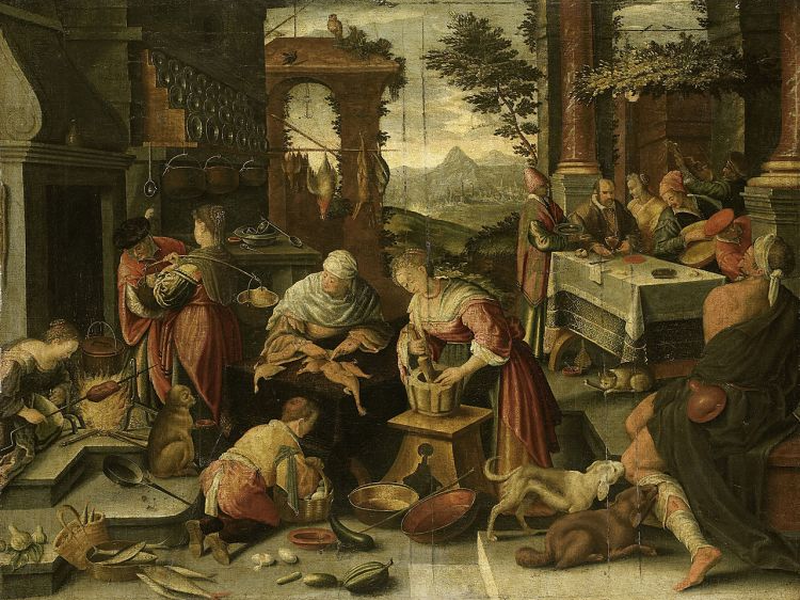
de-rijke-man-en-de-arme-lazarus-by-jacopo-da-ponte-16th-century
Luke

Lazarus and the Rich Man

The parable of Lazarus and the nameless rich man is not an independent story. It is part of a long context that begins in Luke 15:1, where Jesus is eating with tax collectors and sinners and the scribes and Pharisees grumble. In response to their hardheartedness, Jesus tells a three-part…

by Ralph Allan SmithJuly 4, 2019
aaron-burden-uynrnfdkjwg-unsplash
Luke

Everybody has Dropsy - Luke 14:1-24

The Bible is written so that even when a reader cannot pick up on what might be deeper or more detailed aspects of a text, there is virtually always a message to be heard. In the ancient world, where the “reader” of Scripture would likely be a church official facing…

by Ralph Allan SmithJuly 2, 2019
communion
Biblical Theology

Fruit Trees and Grain Plants

The distinction between garden (or vineyard) and field begins in Genesis 2. This relates to the ordering of the formless world. Plants of the field are contrasted with the garden planted by God in Genesis 2:5&8. Later on, under the Old Covenant the Israelites will be required to keep their…

by James B. JordanJune 27, 2019

Showing page 77 of 309

See all

Showing page 8 of 43

See all

Roman Mimesis

In a recent book on Roman images, Tonio Holscher notes that Roman artists borrowed from every phase of Greek art because all phases of Greek art were available simultaneously. According to the TLS reviewer of his book (May 12), “In Greece, these styles had evolved over time, from the stiff…

July 4, 2006
History

French Anthropology

Given the importance of figures like Durkheim, Mauss, and Levi-Strauss in anthropology, it’s surprising to learn that “the French kept anthropology long under the umbrella of sociology, with the first degree in anthropology being awarded in 1968 and the first professional association of anthropologists founded in 1979.” By contrast, “The…

July 4, 2006
History

Influence

William St Clair (TLS May 12) makes the commonsensical point that a history of ideas requires an accompanying social history of reading, which is a history of the publishing trade: “When we read a book or essay called, say, ‘The Age of Wordsworth,’ should we not be concerned that, in…

July 4, 2006

Schools of Totalitarianism

In his novel The Seizure of Power , Czeslaw Milocz describes one Polish character’s preparation for life under the Soviets by telling the story of his school experience. At first, Peter wrote and thought for himself; he got bad grades and was the source of endless trouble. One day, he…

July 4, 2006
History

Globalization

Who said this? “What I have said of America applies to almost all the men of our time. Variety is disappearing from the breast of humankind; the same ways of acting, of thinking and of feeling, the same pop songs and fashions, are encountered in all corners of the globe.…

July 4, 2006

Eucharistic Meditation, July 2

2 Kings 24:4: also for the innocent blood which Manasseh shed, for he filled Jerusalem with innocent blood; and Yahweh would not forgive. Manasseh’s reign, as we saw some weeks ago, was the turning point for Judah. After Manasseh’s idolatries and violence, Yahweh determined to destroy Judah, and no amount…

July 2, 2006

Showing page 1830 of 2212

Browse by Category

In Medias Res

Your weekly digest for all things Theopolis.

Donate

Theopolis is nearly 100% donor-supported. Consider joining us on our mission.