Theopolis Logo

Writing

Explore our collection of theological essays, biblical studies, and reflections on faith and culture.

See all
screen-shot-2021-06-03-at-8-49-15-am
Ezra

Ezra: The Aaronic Rest-Giver

If you’re a preacher looking for good commentaries on Ezra, you’ll struggle. Certainly to find ones that wrestle in good detail with the text. And certainly ones that don’t cost you an arm and a leg. There’s a good bit more for Nehemiah, which is odd, as the two are…

by Rhys LavertyJune 8, 2021

christian-lue-k1e6994p3t8-unsplash
1 John

1 John in Community

Quick thought experiment: try to pretend you’ve never read 1 John before. Read 1:1-6. Go ahead; I’ll wait. Now, on to v. 7: “But if we walk in the light as He is in the light, we have fellowship with ______….” What word would you expect in that blank, based…

by Tim NicholsJune 1, 2021
noahs-ark-genesis
Hermeneutics

Spending Time with Noah: Reflections on Prepositions in the Flood Narrative

In my work as a Bible translator, I was recently checking our translation team’s draft of Genesis 8:8, which says of Noah (translating the Hebrew quite literally): And he sent out the dove from with him to see: had the waters lessened from upon the face of the ground? Part…

by Josh JensenMay 25, 2021
86758
Philosophy

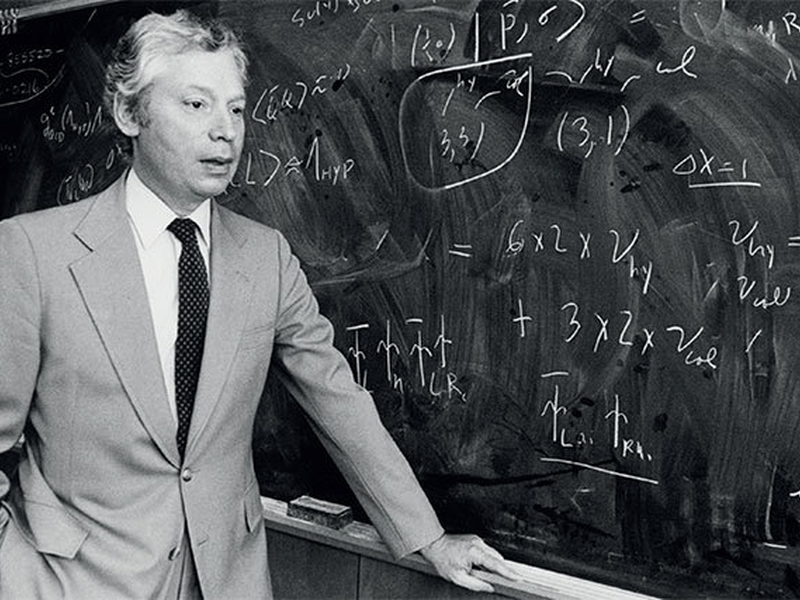
Steven Weinberg Destroyed My Faith

Just in case a reader may not know Weinberg, he is a theoretical physicist and the winner of the Nobel prize in physics in 1979, as well as countless other prizes for his research. He is also a prolific, lucid, and captivating writer. If you want to read something on…

by Ralph Allan SmithMay 18, 2021
screen-shot-2020-09-17-at-9-11-45-am
Colossians

Reconciliation in Colossians 1:20

Colossians 1:15-20 is a famous passage in Paul’s epistles because it is a succinct and powerful poem. It appears even to have been a hymn. Given the uniquely Pauline language — “reconciliation” is a term used only by Paul — it should not seem odd to attribute the poem/hymn to…

by Ralph Allan SmithMay 11, 2021
stalker_still
Movies

Terror of Knowing Myself

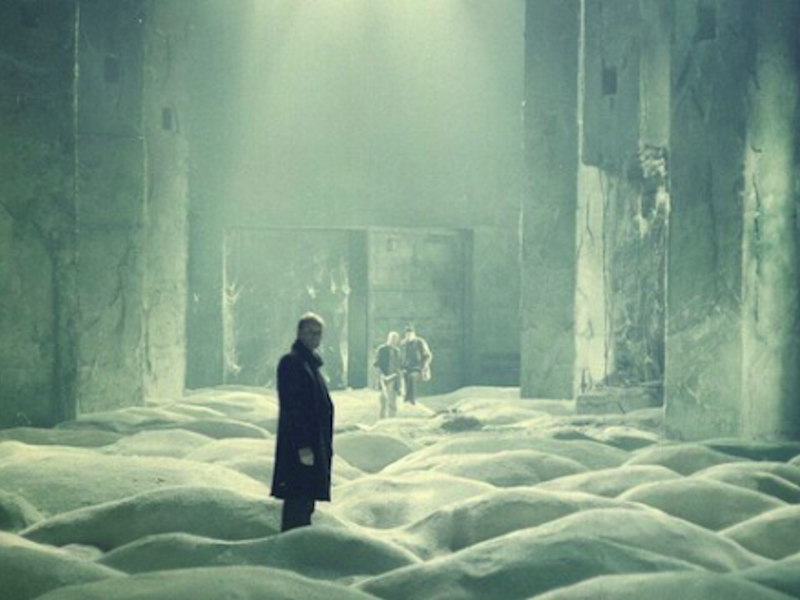
Stalker (1979) is a film by Andrei Tarkovsky based on Roadside Picnic by the Strugatsky brothers. It shows a day from the life of a stalker, a man who enters the so-called "Zone", an Alien landing site, where he leads people to a room that grants people’s innermost desires, which…

by Bogumil JarmulakMay 4, 2021

Showing page 55 of 309

See all

Showing page 8 of 43

See all

Luther and Medieval Piety

T he great question haunting late medieval piety was that of the inadequacy of human piety. As Berndt Hamm puts it ( Reformation of Faith ), the “harrowing question” was that of the “spiritual inadequacy” of Christians (88). The late medieval answer was to reduce the requirements necessary to meet…

April 14, 2017

Politics of the Picturesque

I n his Landscape, Liberty and Authority , Tim Fulford examines the paradox of William Gilpin's travel writings and tour-leading in the picturesque wilds of Wales, England, and Scotland. Gilpin was aware that “the picturesque might be socially dangerous,” so much so that he apologizes to the noble landowners whose…

April 14, 2017

Separation and Incorporation

I n his contribution to Signifying Identities , Fredrik Barth suggests that our notion of political, economic and social boundaries is an extension of the feeling that a tool extends the body: When you hold a knife or a spoon in your hand and use it as an implement, the…

April 14, 2017

Early Christian Disenchantment

G uy G. Stroumsa writes in The Making of the Abrahamic Religions in Late Antiquity that “For Weber, as is well known, the most striking ‘disenchantment of the world' in history occurred with the rise of the ‘inner-worldly' asceticism ( innerweltliche Askese ) of the Calvinist Reformation. And yet, it…

April 14, 2017

From Reform to Revolution?

M ichel de Certeau ( The Writing of History , 126-7) quotes Alphonse Dupront on the post-Reformation situation of the church: “a first piece of raw material, as obvious as capital for the modern mind, is the progressive promotion of heresy in confession and of confession in church. . .…

April 14, 2017

The Unity of Christian Europe

In a 1971 essay, H.G. Koenigsberger challenged the notion that the Reformation broke up a unified Europe. He criticizes historians and social scientists for assuming a norm of unity: “We have assumed that the theological and ecclesiastical unity of Catholic Christendom was its natural condition and that, in consequence, the…

April 13, 2017

Showing page 186 of 2212

Browse by Category

In Medias Res

Your weekly digest for all things Theopolis.

Donate

Theopolis is nearly 100% donor-supported. Consider joining us on our mission.