Theopolis Logo

Writing

Explore our collection of theological essays, biblical studies, and reflections on faith and culture.

See all
mountains
American Culture

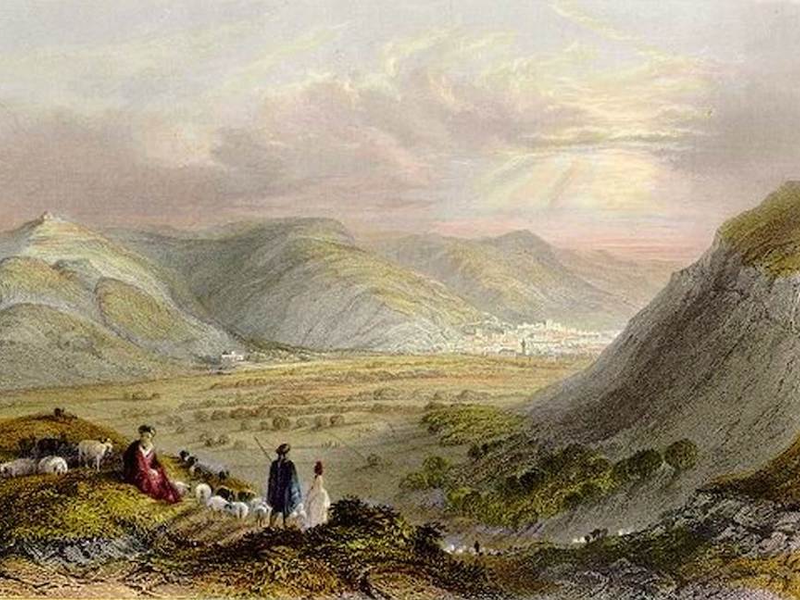
Gerazim and Ebal

Place names become fraught with meaning by association with people and events. The name “Wittenberg” calls to mind Luther and the Reformation for Protestants and Catholics alike. Geneva has a wider range of associations, but the Reformation Wall, with its four main statues of William Farel, John Calvin, Theodore Beza,…

by Ralph Allan SmithFebruary 16, 2017

screen-shot-2017-02-14-at-7-59-35-am
Art

Tomboys and Totems

“…a mystery without a solution, a horror story without savagery, a nightmare in which all the watches stop at noonday…” The Bestial Gardens of Men Then they will say to the mountains, “Fall on us!” and to the hills, “Cover us!” (Luke 23:30) The following lines by Edgar Allan Poe,…

by Mike BullFebruary 14, 2017
aaron-burden-1ebsmyrau-s-unsplash
Biblical Studies

The Structure and Typology of the Bathsheba Incident

2 Samuel 11-12, which record David’s sin with Bathsheba and its aftermath, is structured chiastically: This arrangement highlights several things about the episode. It reinforces what is obvious from even a casual reading, that the transition in the story occurs with Nathan’s confrontation of David’s sin and David’s confession. Up…

by James B. JordanFebruary 8, 2017
bestiary
Anthropology

Anthropomorphism and Christian Humanism

Medieval bestiaries are packed with quaintly inaccurate information about animals, birds, and other created things. Foxes and snakes are devilish critters; stags, pelicans and elephants are Christlike in their various ways. Of course, the medievals picked this up from the Bible, where bestiary observations are fairly common. “Go to the…

by Peter LeithartFebruary 2, 2017
beer
Beer

The End of Beerocracy

What do Reformational Catholicism and craft beer have in common? The question seems to beg for a punchline. Better yet, it would be pretty good clickbait for an article on Katharina von Bora’s “spirited” contribution that helped spark the Protestant Reformation. Well, this is no joke and I am certainly…

by John CrawfordJanuary 31, 2017
calvin
Pastoral Ministry

Calvin and Pastoral Care

Suffering Defined Suffering happens. We witness it all around us and experience it in our lives. It often comes from forces beyond our control. Suffering is inscrutable; it strikes unexpectedly, on a bright summer day or a cold winter night. We lament and are bewildered by suffering. But we are…

by Uri BritoJanuary 26, 2017

Showing page 117 of 309

See all

Showing page 8 of 43

See all
History

Counter-culture and post-modern

Kumar notes that the 1960s counter-culture set itself against everything in modernism: “Pop art and pop music, the ‘new wave’ in cinema and the ‘new novel’ in literature, thne elision of the boundaries between ‘art’ and ‘life,’ the cultivation of sensibility through sex and drugs rather than aesthetic contemplation of…

February 24, 2006
History

Early McLaren?

In a 1965 essay, Leslie Fiedler celebrated the new movements of the 1960s as post-modern, post-Freudian, post-Humanist, post-Protestant, post-white, post-male.

February 24, 2006
History

Postmodernism/ity

Kumar suggests that there is no useful distinction to be made between postmodernity as a socio-political concept and postmodernism as a cultural concept. All the instincts of postmodernists are against such a differentiation of spheres. For postmodernists, it is no longer useful to distinguish subsystems within the social world -…

February 24, 2006
History

Two modernisms

Kumar defines modernism as an intellectual, cultural and artistic revolt against modernity. Yet modernism itself, especially as expressed in architecture, was complex and racked with internal contradictions: “It could denounce the ‘inauthentic’ present in the name of the future, as in Futurism and Constructivism; and it could with equal force…

February 24, 2006
History

Two modernities?

At least two: The modernity of science and technology, the factory system and city planning, of bureacracy and management. And on the other hand the modernity of sensibility, literature, hedonism, the lust for ever-new experience. On the one hand, Industrialization; on the other, the Romanticism that challenged it. On the…

February 24, 2006
History

Liquid modernity

“Constant revolutionizing of production, uninterrupted disturbance of all social conditions, everlasting uncertainty and agitation . . . All fixed, fast-frozen relationships . . . are swept away, all new-formed ones become antiquated before they can ossify.” Zygmunt Bauman? No: Marx and Engels, in the Communist Manifesto .

February 24, 2006

Showing page 1877 of 2212

Browse by Category

In Medias Res

Your weekly digest for all things Theopolis.

Donate

Theopolis is nearly 100% donor-supported. Consider joining us on our mission.