Theopolis Logo

Writing

Explore our collection of theological essays, biblical studies, and reflections on faith and culture.

See all
jelleke-vanooteghem-gnxb59lgu1m-unsplash
Baptism

Baptism and the Spirit

Pneumatology, the doctrine of the Holy Spirit, is often formulated along dispensational lines. The Holy Spirit’s work in the Old Testament, we tend to think, was earthly, concerned with political and military leadership, while in the New Testament the Spirit’s work has to do with mediating salvation achieved by Christ.…

by Peter LeithartMay 27, 1996

trnava-university-beeyeib-am8-unsplash
Biblical Horizons

Open Book 6: Views & Reviews

Homosexuality and the Love of Death Some years ago (September, 1980) Midge Decter published in Commentary one of the most illuminating pieces that I have ever seen on homosexuality. It was a very autobiographical piece dealing with her own summer vacation experiences on Fire Island off of New Jersey. When…

by Richard BledsoeApril 28, 1996
tim-wildsmith-j6jv-mkdzqs-unsplash
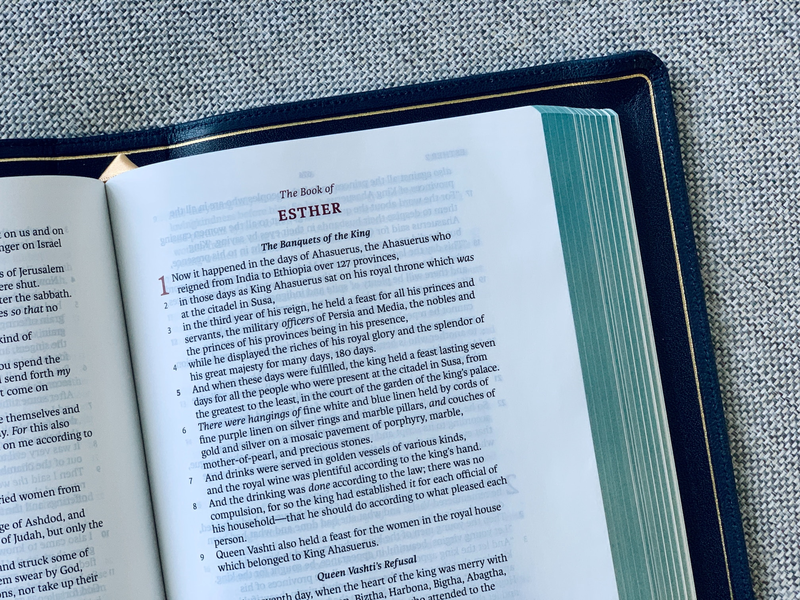
Esther

Esther: Historical & Chronological Comments (II)

C. The Battle of Gog and Magog (Ezekiel 38-39) (continued for previous issue) A final corroboration of this interpretive hypothesis comes from what we might call the "Amalek Pattern" in the Bible. Note in Genesis 12-15 that Abram moves into the land after escaping Pharaoh (ch. 12), settles down and…

by James B. JordanApril 28, 1996
image-20150409-15244-1r08rsu
Romans

Christ in the Holy of Holies: The Meaning of the Mount of Olives

Speaking of the Church, Romans 11:16-17 says, "And if the root be holy, the branches are also. But if some of the branches were broken off, and you, being a wild olive were grafted in among them and became partaker with them of the root of the fatness of the…

by James B. JordanApril 28, 1996
aaron-burden-h8s0pf2rcqs-unsplash
Romans

Committed to the Form of Teaching

But thanks be to God that though you were slaves of sin, you became obedient from the heart to that form of teaching (tupos didaskales) to which you were committed, and having been freed from sin, you became slaves of righteousness (Romans 6:17-18). In his study of the use of…

by Peter LeithartApril 27, 1996
screenshot-2023-07-27-at-10-25-35-am
Biblical Horizons

Review: Biblical Theology, by John Owen

John Owen (1616-1683), Biblical Theology, or the Nature, Origin, Development, and Study of Theological Truth in Six Books, translated by Stephen P. Westcott (Pittsburgh: Soli Deo Gloria Publications, [1661] 1994), hardcover, 911 pages, $50.00. Here for the first time in English is one of Owen’s most important Latin works, along…

by James B. JordanMarch 28, 1996

Showing page 266 of 309

See all

Showing page 8 of 43

See all
History

Counter-culture and post-modern

Kumar notes that the 1960s counter-culture set itself against everything in modernism: “Pop art and pop music, the ‘new wave’ in cinema and the ‘new novel’ in literature, thne elision of the boundaries between ‘art’ and ‘life,’ the cultivation of sensibility through sex and drugs rather than aesthetic contemplation of…

February 24, 2006
History

Early McLaren?

In a 1965 essay, Leslie Fiedler celebrated the new movements of the 1960s as post-modern, post-Freudian, post-Humanist, post-Protestant, post-white, post-male.

February 24, 2006
History

Postmodernism/ity

Kumar suggests that there is no useful distinction to be made between postmodernity as a socio-political concept and postmodernism as a cultural concept. All the instincts of postmodernists are against such a differentiation of spheres. For postmodernists, it is no longer useful to distinguish subsystems within the social world -…

February 24, 2006
History

Two modernisms

Kumar defines modernism as an intellectual, cultural and artistic revolt against modernity. Yet modernism itself, especially as expressed in architecture, was complex and racked with internal contradictions: “It could denounce the ‘inauthentic’ present in the name of the future, as in Futurism and Constructivism; and it could with equal force…

February 24, 2006
History

Two modernities?

At least two: The modernity of science and technology, the factory system and city planning, of bureacracy and management. And on the other hand the modernity of sensibility, literature, hedonism, the lust for ever-new experience. On the one hand, Industrialization; on the other, the Romanticism that challenged it. On the…

February 24, 2006
History

Liquid modernity

“Constant revolutionizing of production, uninterrupted disturbance of all social conditions, everlasting uncertainty and agitation . . . All fixed, fast-frozen relationships . . . are swept away, all new-formed ones become antiquated before they can ossify.” Zygmunt Bauman? No: Marx and Engels, in the Communist Manifesto .

February 24, 2006

Showing page 1877 of 2212

Browse by Category

In Medias Res

Your weekly digest for all things Theopolis.

Donate

Theopolis is nearly 100% donor-supported. Consider joining us on our mission.