Theopolis Logo

Writing

Explore our collection of theological essays, biblical studies, and reflections on faith and culture.

See all
debby-hudson-qa74yh6-xlc-unsplash
Baptism

For the Children’s Sake | An Alternative Angle on the Paedocommunion Debate

The debate over paedocommunion does not seem to have made much headway on either side in recent years. Certainly both sides have made a solid effort to argue for their position. But no resolution seems to be forthcoming in the near future. As a convinced paedocommunionist, I find the church’s…

by Rich LuskNovember 16, 2002
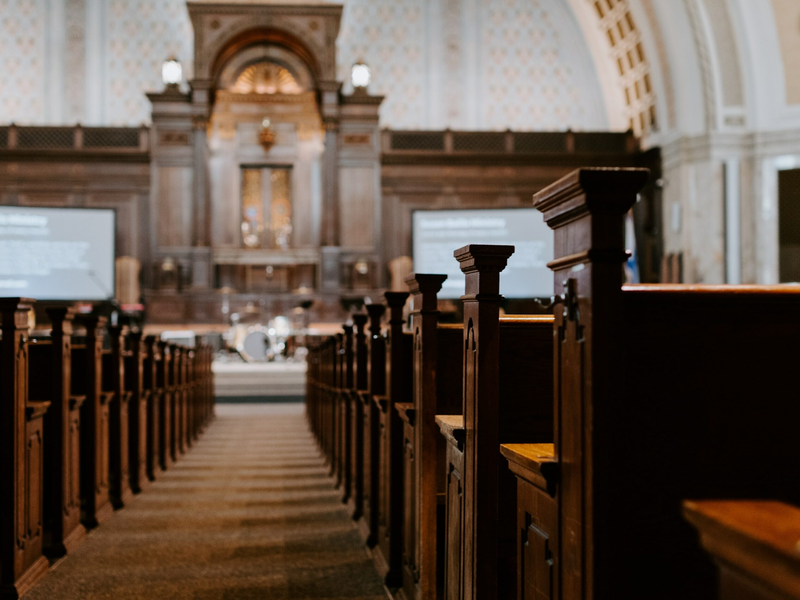
kelly-sikkema-ggs0_g6wi-i-unsplash
Covenant

Covenant & Election FAQs

How do covenant and election relate to one another? There are many issues of semantics that enter into this discussion and many issues of real substance, so we need to be careful. If we oversimplify, we can say that election relates to God’s eternal plan to save a people for…

by Rich LuskAugust 20, 2002
claudel-rheault-zvbv1aka-l4-unsplash
Theologia

Vine, Branches, & Fruit

Shortly after the Last Supper and before his final arrest, Jesus said these words to his remaining eleven faithful disciples: I am the true vine, and my Father is the vinedresser. Every branch of mine that does not bear fruit he takes away, and every branch that does bear fruit…

by Mark HorneJune 7, 2002
chris-bair-ndczc5739ck-unsplash
Deuteronomy

The Gospel of Deuteronomy

Was Caleb saved by faith or works? Caleb is just one of many thousands of Hebrews who entered the Promised Land after spending years in the wilderness being led by Moses. God had delivered the Hebrews from slavery in Egypt and gave them a law at Mount Sinai based on…

by Mark HorneJune 7, 2002
kelly-sikkema-gpoh17dxqdm-unsplash
Romans

Romans and the Role of Israel in the Atonement

For while we were still helpless, at the right time Christ died for the ungodly (Romans 5.7) So also we, while we were children, were held in bondage under the elemental things of the world. But when the fullness of the time came, God sent forth His Son, born of…

by Mark HorneJune 6, 2002
screen-shot-2023-04-04-at-5-01-54-pm
Ephesians

Paul's use of the Decalogue in Ephesians 6:1-3

Children, obey your parents in the Lord, for this is right. “Honor your father and mother” (which is the first commandment with a promise), “that it may be well with you, and that you may live long on the earth” (Ephesians 6.1-3). Honor your father and your mother, that your…

by Mark HorneJune 6, 2002

Showing page 236 of 309

See all

Showing page 8 of 43

See all
History

Modernity and antiquity

Kumar suggests that “some of the principal hall-marks of modernity” are already evident in the Christian notions of time and history. Both Christianity and modernity separate time from nature, and humanize time; time is seen by both as “linear and irreversible”; both see history as an Aristotelian drama with beginning,…

February 24, 2006
History

First Modernity

The Latin modernus was coined in the late fifth century, as an antonym to antiquus , and variations of modernus became particularly common after the 10th century. Thus, Krishan Kumar writes, “Modernity is . . . an invention of the Christian Middle Ages,” and was used to emphasize the radical…

February 24, 2006
Philosophy

Computer Communications and the Self

Poster lists four effects that computer communications (email, chat groups, etc) have on the self: “1 they introduce new possibilities for playing with identities; 2 they degender communications by removing gender cues; 3 they destabilize existing hierarchies in relationships and re-hierarchize communications according to criterio that were previously irrelevant; and…

February 24, 2006
Philosophy

Computers, subjects and objects

Descartes famously contrasted the mind (res cogitans) with the external world (res extensa), but Mark Poster suggests that computer writing fudges that distinction: “the computer dematerializes the written trace. As inputs are made to the computer through the keyboard, pixels of phosphor are illuminated on the screen, pixels that are…

February 24, 2006
Media

Community and New Communications

Mark Poster points to a tension between the modern institutions of production and the postmodern technologies of communication, particularly as they impact the formation of the self: “If modernity or the mode of production signifies patterned practices that elicit identities as autonomous and (instrumentally) rational, postmodernity or the mode of…

February 24, 2006
Media

Telephone

Prior to World War I, Telefon Hirmondo, the telephone system of Budapest, was used as a broadcast system, with a published schedule of programs that were restricted to certain classes of people in Hungary. Only later did it develop into a communications system in which everyone could pass information to…

February 24, 2006

Showing page 1878 of 2212

Browse by Category

In Medias Res

Your weekly digest for all things Theopolis.

Donate

Theopolis is nearly 100% donor-supported. Consider joining us on our mission.