Theopolis Logo

Writing

Explore our collection of theological essays, biblical studies, and reflections on faith and culture.

See all
hoch3media-hkkjnp-nwdq-unsplash
Biblical Horizons

A Visionary Liturgy, Part 1

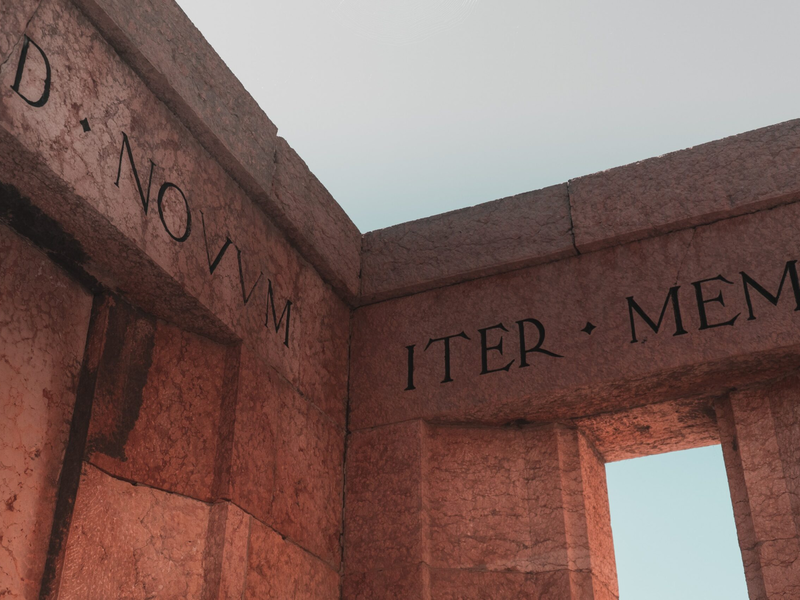
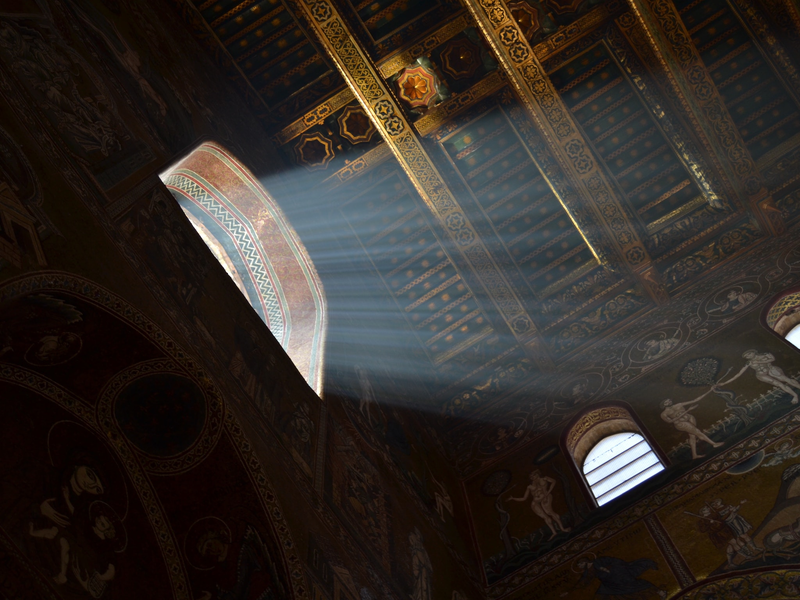
In the 48th year, the third month, and the fourteenth night, while I slept in my bed, I was taken in vision to Xanadu and set upon a high hill. Looking to the west, I saw a large building, surrounded with gardens and fountains, walks and gravestones, and a bell…

by James B. JordanJanuary 4, 1998
carlo-alberto-burato-smdx3gleu_m-unsplash
Advent

Celebrating a Calvinist Christmas with a Clear Conscience: Is the Holiday Un-Presbyterian?

‘Tis the season to be informed–sometimes in gentleness, often with vigor–by a variety of Christians (and others) 1 claiming that it is wrong to celebrate Christmas. I have no desire to force anyone to celebrate Christmas against their will. Indeed, it would be insulting to the high holiday to pretend…

by Mark HorneDecember 15, 1997
screen-shot-2023-04-04-at-5-01-54-pm
Biblical Horizons

The Case Against Western Civilization, Part 2

Part 2: The Enoch Factor Back in Open Book 21 we discussed "The Enoch Factor." Because that was several years ago (May 1994) and many people have begun reading this letter since that time, we shall return to the subject here and expand what we wrote at that time. After…

by James B. JordanDecember 4, 1997
actionvance-t7el2ig3jmc-unsplash
Biblical Studies

The Sequence of Events in the Creation Week, Part 3

Day 6. The sixth day provides the creation of land animals and of humanity. As we saw above, the second day spills over to the first half of the third day, for only at that point did God say that it was good. Similarly, it seems that the fifth day…

by James B. JordanDecember 4, 1997
luca-tosoni-wneuvexggjg-unsplash
Biblical Horizons

Repoliticizing Jesus

During the past two decades, the "quest of the historical Jesus" has entered a new phase. The first incarnation of the quest was rudely shaken by the publication of Albert Schweitzer’s classic Quest of the Historical Jesus , easily the most devastating and funniest work of New Testament scholarship ever…

by Peter LeithartNovember 27, 1997
mike-l-8qr1ixi-rmu-unsplash
Biblical Horizons

Sovereignty and Self-Gift

At the 1997 Biblical Horizons Summer Conference, the Rev. Jeffrey Meyers presented a series of remarkable lectures on the gospel of Mark. Among his many insightful comments, he suggested that the second gospel continues where the first gospel ends; Matthew ends with Jesus saying "Go" (Matthew 28:19), and Mark’s shows…

by Peter LeithartNovember 27, 1997

Showing page 251 of 309

See all

Showing page 8 of 43

See all
History

Modernity and antiquity

Kumar suggests that “some of the principal hall-marks of modernity” are already evident in the Christian notions of time and history. Both Christianity and modernity separate time from nature, and humanize time; time is seen by both as “linear and irreversible”; both see history as an Aristotelian drama with beginning,…

February 24, 2006
History

First Modernity

The Latin modernus was coined in the late fifth century, as an antonym to antiquus , and variations of modernus became particularly common after the 10th century. Thus, Krishan Kumar writes, “Modernity is . . . an invention of the Christian Middle Ages,” and was used to emphasize the radical…

February 24, 2006
Philosophy

Computer Communications and the Self

Poster lists four effects that computer communications (email, chat groups, etc) have on the self: “1 they introduce new possibilities for playing with identities; 2 they degender communications by removing gender cues; 3 they destabilize existing hierarchies in relationships and re-hierarchize communications according to criterio that were previously irrelevant; and…

February 24, 2006
Philosophy

Computers, subjects and objects

Descartes famously contrasted the mind (res cogitans) with the external world (res extensa), but Mark Poster suggests that computer writing fudges that distinction: “the computer dematerializes the written trace. As inputs are made to the computer through the keyboard, pixels of phosphor are illuminated on the screen, pixels that are…

February 24, 2006
Media

Community and New Communications

Mark Poster points to a tension between the modern institutions of production and the postmodern technologies of communication, particularly as they impact the formation of the self: “If modernity or the mode of production signifies patterned practices that elicit identities as autonomous and (instrumentally) rational, postmodernity or the mode of…

February 24, 2006
Media

Telephone

Prior to World War I, Telefon Hirmondo, the telephone system of Budapest, was used as a broadcast system, with a published schedule of programs that were restricted to certain classes of people in Hungary. Only later did it develop into a communications system in which everyone could pass information to…

February 24, 2006

Showing page 1878 of 2212

Browse by Category

In Medias Res

Your weekly digest for all things Theopolis.

Donate

Theopolis is nearly 100% donor-supported. Consider joining us on our mission.