Theopolis Logo

Writing

Explore our collection of theological essays, biblical studies, and reflections on faith and culture.

See all
tanner-mardis-xuxghzhibn4-unsplash-1-2
Biblical Studies

Tweets-turned-Notes on the Bible’s Chronology

Summary In what follows, I will consider the “year-stamps” employed in Scripture, i.e., statements of the form, “Such-and-such an event took place in the Xth year of Y.” In the process, I will suggest some ways in which the Biblical narrative might relate to events in the extra-Biblical world, though…

by James BejonJuly 16, 2019
durer-prodigal-son-2
Luke

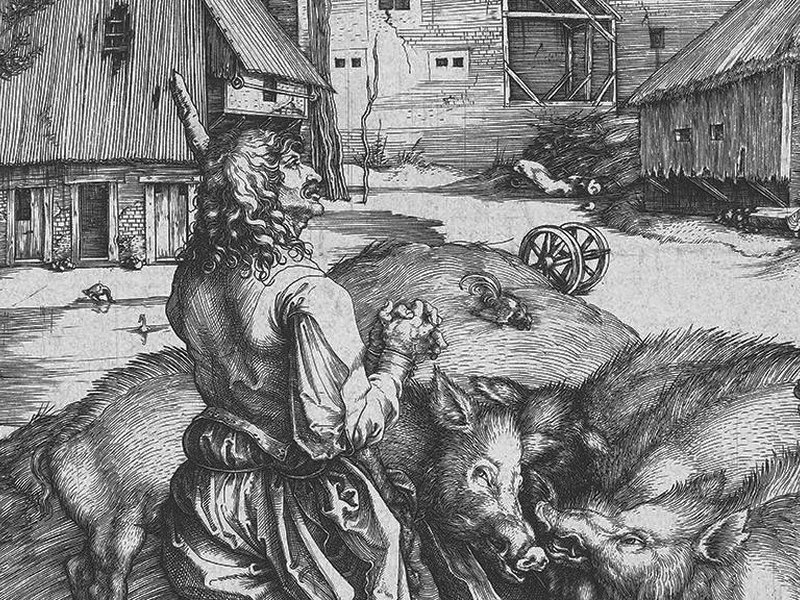
Perspectives on the Prodigal, (Part 2)

In the first essay on the parable of the Prodigal Son, I suggested that the problems commentators and others encounter in interpreting Jesus three-part parable are not accidental. These are not just problems in our ignorance of cultural background. They are intentional features of the stories —stories designed to poke…

by Ralph Allan SmithJuly 11, 2019
durer-prodigal-son-2
Luke

Perspectives on the Prodigal, (Part 1)

The story of the Prodigal Son is perhaps the most well-known story in the Bible. As others have observed, it may also be one of the most misunderstood. In two short essays, I will point out features of this story that are commonly neglected, aspects of Jesus’ parable that might…

by Ralph Allan SmithJuly 9, 2019
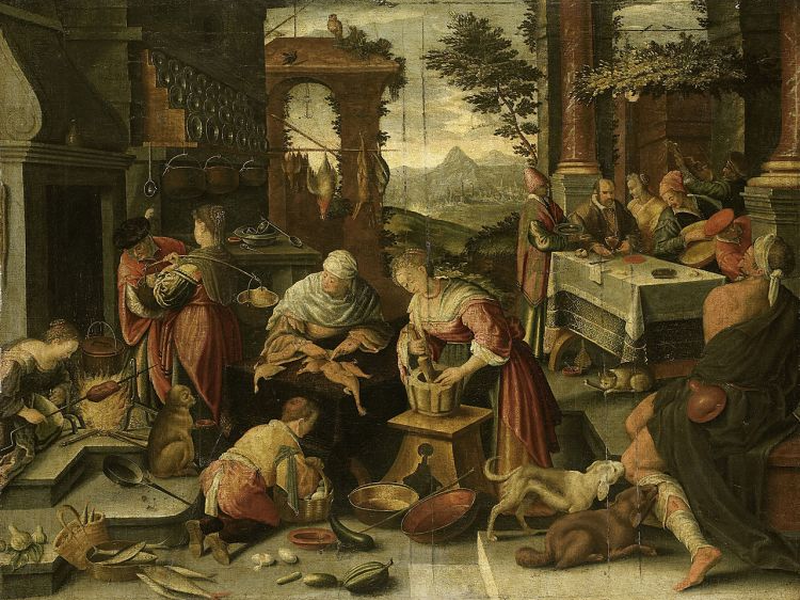
de-rijke-man-en-de-arme-lazarus-by-jacopo-da-ponte-16th-century
Luke

Lazarus and the Rich Man

The parable of Lazarus and the nameless rich man is not an independent story. It is part of a long context that begins in Luke 15:1, where Jesus is eating with tax collectors and sinners and the scribes and Pharisees grumble. In response to their hardheartedness, Jesus tells a three-part…

by Ralph Allan SmithJuly 4, 2019
aaron-burden-uynrnfdkjwg-unsplash
Luke

Everybody has Dropsy - Luke 14:1-24

The Bible is written so that even when a reader cannot pick up on what might be deeper or more detailed aspects of a text, there is virtually always a message to be heard. In the ancient world, where the “reader” of Scripture would likely be a church official facing…

by Ralph Allan SmithJuly 2, 2019
communion
Biblical Theology

Fruit Trees and Grain Plants

The distinction between garden (or vineyard) and field begins in Genesis 2. This relates to the ordering of the formless world. Plants of the field are contrasted with the garden planted by God in Genesis 2:5&8. Later on, under the Old Covenant the Israelites will be required to keep their…

by James B. JordanJune 27, 2019

Showing page 77 of 309

See all

Showing page 8 of 43

See all
Philosophy

Derrida, Closet Platonist

In Specters of Marxism, Derrida advocates a strongly eschatological Marxism but without committing himself to the specifics of a Marxist analysis of capitalism (must as he advocates a “messianism without messiah”). In both cases, he reaches for a formal structure without content, deliberately, because “content is always deconstructible.” Further, any…

January 19, 2006

Vaporous labor

One man sits and does nothing; and eats himself up. Another labors alone without end; and eats himself up. One folds his hands and refuses to grab anything; and his hands are empty. Another grabs whatever comes near with both hands; and in the end his hands are empty too.…

January 18, 2006

Relativity

Surely Solomon believed there were absolute goods, or One Absolute Good, but he spends most of Ecclesiastes talking about relative goods. The Hebrew idiom tob . . . min (“good/better . . . than”) is used throughout chapters 4 and 7 to express the relative advantage of certain situations in…

January 18, 2006

Tragic Wisdom?

Among all the books of the Bible, Ecclesiastes appears to come closest to the tragic wisdom of the ancients. But this is an illusion. Solomon warns that it is folly to say that the old days were better than the present (7:10), and encourages patience because “the end of the…

January 18, 2006

Ahaz of Judah

The fraternal conflicts between Israel and Judah foreshadow later conflicts between Israel and the true Jew, Jesus. And so, when the Northern Kingdom allies with Aram (its traditional enemy) against Ahaz of Judah, it foreshadows the alliance of Jew and Gentile against the great Son of God. Pilate and Herod…

January 18, 2006
Philosophy

Postmodernity and Social Theory

The late Gillian Rose characterized the postmodern rejection of metaphysics as a triumph of social theory over philosophy, a triumphy that “re-enacts the earlier reaction, coterminous with the founding of modernity, according to which philosophy after Kant was ‘superseded’ by social theory . . . . It resulted in the…

January 18, 2006

Showing page 1898 of 2212

Browse by Category

In Medias Res

Your weekly digest for all things Theopolis.

Donate

Theopolis is nearly 100% donor-supported. Consider joining us on our mission.