Theopolis Logo

Writing

Explore our collection of theological essays, biblical studies, and reflections on faith and culture.

See all
screen-shot-2022-08-04-at-9-36-57-am
Matthew

Paul Doesn't Care About Universal Individual Sinfulness or General Revelation

One reason readers assume Paul is trying to prove that all human beings are sinful is that they understand him to be arguing that no one can keep the law. That means, they think, his opponents must believe that human nature is potentially sinless. Taking Paul’s statement that, if you…

by Mark HorneJune 17, 2013

karsten-wurth-imegmbunara-unsplash
Mission

Dreams and Visions

[Note: This post was written prior to our name changing to Theopolis Institute.] What is Trinity House for? Three things: We aim to advance the reformation of the church and, through the church, to promote the renewal of culture; in furthering reformation, we aspire to be a site of fraternal,…

by Peter LeithartJune 12, 2013
sixteen-miles-out-al48tflf4e8-unsplash
Deuteronomy

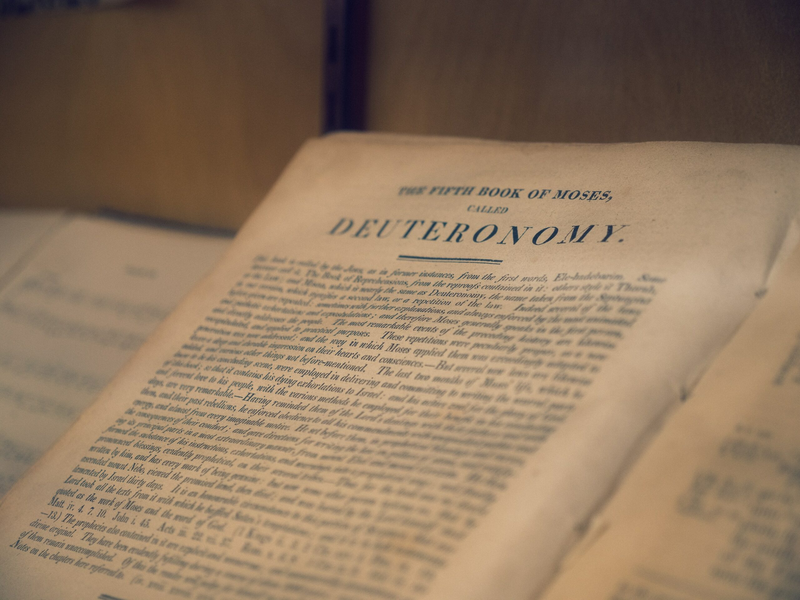
Sons to Yahweh your God!

This is the third in a series of studies of the Third Word, and especially of Deuteronomy 14. In 1979 Stephen Kaufman penned a groundbreaking essay on Deuteronomy, arguing that it was a meticulously structured and carefully composed book. In his view, chapters 12 to 26 in particular follow the…

by Ralph Allan SmithJune 10, 2013
kelly-sikkema-gpoh17dxqdm-unsplash
Romans

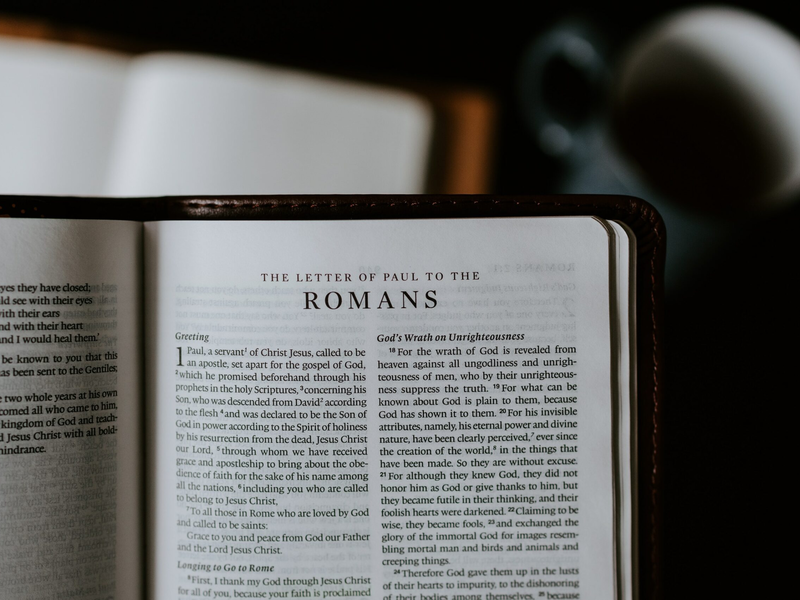
How is Wrath Revealed?

A large mistake is made in understanding Romans if one assumes that Paul is concerned with proving the fact that no one can ever live without sin—or that all attempts at obeying God’s commands are at least tainted with human sinfulness. The first problem with such an assumption is that…

by Mark HorneJune 5, 2013
chris-bair-ndczc5739ck-unsplash
Deuteronomy

The Third Word

This is the second in a series of studies on the Third Word, and especially on the food laws of Deuteronomy 14. In the second part of this series, I argue that Moses’ reworking of the Ten Words in Deuteronomy 5 includes adding nuance to the Third Word. This prepares…

by Ralph Allan SmithJune 3, 2013
yannis-papanastasopoulos-if_29sed7ta-unsplash
Culture

Turning Babel into a Beast

Recent months have brought a lively discussion of Christian participation in the culture war. On the one hand, the pro-life movement appears to be making some slow progress on the abortion issue. The trial of abortionist and serial murderer Kermit Gosnell has the potential to awaken those who are nominally…

by Joe RigneyMay 29, 2013

Showing page 193 of 309

See all

Showing page 8 of 43

See all

Times

Choon-Leong Seow has some helpful comments about the “time for this, time for that” poem in Ecclesiastes 3. He points out that the thrust of the section is about God’s control of times and portions. As evidence, he notes that the word “season” us normally used “of predetermined or appointed…

January 7, 2006
Philosophy

Objectivity and incarnation

In his early work on Husserl’s treatise on the origins of geometry, Derrida highlights the critical insight that the objectivity and universality of geometric axioms depends, paradoxically, on their embodiment in writing. On the one hand, geometry is “there for ‘everyone.’” Yet, “how does geometrical ideality (just like that of…

January 7, 2006
Philosophy

The Hebraism of Postmodernism

Postmodernism, as I’ve indicated in previous posts, is many things, some of which are quite inimical to Christian faith. But in important respects, postmodernism - especially the thought of Derrida - is a Hebraic protest against Hellenized philosophy. In his fine recent book on Derrida, James KA Smith suggests that…

January 7, 2006
History

Paradox of Community

Bauman suggests that postmodernity, which is the “age of contingency fur sich,” is also the age of community. Yet, the communities that are possible within postmodern culture are inherently unstable; they are “clouds of communities”: “Such communities will never be anything like Tonnies’s cosy and unreflective (cosy because unreflective) homes…

January 6, 2006
Philosophy

Skepticism

The arguments in favor of skepticism were summarized by Aenesidemus in the first century B.C. in his Pyrrhonian Principles . Aenesidemus brought together the arguments under “ten modes” or “ten tropes,” helpfully summarized at http://plato.stanford.edu/entries/skepticism-ancient/#LPA as they were stated by Sextus Empricus. The ten modes are reproduced below. (Mates refers…

January 6, 2006

Quenching Spirit

Reflecting further on the pastoral applications of Solomon’s phrase “shepherding wind”: Every believer is born of the Spirit, and blows where he wills, and a pastor is in the business of shepherding wind. In this context, “quenching the Spirit” might refer to poor shepherding that tries to suppress the wind.…

January 6, 2006

Showing page 1902 of 2212

Browse by Category

In Medias Res

Your weekly digest for all things Theopolis.

Donate

Theopolis is nearly 100% donor-supported. Consider joining us on our mission.