Theopolis Logo

Writing

Explore our collection of theological essays, biblical studies, and reflections on faith and culture.

See all
screen-shot-2023-02-24-at-1-48-41-pm
Biblical Chronology

Chronologies and Kings: Part 3

The chronology of the Kings of Judah and Israel can be divided into three periods with clearly defined boundaries. The first period begins with the death of Solomon and the accessions of Rehoboam in the south (Judah) and Jeroboam in the north (Israel). It ends with the deaths of Ahaziah…

by James B. JordanSeptember 22, 1991

johann-walter-bantz-clv9dfjlwac-unsplash-1-5
Art

Arts & Play, Part 1

Most modern people regard the arts as essentially decorative. They are hardly very important, as compared to business, politics, or religion. Yet, from a Biblical point of view, the arts lie close to the heart of human life. The universe that God created is itself an artistic masterpiece by the…

by James B. JordanSeptember 22, 1991
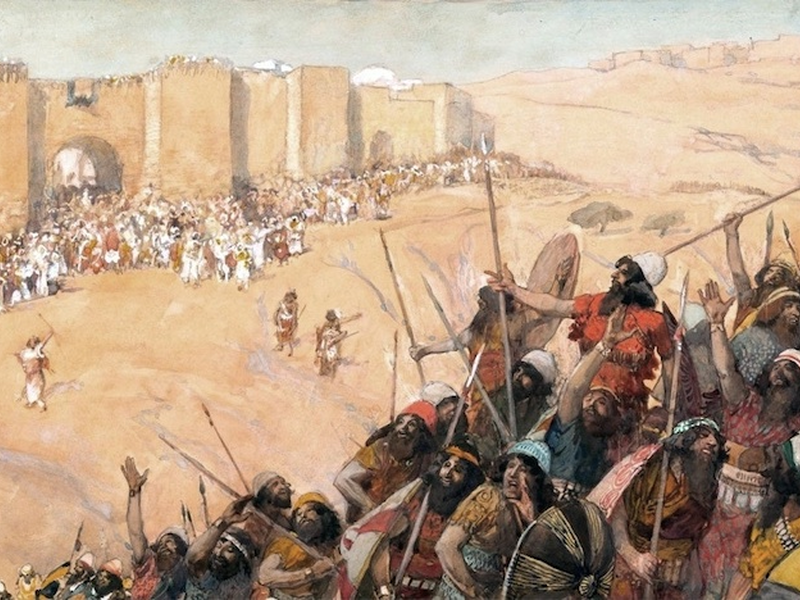
6273e95e0f5ac766258d8cf3_joshuasconquestoftheland-2
Exodus

Chronologies and Kings, Part 2

Before we move into a detailed survey of the history and chronology of the kings of Israel and Judah, let us review the chronological information that leads from creation to the kingdom. This will be helpful both to new readers of these essays, and a reminder for those who have…

by James B. JordanAugust 22, 1991
screen-shot-2023-02-24-at-1-48-41-pm
Biblical Chronology

Chronologies and Kings, Part 1

We have completed our overall survey of Biblical chronology, and now turn to a detailed examination of the Biblical information regarding the chronology of Israel’s kings. The first piece of chronological information we have regarding Israel’s kings is very cryptic, and it serves as an guide to the interpretation of…

by James B. JordanJuly 22, 1991
screenshot-2023-08-09-at-2-13-32-pm
Biblical Horizons

Book Review - To Take Place: Toward Theory in Ritual

Jonathan Z. Smith, To Take Place: Toward Theory in Ritual (Chicago: University of Chicago Press, 1987). Reviewed by Peter J. Leithart. The philosophes of the 18th century often attacked Christendom using the tools of anthropology and comparative religion. Rousseau contrasted the idyllic equality of primitive, natural peoples with the bondage…

by Peter LeithartJuly 6, 1991
screenshot-2023-08-09-at-1-47-41-pm
Biblical Horizons

Book Review: The Rise of Magic in Early Medieval Europe

Valerie I. J. Flint, The Rise of Magic in Early Medieval Europe (Princeton University Press, 1991). Reviewed by Peter J. Leithart. Valerie I. J. Flint, Professor of History at the University of Auckland, New Zealand, is refreshingly candid about her reasons for undertaking a study of The Rise of Magic…

by Peter LeithartJuly 6, 1991

Showing page 295 of 309

See all

Showing page 8 of 43

See all

Structure in 1 Chronicles 26

1 Chronicles 26:1-19 lists the names and positions of gatekeepers at Solomon's temple. The passage is framed by references to the “allotment” or “apportionment” of assignments to Korahites (v. 1) and sons of Korah and Merari (v. 19). Within this frame, the text moves in a complex parallel fashion through…

February 21, 2017

All Great Art Is Praise

“T he art of man is the expression of his rational and disciplined delight in the forms and laws of the creation of which he forms a part.” This is the first thesis of John Ruskin's “All Great Art Is Praise,” in The Laws of Fesole . Rationality is essential…

February 21, 2017

Demonstrative Complications

I n their 1662 treatise on Logic, or the Art of Thinking , Antoine Arnauld and Pierre Nicole question the straightforwardness of the Calvinist logical analysis concerning the Eucharistic “This is my body.” They summarise the argument this way: “Their claim is that in Jesus Christ’s assertion, ‘This is my…

February 20, 2017

Passivity and Freedom

I ngolf Dalferth thinks we are Creatures of Possibility . By that, he means that “we are creatures in the making whose actual becoming depends on possibilities beyond our control that occur in our lives as opportunities and chances that we can neglect and miss or take up and use”…

February 17, 2017

The State after ‘68

A ccording to Pierre Manent ( Beyond Radical Secularism ), May 1968 marked a critical turning point in the political history ofFrance. Despite the persistence of the “Gaullist” party in political power, ‘68 undermined “collective rules, both political and merely social. The citizen of action was followed by the individual…

February 17, 2017

On Separating Church and State

S eparation of church and state, religion and politics, is not “sufficient unto itself,” argues Pierre Manent ( Beyond Radical Secularism ). After all, he points out, citizens are believers, believers citizens, and they don’t cease to be one when they take up the role of the other. Separation “suggests…

February 17, 2017

Showing page 204 of 2212

Browse by Category

In Medias Res

Your weekly digest for all things Theopolis.

Donate

Theopolis is nearly 100% donor-supported. Consider joining us on our mission.