Theopolis Logo

Writing

Explore our collection of theological essays, biblical studies, and reflections on faith and culture.

See all
screen-shot-2022-08-04-at-9-36-57-am
Matthew

Paul Doesn't Care About Universal Individual Sinfulness or General Revelation

One reason readers assume Paul is trying to prove that all human beings are sinful is that they understand him to be arguing that no one can keep the law. That means, they think, his opponents must believe that human nature is potentially sinless. Taking Paul’s statement that, if you…

by Mark HorneJune 17, 2013

karsten-wurth-imegmbunara-unsplash
Mission

Dreams and Visions

[Note: This post was written prior to our name changing to Theopolis Institute.] What is Trinity House for? Three things: We aim to advance the reformation of the church and, through the church, to promote the renewal of culture; in furthering reformation, we aspire to be a site of fraternal,…

by Peter LeithartJune 12, 2013
sixteen-miles-out-al48tflf4e8-unsplash
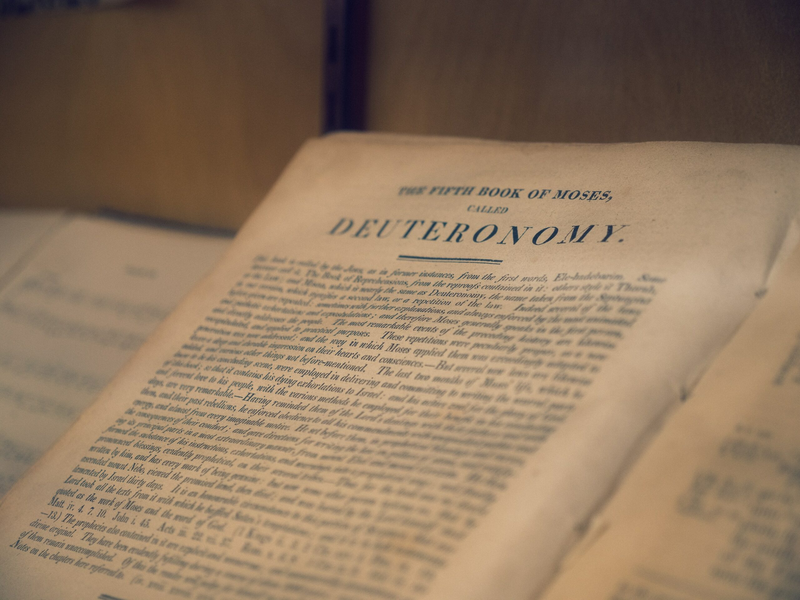
Deuteronomy

Sons to Yahweh your God!

This is the third in a series of studies of the Third Word, and especially of Deuteronomy 14. In 1979 Stephen Kaufman penned a groundbreaking essay on Deuteronomy, arguing that it was a meticulously structured and carefully composed book. In his view, chapters 12 to 26 in particular follow the…

by Ralph Allan SmithJune 10, 2013
kelly-sikkema-gpoh17dxqdm-unsplash
Romans

How is Wrath Revealed?

A large mistake is made in understanding Romans if one assumes that Paul is concerned with proving the fact that no one can ever live without sin—or that all attempts at obeying God’s commands are at least tainted with human sinfulness. The first problem with such an assumption is that…

by Mark HorneJune 5, 2013
chris-bair-ndczc5739ck-unsplash
Deuteronomy

The Third Word

This is the second in a series of studies on the Third Word, and especially on the food laws of Deuteronomy 14. In the second part of this series, I argue that Moses’ reworking of the Ten Words in Deuteronomy 5 includes adding nuance to the Third Word. This prepares…

by Ralph Allan SmithJune 3, 2013
yannis-papanastasopoulos-if_29sed7ta-unsplash
Culture

Turning Babel into a Beast

Recent months have brought a lively discussion of Christian participation in the culture war. On the one hand, the pro-life movement appears to be making some slow progress on the abortion issue. The trial of abortionist and serial murderer Kermit Gosnell has the potential to awaken those who are nominally…

by Joe RigneyMay 29, 2013

Showing page 193 of 309

See all

Showing page 8 of 43

See all
Literature

The Bible and Other Tragedies

In a book written in the late 1370s, the surgeon John Arderne prescribed “the Bible and other tragedies” as remedies. These books were good sources, as Henry Ansgar Kelly explains in summarizing Arderne’s point, “for humorous stories of a good and decent kind that doctors can use to provoke their…

January 28, 2004
Theology

Barth on Faith

Barth defines faith as the “determination of human action by the being of the Church and therefore by Jesus Christ, by the gracious address of God to man.” While there may be weaknesses with this, there are several commendable things about the definition: 1) It does not polarize faith and…

January 27, 2004
Theology

Theology as Science Again

If, as Barth says, theology NEED not be part of the genus “science,” why has it been so designated? It appears that the impetus is an effort to achieve precisely the things that Barth says it does NOT need from science. Barth says, “As regards method, [theology] has nothing to…

January 27, 2004
Theology

Theology as Science?

Barth quotes from J. Gerhard, who rejected the designation of theology as a science. One of his grounds was: ” scientiae certitudo ab internis et inhaerentibus principiis, fidei vero ab externis videlicet ab autoritate revelantis pendet ,” which in substance means that science derives its certainty from principles that are…

January 27, 2004

The Oikoumene in the NT

Jim Jordan has pointed out that the Greek word “oikoumene” is used in the NT to refer to the Hellenistic and Helleno-Roman world, rather than to the entire inhabited earth. It could be translated as “empire.” Against this background, the usage in Heb 2:5 is very striking, since it talks…

January 27, 2004

Adam and the Dragon

A discussion of death in the prefall world led to this thought: What was Adam supposed to do when a big dragon came to his wife and began tempting her to sin? I think he was supposed to do exactly what the Last Adam did: Crush the serpent’s head. But…

January 26, 2004

Showing page 2131 of 2212

Browse by Category

In Medias Res

Your weekly digest for all things Theopolis.

Donate

Theopolis is nearly 100% donor-supported. Consider joining us on our mission.