Theopolis Logo

Writing

Explore our collection of theological essays, biblical studies, and reflections on faith and culture.

See all
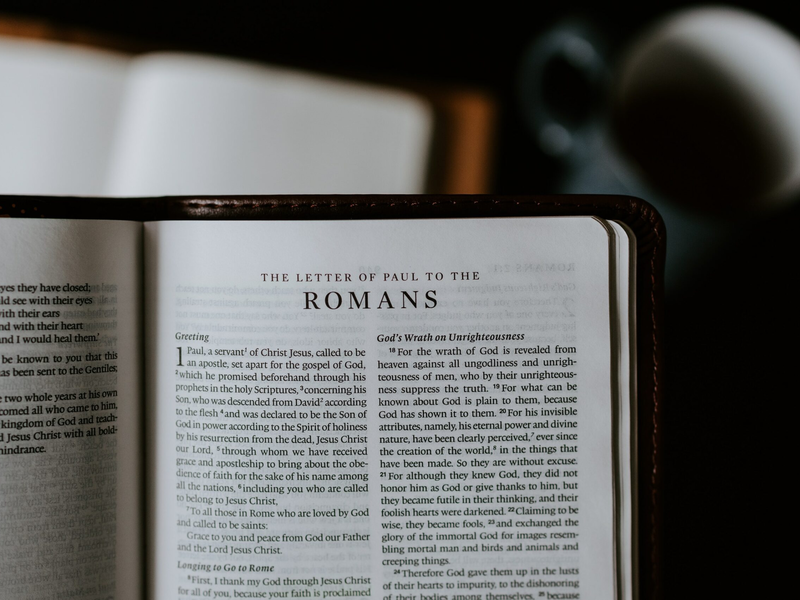
kelly-sikkema-gpoh17dxqdm-unsplash
Romans

Paul’s Gospel & the Theme of Romans

Paul, a bond-servant of Christ Jesus, called as an apostle, set apart for the gospel of God, which He promised beforehand through His prophets in the holy Scriptures, concerning His Son, who was born of a descendant of David according to the flesh, who was declared the Son of God…

by Mark HorneJune 6, 2003

screenshot-2023-07-27-at-10-25-35-am
History

The Nelda Boswell Scroll: The Apostle Paul’s Town Hall Meeting in Iconium

With the surprising discovery of the Nelda Boswell scroll historians have deciphered its contents and concluded that the apostle Paul returned to the region of Galatia shortly after he wrote the letter that we call Galatians. The evidence suggests that a number of local pastors, elders, and deacons, along with…

by Jeff MeyersJune 6, 2003
aaron-burden-qjdzyt_k8xg-unsplash
Jonah

Jonah, the Judaizers, and the Gospel

Second Temple Judaism was a form of covenantal nomism, according to E. P. Sanders’ terminology. This means that Torah-observance was a way of expressing loyalty to the Lord of the covenant who had graciously elected Israel. I think Sanders’ view (taken up in bits and pieces and with some modifications…

by Rich LuskJune 6, 2003
Theologia

Gratitude or Faith?

We often hear that the key to Christian obedience is thankfulness for what God has done. But the Bible stresses faith and hope much more than gratitude. The Baptist pastor and author John Piper has written, “Nowhere in the Bible is gratitude connected explicitly with obedience as a motivation. We…

by Mark HorneJune 6, 2003
aaron-burden-qjdzyt_k8xg-unsplash
Federal Vision

God’s Righteousness & Our Justification

One of the questions that is commonly asked about Tom Wright regards his teaching about how Paul uses the term “the righteousness of God.” Since Wright’s interpretation of the term in Paul’s epistles is commonly mentioned in passing but rarely analyzed, it seems like a good idea to explicitly spell…

by Mark HorneJune 6, 2003
jordan-wozniak-xp_agmeea6s-unsplash
Genesis

Forever Means Forever: God’s Promises to the Jews

If God promised a certain land to the seed of Abraham, saying that it would be theirs “forever” (Gen. 13:15), why do Reformed churches teach that the Jews permanently lost their right to the land? What about all these Old Testament “forever” promises and prophesies made to the Jews? How…

by Jeff MeyersJune 6, 2003

Showing page 230 of 309

See all

Showing page 8 of 43

See all

Shakespeare on Sacraments

In their essay on the Eucharist in Cultural Reformations , David Aers and Sarah Beckwith notes that “one of the central images in the exhortations to Holy Communion in the Book of Common Prayer and also in the ‘Homily of the Worthy Reception’ is the image of the heavenly banquet…

May 13, 2016

Reformation Crucifixion

In the second volume of his study of the cross in Western art ( The Triumph of the Cross ), Richard Viladesau notes that “the period immediately preceding the Reformation was one in which Christ's passion was treated with graphic emphasis on the violence of the events and on the…

May 13, 2016

Worthy Reception

In a contribution to Cultural Reformations , David Aers and Sarah Beckwith explain that “One of the chief reasons why Cranmer and other reformers thought the rejection of transubstantiation was so essential was that it negated the act of repentance and reception. If the body of Christ was e x…

May 12, 2016

Augustinian Eucharist

David Aers and Sarah Beckwith argue that Augustine's interpretation of John 6 cannot be understood in a Zwinglian or Wycliffite sense (essay in Cultural Reformations , 153). Augustine does say “Believe and you have eaten,” but Augustine's framework for saying this is corporate and ecclesial. As evidence, they summarize Augustine's…

May 12, 2016

Disenchantment and the Sacrifice of Intellect

Theology often lays claim to scientific status, Weber observes, but in doing so does something that no genuine science does: It operates with substantive presuppositions, especially the assumption that the cosmos is meaningful. In “Science as a Vocation,” he writes, “All theology represents an intellectual rationalization of the possession of…

May 12, 2016

From the Mountain

John is carried by the Spirit to a “great and high mountain” (Revelation 21:9-10), where he sees new Jerusalem descend from heaven. It's the last mountain in Bible, in line with Eden, Sinai, Zion, Moriah, Tabor, Olives. The link with Sinai is especially important, but not because this is a…

May 11, 2016

Showing page 290 of 2212

Browse by Category

In Medias Res

Your weekly digest for all things Theopolis.

Donate

Theopolis is nearly 100% donor-supported. Consider joining us on our mission.