Theopolis Logo

Writing

Explore our collection of theological essays, biblical studies, and reflections on faith and culture.

See all
cloister

Gatekeepers

1 Chronicles 9:1 seems to bring the genealogies of 1 Chronicles to an end. The Chronicler has recorded the genealogy of the human race from Adam, focusing on the descendants of Abraham through Jacob. Summing it all up, he says, “So all Israel was enrolled by genealogies; and behold, they…

by Peter LeithartJune 21, 2016
trinity-1-2
Trinity

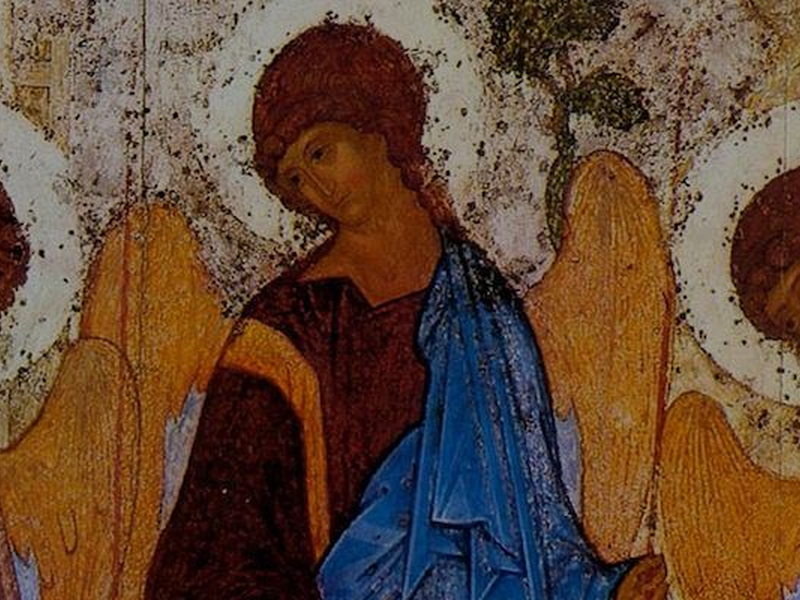
Are the Divine Persons Persons?

The “personalist” understanding of the Trinity, articulated most influentially in the work of John Zizioulas, has fallen on hard times. Recent scholars have attacked Zizioulas’s idea that Cappadocian Trinitarianism represented an ontological revolution, hammering on the distinction between divine and human personhood. Michel Barnes’s conclusion is the most drastic of…

by Peter LeithartJune 16, 2016
img_4660-2
Architecture

On Biblical Theology

Biblical Theology is often defined as the historical unfolding of God’s revelation, or of God’s revelation and of the history of his covenantal redemption and transformation of humanity and the world. In practice, Biblical Theology is usually broader than this, and also includes the study of literary structure and of…

by James B. JordanJune 14, 2016
laughing_statue_by_xxbobbiie-d5f0meh-2
Humor

Wise Laughter

We are made to be happy. Created to enter into the eternal joy of God, our whole being inclines to that end, but the fallen world has put forth barriers and by our own sin we bar ourselves from that endless delight, and death blinds us to that reality. Yet…

by Remy WilkinsJune 7, 2016
img_7664
Liturgy

Why Theopolis? Take Two

At the end of Revelation, John sees the heavenly city descending to earth. The city shines with the brilliance of God's glory, which lightens the nations, so that kings bring their glory to the city. This is not a vision of the final new heaven and new earth. It's a…

by Peter LeithartJune 2, 2016
trinity-1-2
Attributes of God

How Can We Talk About God?

“No one has ever seen God,” writes John (John 1:18). If this is the case, then how can we speak about God? Some people say we actually cannot. Or at least we cannot speak about God positively, i.e. who He is. We can only say who or what God is…

by Bogumil JarmulakMay 31, 2016

Showing page 130 of 309

See all

Showing page 8 of 43

See all

Descartes, Occasionalist

According to Norman Kemp Smith ( Problems in the Cartesian Philosophy ), “The great achievement of Galileo and Descartes in physical science consisted in a new theory of motion. Whereas by the Greek Atomists and by Aristotle motion was anthropomorphically conceived, as, like human activity, coming into being, exhausting itself…

April 21, 2016
Shakespeare

From Ceremony to Theater

Richard II is often cited as Shakespeare's prime example of a divine-right king, a king by ceremony, the paragon of sacramental kingship. His play depicts the unraveling of medieval kingship and the formation of a new basis for politics. As Alexander Leggatt ( Shakespeare's Political Drama ) argues, however, the…

April 21, 2016

Death and Resurrection in Acts

MD Goulder argues that death and resurrection is the narrative pattern of Acts ( Type and History in Acts ). In most cases, there is no actual death. There is near-death, and then deliverance: “The apostolic college, Peter, Paul, in turn go down to the pit: and from the pit…

April 20, 2016

Coriolanus to Cleopatra

Paul Cantor ( Shakespeare's Rome ) argues that Shakespeare wrote Coriolanus and Antony and Cleopatra as companion plays, marking the birth of the Republic and its decadent decline in the early empire. As evidence, he points to overlapping themes and literary features, and notes that there is a political and…

April 20, 2016

Descartes and the Mass

Descartes's early critics had many qualms about his new philosophy, but for theological critics the central question was how to square his views with the dogma of transubstantiation. Descartes claimed to be a faithful Roman Catholic, but philosophically he was opposed to the hylomorphic theory of matter on which traditional…

April 20, 2016

Geography of Mission

MD Goulder ( Type and History in Acts ) points out that the history recorded in Acts doesn't follow the Jerusalem-Judea-Samaria-ends of earth pattern that Jesus leads us to expect at the beginning of the book: “The four places are being given in their theological order: the holy city, the…

April 19, 2016

Showing page 297 of 2212

Browse by Category

In Medias Res

Your weekly digest for all things Theopolis.

Donate

Theopolis is nearly 100% donor-supported. Consider joining us on our mission.