Theopolis Logo

Writing

Explore our collection of theological essays, biblical studies, and reflections on faith and culture.

See all
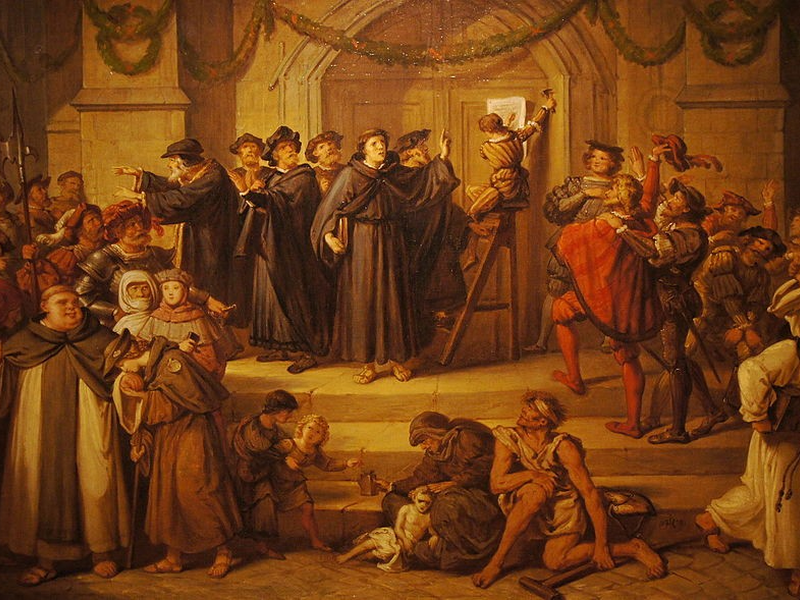
der_anschlag_von_luthers_95_thesen-1024x589
Church Calendar

Five Misconceptions of Reformation Day

For many people the date October 31 is significant not only for being the Eve of All Saints (All Hallows Eve, Halloween) but as the day in 1517 when Martin Luther nailed his 95 theses to the door of the Castle Church in Wittenburg. These theses were a list of…

by Timothy LeCroyOctober 31, 2017

sacre-bleu-r__kixb0i5m-unsplash
Church Calendar

Concerning Halloween

It has become routine in October for some Christian schools to send out letters warning parents about the evils of Halloween, and it has become equally routine for me to be asked questions about this matter. "Halloween" is simply a contraction for All Hallows’ Eve. The word "hallow" means "saint,"…

by James B. JordanOctober 26, 2017
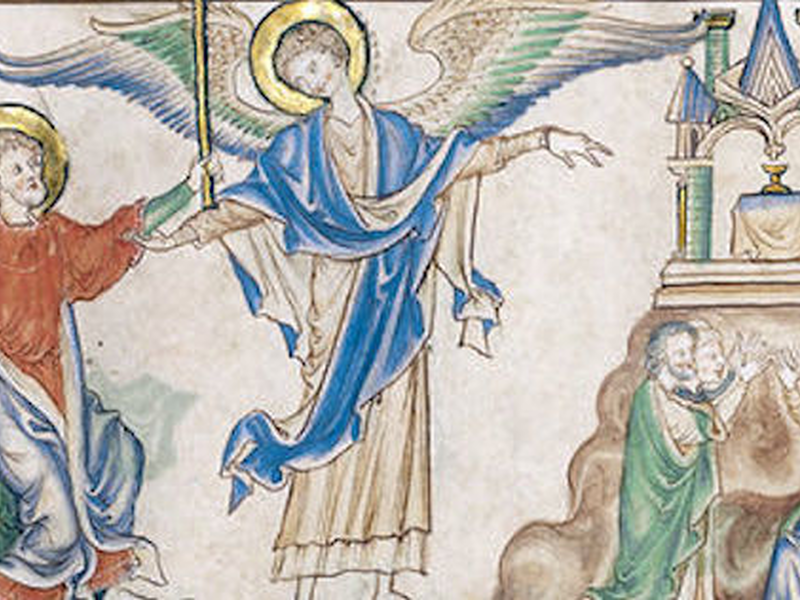
revelation-john-with-rod
Revelation

Preaching, An Art of Division

The following is an excerpt from Peter Leithart's forthcoming two-volume commentary on Revelation (T&T Clark). Y ou must prophesy again concerning many peoples and nations and tongues and kings,” a voice tells John (Rev. 10:11). Then someone gives him a “reed like a rod” and instructs him to measure (11:1).…

by Peter LeithartOctober 24, 2017
josiah-death

Back To Egypt

Josiah is an ideal Davidic king in many ways. He not only “did right,” but he “walked in the ways of his father David” and “did not turn aside to the right or to the left” (2 Chronicles 34:2). At the age of 16, he began to seek Yahweh, and…

by Peter LeithartOctober 19, 2017
augustine
Augustine

Augustine and the Music of Time

One of the best discussions of Augustine’s views on time comes from Jeremy Begbie’s Theology, Music, and Time (ch. 3). Following Paul Ricoeur, Begbie claims that Augustine’s distentio “is conceived as the three-fold present, and the threefold present as distentio . The distentio consists in the non-coincidence of the mind’s…

by Peter LeithartOctober 17, 2017
img_1043
How to Worship

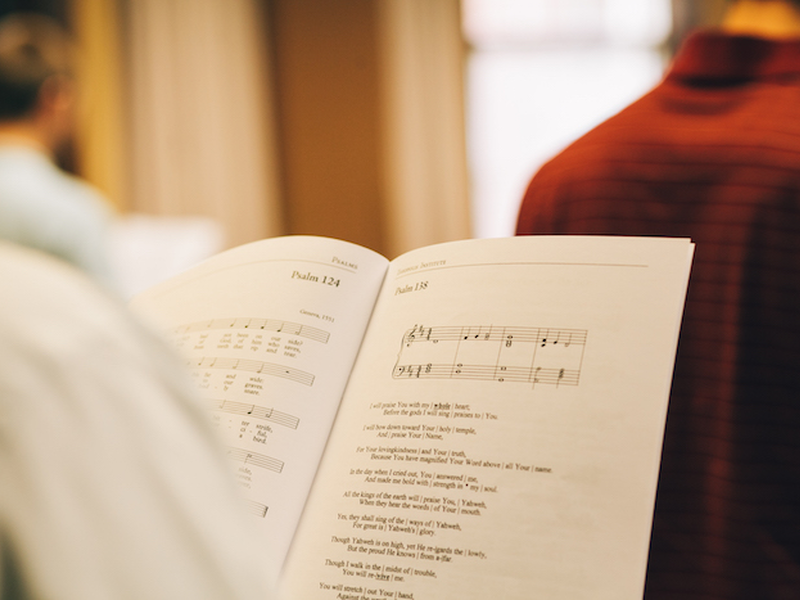
The Psalter Should be Woven into the Fabric of Worship

This has always been the position of the Christian Church, and from an historical perspective the present situation in evangelicalism is appalling. The early liturgies of the Church, which are still used in Episcopal and Lutheran worship, are laced with psalm phrases. The early hymns, such as the Te Deum…

by James B. JordanOctober 12, 2017

Showing page 104 of 309

See all

Showing page 8 of 43

See all

Eucharist, Evangelical and Catholic

Theodore Beza's opening speech at the Colloquy of Poissy was a model of irenic Protestantism (Nugent, Ecumenism is the Age of the Reformation ). He stressed the creedal commonalities of Rome and the Reformed, and argued that the differences were “matters of interpretation” and unnecessary accretions” (97). As Nugent says,…

September 16, 2015

Phone Booth

Way out in the Mojave desert is a phone booth. Some years ago, a resident of LA published a picture, which inspired Godfrey Daniels to start calling the phone. He was prepared to keep calling for years until someone picked up. A month later, Lorene Aiken, who worked at the…

September 16, 2015

Conformist Subversives

To secular analysts, “Progressive Pentecostals” seem naively apolitical. In their study of Global Pentecostalism , Donald Miller and Tetsunao Yamamori agree that the “integral” or “holistic” Pentecostals that they study are not social gospellers or liberation theologians. They don't aim to “reform social structures or challenge government policies.” They are…

September 16, 2015

Exit and Voice

What do people do when social institutions go wrong? Albert Hirschman ( Exit, Voice, and Loyalty ) argues that there are two main alternatives: One withdraws (exit) or one speaks out (voice). He admits that these categories sound “suspiciously neat,” but defends them because they “reflect a more fundamental schism:…

September 15, 2015

Deuteronomic Penalties

Deuteronomy 25 begins like a law-and-order text. Judges are to condemn the wicked and justify the innocent. Convicted criminals are beaten, and beaten publicly “in the presence” of the judge, beaten as much as his crime deserves (v. 2). Verse 3 takes a slight turn: It places a limit on…

September 15, 2015

Irenicism in the Reformation

“Perhaps irenicism is the finest synthesis of Renaissance and Reformation,” writes Donald Nugent in his 1974 monograph on the Colloquy of Poissy, Ecumenism in the Age of the Reformation (4). The irenicists had roots in the late medieval conciliarism and in Cusa's efforts to unite contraries, but it was humanism…

September 15, 2015

Showing page 376 of 2212

Browse by Category

In Medias Res

Your weekly digest for all things Theopolis.

Donate

Theopolis is nearly 100% donor-supported. Consider joining us on our mission.