Theopolis Logo

Writing

Explore our collection of theological essays, biblical studies, and reflections on faith and culture.

See all
emmanuel-phaeton-1bwmfmvybi8-unsplash
Federal Vision

The Righteous Judge

God is a righteous judge, And a God who has indignation every day. If a man does not repent, He will sharpen His sword; He has bent His bow and made it ready (Psalm 7.11, 12). David’s inspired lyrics do not sound very encouraging to modern ears–especially to modern Christian…

by Mark HorneJune 7, 2003
screenshot-2024-06-07-at-11-46-17-am
Luke

The Justification of the Good Samaritan

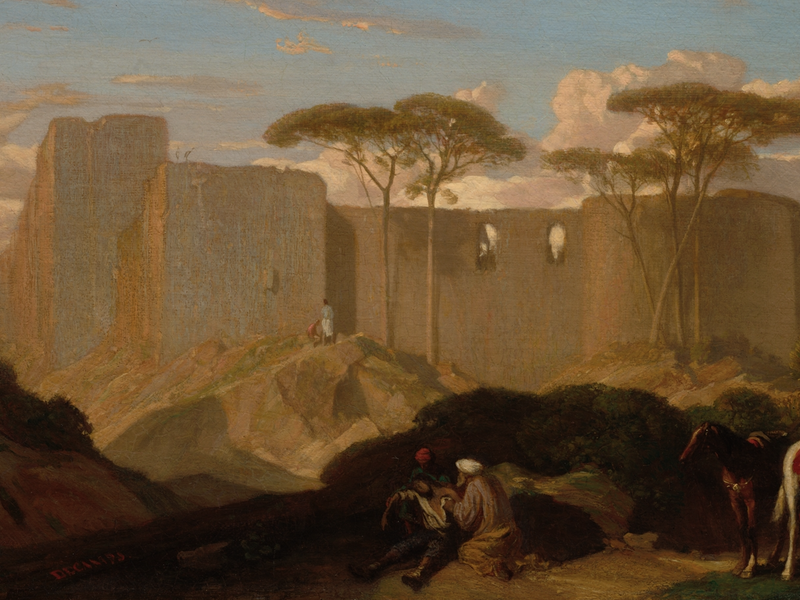
The story of the Good Samaritan (Lk. 10:25-37) is one of the best known and most loved of Jesus’ parables. I am not going to attempt to exegete the passage, as that has been done admirably and ably by others. Rather, I want to briefly examine what bearing the passage…

by Rich LuskJune 7, 2003
kelly-sikkema-gpoh17dxqdm-unsplash
1 Corinthians

The Grace of Judgment According to Works

In Romans 2.6-16, Paul writes, He will render to each one according to his works: to those who by patience in well-doing seek for glory and honor and immortality, he will give eternal life; but for those who are self-seeking and do not obey the truth, but obey unrighteousness, there…

by Mark HorneJune 7, 2003
karsten-wurth-imegmbunara-unsplash
Matthew

The Extra Mile: Matthew 5:38-42

It was still dark as David approached the crest of the little ridge. The eastern horizon was not even gray. It was early. But he knew this trail well. Every morning before dawn and every evening before dark, he would walk down to the well and carry water back to…

by Jeff MeyersJune 7, 2003
briana-tozour-mrfapsuyy8a-unsplash
Romans

Romans and God's Covenant Loyalty

The theme of Romans is the righteousness of God (Rom. 1:16-17). That is to say, Romans is something of a theodicy. Paul is defending God’s covenant faithfulness, particularly in light of Jewish unfaithfulness. How does it work? Without getting into exegetical details, we can still sketch out the big picture.…

by Rich LuskJune 6, 2003
jan-kahanek-g3o5ztrk2e4-unsplash
Federal Vision

Putting the New Perspective into Perspective: Some Thoughts on Second Temple Judaism

The New Perspective on Paul (NPP) is a loosely defined movement held together primarily by a common understanding of Second Temple Judaism. All NPP theologians basically adhere, with varying degrees of intensity and consistency, to Ed Sanders’ claims with regard to the nature of pre-70 A.D. Judaism. Sanders has sought…

by Rich LuskJune 6, 2003

Showing page 229 of 309

See all

Showing page 8 of 43

See all

Why Now?

Jesus prayed that the church's unity would reflect the unity of the Father and Son. Paul urged the Ephesians to cultivate the virtues of peace that would express the sevenfold unity of the church (Ephesians 4). That demand is a perennial one. But we've been divided for a long time.…

March 12, 2015

Fragile Fruitfulness

Israel is a vine, transplanted from Egypt (Psalm 80; Isaiah 5). She exists to produce wine that gladdens the hearts of men. Israel is the Dionysian people. Ezekiel brings out another dimension of the vine image: “Son of man, how is the wood of the vine better than any wood…

March 12, 2015

Judgment to the Corners

The oracle of judgment in Ezekiel 14:12-23 is structured as a fourfold judgment: sword, famine, beasts, plague (v. 21). The descriptions of judgment are laid out in four paragraphs that use repetitive, stereotyped language. Throughout, Yahweh says that even the intercession of Noah, Daniel, and Job could not rescue Judah…

March 12, 2015
Fairy Tales

The Political Economy of Fairy Tales

In a TLS review of several recent books on fairy tales, Fracesca Wade points to the political context and economic setting of early folk and fairy tale collections. Inspired by Herder, the Grimms, she observes, intended to recover Germanitas by study of natural German poetry: “Although the brothers drew widely…

March 12, 2015

Remembering the Present

In his Deja Vu and the End of History , Italian philosopher Paolo Virno explores the phenomenology of memory, especially in its relation to philosophies of history. The deja vu of the title isn't a metaphor; following Henri Bergson, Virno argues that it represents “the untrammelled extension of memory's jurisdiction,…

March 11, 2015

Potential, Act, and Violence

Paolo Virno ( Deja Vu and the End of History ) observes that potential and act occur simultaneously. Take language: “The language faculty irrupts into becoming in concomitance with the phrase that I am speaking. It appears precisely now, as I speak, neither before nor afterwards: but, note, right now…

March 11, 2015

Showing page 453 of 2212

Browse by Category

In Medias Res

Your weekly digest for all things Theopolis.

Donate

Theopolis is nearly 100% donor-supported. Consider joining us on our mission.