Theopolis Logo

Writing

Explore our collection of theological essays, biblical studies, and reflections on faith and culture.

See all
sinitta-leunen-dvibhmzsy8e-unsplash
Epistemology

A Cheer for the Mystics

Mystical theologians are often unguarded, extreme, un-nuanced, pressing to the edges of heresy, sometimes beyond. Still, the mystics are worthy of study. Why? Many reasons. Unlike some late medieval and post-Reformation dogmaticians, mystical theologians are often instinctively and richly Trinitarian. Historical-critical approaches to Scripture left mystical theologians virtually untouched; mystics…

by Peter LeithartSeptember 2, 2013
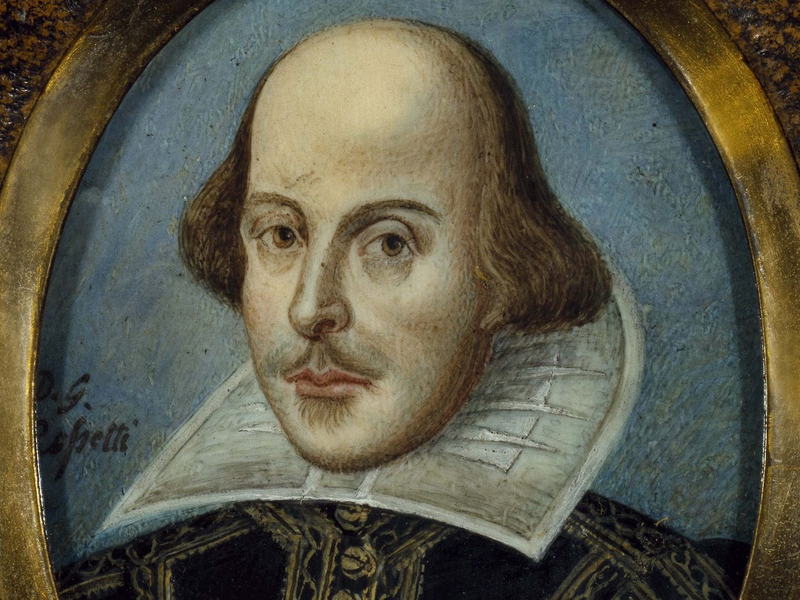
portrait-of-william-shakespeare-1564-1616-ca-1865
Literature

Shadow and Substance in Shakespeare's Venice

Portia of Belmont is a “lady richly left,” as Bassanio says of her in the first Act of The Merchant of Venice . Plus, she’s beautiful and wise. Suitors clamber to Belmont in hope. Her father knew it would be so, and in his will set up a fairy-tale test…

by Peter LeithartAugust 28, 2013
carlo-alberto-burato-smdx3gleu_m-unsplash
Liturgy

Liturgy Traps

[fve]http://vimeo.com/72195198[/fve]

by James B. JordanAugust 26, 2013
screen-shot-2022-05-12-at-12-07-23-pm
Deuteronomy

Victory Food

In the nature of the case, “the” Christian meditation on Deuteronomy 14:1-21 cannot be written. Meditation offers too many possibilities, opens too many doors. There is not one and only one correct set of associations for a Christian to consider when thinking of Deuteronomy 14:1-21. We could, for example, consider…

by Ralph Allan SmithAugust 21, 2013
aaron-burden-1ebsmyrau-s-unsplash
Romans

David's Sin and Israel's Salvation, Part I

Having retold the story of the cumulative sin of Israel leading to the great atonement on the cross, Paul then reemphasizes that, just as both Jew and Gentiles were locked into sin and judgment, now they are both justified by faith: Then what becomes of our boasting? It is excluded.…

by Mark HorneAugust 20, 2013
ben-white-w8qqn1pmqh0-unsplash
Deuteronomy

You are what you eat

Deuteronomy 14 is full of allusions to events of Israel’s history and other portions of Scripture. What would an Israelite learn by mediation on these allusions? The answer, I believe, is at least fourfold. Faith, Worship, War For the ancient Israelite first hearing Moses’ sermon, or perhaps hearing it read…

by Ralph Allan SmithAugust 15, 2013

Showing page 189 of 309

See all

Showing page 8 of 43

See all

Form and Type

It sure seems that the story of Joseph is a typological foreshadowing of the life of Jesus. Joseph is hated by his brothers; turned over to Gentiles; falsely accused; thrown into pit and prison; raised up, finally set on a throne, from which he gathers and distributes bread. Of course,…

March 5, 2015

Othering and Order

Jock Young ( Vertigo of Late Modernity ) discerns two sorts of “othering” in contemporary life: “the first is a conservative demonisation which projects negative attributes on the other and thereby grants positive attributes to oneself The second, very common yet rarely recognised, is a liberal othering where the other…

March 5, 2015

Fragmentation and Aestheticism

In several dense paragraphs in The Fragmented World of the Social , Axel Honneth describes the Gyorgy Lukacs's analysis of the fragmentation caused by capitalist society and the romantic reaction. There is, for starters, the fragmentation of the human being himself, induced by the capitalist separation of the worker from…

March 4, 2015

A World Beyond Morality

In his little book, Alone Again , Zygmunt Bauman summarizes his characteristic themes: We live in a liquid world, nothing permanent, nothing solid, nothing predictable. Typically pungent, Bauman points to “the overall tendency to dismantle, deregulate and dissipate the once solid and relatively lasting frames in which the concerns and…

March 4, 2015

Heifers, Serpents, Trees, Locusts

Jeremiah 46 is an oracle against Egypt, which, like Judah, is threatened by the advancing forces of Babylon. In the space of four verses (20-23), Jeremiah runs through a dizzying series of metaphors. Egypt is a pretty heifer (v. 20), and Nebuchadnezzar's army is a “horsefly” that is going to…

March 4, 2015

Making Selves Without Straw

The late Jock Young observes in his Vertigo of Late Modernity that our period is characterized by “a combination of factors, some long existing yet unique in their combination, others pre-existent yet transformed in the present period. The impact revolves around three axes, the disembeddedness of everyday life, the awareness…

March 4, 2015

Showing page 456 of 2212

Browse by Category

In Medias Res

Your weekly digest for all things Theopolis.

Donate

Theopolis is nearly 100% donor-supported. Consider joining us on our mission.