Theopolis Logo

Writing

Explore our collection of theological essays, biblical studies, and reflections on faith and culture.

See all
giammarco-zeh-ljawhtg-unsplash
Biblical Horizons

OPEN BOOK: Views and Reviews

Isaac E. Mozeson, The Word: The Dictionary that Reveals the Hebrew Sources of English (Northvale, NJ: Jacob Aaronson Inc., 1995), 310 pp. Reviewed by James B. Jordan. Once there was only one language in the world, the language God spoke to Adam. At the Tower of Babel, there came to…

by James B. JordanJune 28, 1996
tim-wildsmith-j6jv-mkdzqs-unsplash
Esther

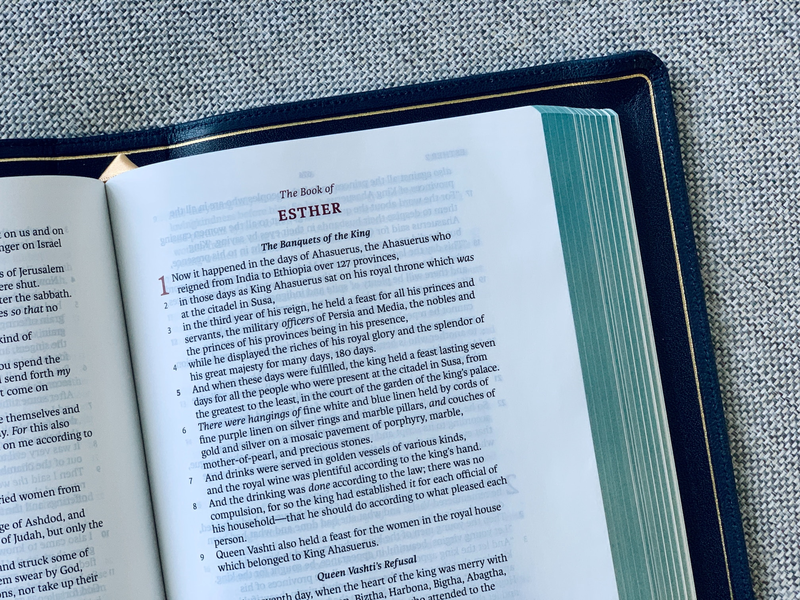
Esther: Historical & Chronological Comments (IV)

2. The Setting of the Book of Esther A. Xerxes (continued from previous issue) Ezra 6:14 says that the Jews finished building "according to the command of the God of Israel and the decree of Cyrus and Darius and Artaxerxes king of Persia." The problem with this verse is that…

by James B. JordanJune 28, 1996

ales-krivec-4mibe6zg5r0-unsplash
Acts

Jesus and Amalek

This essay goes with our previous study of the Amalek pattern back in Biblical Horizons No. 2. Since many do not have this essay, entitled "The Battle of Gog and Magog," let me cite the relevant paragraphs: Note in Genesis 12-15 that Abram moves into the land after escaping Pharaoh…

by James B. JordanJune 28, 1996
aaron-burden-1ebsmyrau-s-unsplash
Proverbs

The Strange Woman

Proverbs 7:6-23 is one of several passages early in the Proverbs in which Solomon warns his son about the wiles and dangers of the "strange woman." It is certainly quite proper to take these as straightforward warnings against sexual sins, and these are certainly warnings that need to be impressed…

by Peter LeithartJune 27, 1996
jan-kahanek-g3o5ztrk2e4-unsplash
Biblical Studies

Some Observations

1. In Luke 4:20 we read that after Jesus finished reading from Isaiah, "the eyes of all in the synagogue were fixed upon Him." This is usually taken in a psychological sense: They were amazed at Jesus somehow. I suggest that, as always, a merely psychological reading is a modern…

by James B. JordanMay 28, 1996
tim-wildsmith-j6jv-mkdzqs-unsplash
Esther

Esther: Historical & Chronological Comments (III)

2. The Setting of the Book of Esther Up to now we have assumed what we must prove, that the king in Esther is Darius the Great. While Biblical chronologists have usually taken this position, commentators on the book of Esther have often taken others as the king. One view,…

by James B. JordanMay 28, 1996

Showing page 265 of 309

See all

Showing page 8 of 43

See all

Barth on Justification

Barth’s theology of justification has many virtues. Let me highlight only a couple of them. For starters, Barth’s is an utterly, manically theocentric account of justification. This comes through in large ways and small. One of the most striking indications of this is the way he deals with the question…

November 18, 2014

Impure God

Vladimir Jankelevitch ( Le Pur et l’Impur , 11) observes that we apply the concept of purity to wine and milk, defining the purity of beverages in opposition to admixture of other ingredients. In each case “purity” prohibits mixture, especially mixture of a thing with its supposed opposite. Pure poetry…

November 18, 2014

God of the Gospel

Barth in fully Barthian regalia ( Church Dogmatics, IV.1 , 186-7): “As God was in Christ, far from being against Himself, or at disunity with Himself, He has put into effect the freedom of His divine love, the love in which He is divinely free. He has therefore done and…

November 17, 2014

Role Reversal

Barth famously answers Anselm’s Cur Deus Homo? by talking about the “Judge judged in our place” ( Church Dogmatics, IV.1 ). In a passage summarizing the gospel account of Jesus’s life, he gives this remarkable summary of the “exchange of roles” that occurs in the gospel: “Those who are to…

November 17, 2014

It Takes A God

A great Cur Deus Homo moment from Barth ( Church Dogmatics, IV.1 , 553): “What we men must suffer - if it is to be suffered in accordance with the righteousness of God - can be suffered for us only by God Himself as man: if, that is to say,…

November 17, 2014

Demonstration of Righteousness

“Did God need to justify Himself?” Barth asks ( Church Dogmatics, IV.1 , 567). Does He need to demonstrate His justice to human beings in the world? Barth answers, as expected, No: “He does not need anything.” True enough in the abstract: God needs nothing outside Himself. But once God…

November 17, 2014

Showing page 498 of 2212

Browse by Category

In Medias Res

Your weekly digest for all things Theopolis.

Donate

Theopolis is nearly 100% donor-supported. Consider joining us on our mission.