Theopolis Logo

Writing

Explore our collection of theological essays, biblical studies, and reflections on faith and culture.

See all
screen-shot-2023-02-24-at-1-48-41-pm
Biblical Chronology

Chronologies and Kings: Part 3

The chronology of the Kings of Judah and Israel can be divided into three periods with clearly defined boundaries. The first period begins with the death of Solomon and the accessions of Rehoboam in the south (Judah) and Jeroboam in the north (Israel). It ends with the deaths of Ahaziah…

by James B. JordanSeptember 22, 1991

johann-walter-bantz-clv9dfjlwac-unsplash-1-5
Art

Arts & Play, Part 1

Most modern people regard the arts as essentially decorative. They are hardly very important, as compared to business, politics, or religion. Yet, from a Biblical point of view, the arts lie close to the heart of human life. The universe that God created is itself an artistic masterpiece by the…

by James B. JordanSeptember 22, 1991
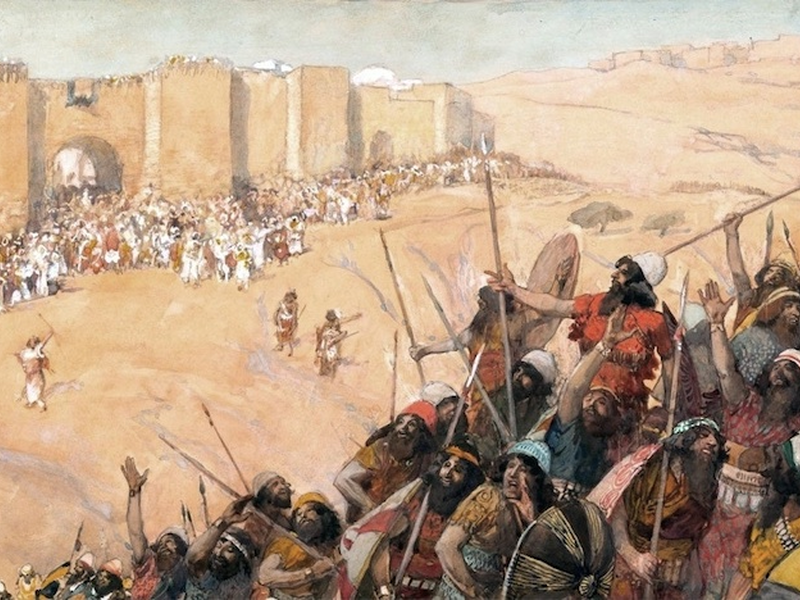
6273e95e0f5ac766258d8cf3_joshuasconquestoftheland-2
Exodus

Chronologies and Kings, Part 2

Before we move into a detailed survey of the history and chronology of the kings of Israel and Judah, let us review the chronological information that leads from creation to the kingdom. This will be helpful both to new readers of these essays, and a reminder for those who have…

by James B. JordanAugust 22, 1991
screen-shot-2023-02-24-at-1-48-41-pm
Biblical Chronology

Chronologies and Kings, Part 1

We have completed our overall survey of Biblical chronology, and now turn to a detailed examination of the Biblical information regarding the chronology of Israel’s kings. The first piece of chronological information we have regarding Israel’s kings is very cryptic, and it serves as an guide to the interpretation of…

by James B. JordanJuly 22, 1991
screenshot-2023-08-09-at-2-13-32-pm
Biblical Horizons

Book Review - To Take Place: Toward Theory in Ritual

Jonathan Z. Smith, To Take Place: Toward Theory in Ritual (Chicago: University of Chicago Press, 1987). Reviewed by Peter J. Leithart. The philosophes of the 18th century often attacked Christendom using the tools of anthropology and comparative religion. Rousseau contrasted the idyllic equality of primitive, natural peoples with the bondage…

by Peter LeithartJuly 6, 1991
screenshot-2023-08-09-at-1-47-41-pm
Biblical Horizons

Book Review: The Rise of Magic in Early Medieval Europe

Valerie I. J. Flint, The Rise of Magic in Early Medieval Europe (Princeton University Press, 1991). Reviewed by Peter J. Leithart. Valerie I. J. Flint, Professor of History at the University of Auckland, New Zealand, is refreshingly candid about her reasons for undertaking a study of The Rise of Magic…

by Peter LeithartJuly 6, 1991

Showing page 295 of 309

See all

Showing page 8 of 43

See all

Barth on Justification

Barth’s theology of justification has many virtues. Let me highlight only a couple of them. For starters, Barth’s is an utterly, manically theocentric account of justification. This comes through in large ways and small. One of the most striking indications of this is the way he deals with the question…

November 18, 2014

Impure God

Vladimir Jankelevitch ( Le Pur et l’Impur , 11) observes that we apply the concept of purity to wine and milk, defining the purity of beverages in opposition to admixture of other ingredients. In each case “purity” prohibits mixture, especially mixture of a thing with its supposed opposite. Pure poetry…

November 18, 2014

God of the Gospel

Barth in fully Barthian regalia ( Church Dogmatics, IV.1 , 186-7): “As God was in Christ, far from being against Himself, or at disunity with Himself, He has put into effect the freedom of His divine love, the love in which He is divinely free. He has therefore done and…

November 17, 2014

Role Reversal

Barth famously answers Anselm’s Cur Deus Homo? by talking about the “Judge judged in our place” ( Church Dogmatics, IV.1 ). In a passage summarizing the gospel account of Jesus’s life, he gives this remarkable summary of the “exchange of roles” that occurs in the gospel: “Those who are to…

November 17, 2014

It Takes A God

A great Cur Deus Homo moment from Barth ( Church Dogmatics, IV.1 , 553): “What we men must suffer - if it is to be suffered in accordance with the righteousness of God - can be suffered for us only by God Himself as man: if, that is to say,…

November 17, 2014

Demonstration of Righteousness

“Did God need to justify Himself?” Barth asks ( Church Dogmatics, IV.1 , 567). Does He need to demonstrate His justice to human beings in the world? Barth answers, as expected, No: “He does not need anything.” True enough in the abstract: God needs nothing outside Himself. But once God…

November 17, 2014

Showing page 498 of 2212

Browse by Category

In Medias Res

Your weekly digest for all things Theopolis.

Donate

Theopolis is nearly 100% donor-supported. Consider joining us on our mission.