Theopolis Logo

Writing

Explore our collection of theological essays, biblical studies, and reflections on faith and culture.

See all
cloister

Gatekeepers

1 Chronicles 9:1 seems to bring the genealogies of 1 Chronicles to an end. The Chronicler has recorded the genealogy of the human race from Adam, focusing on the descendants of Abraham through Jacob. Summing it all up, he says, “So all Israel was enrolled by genealogies; and behold, they…

by Peter LeithartJune 21, 2016
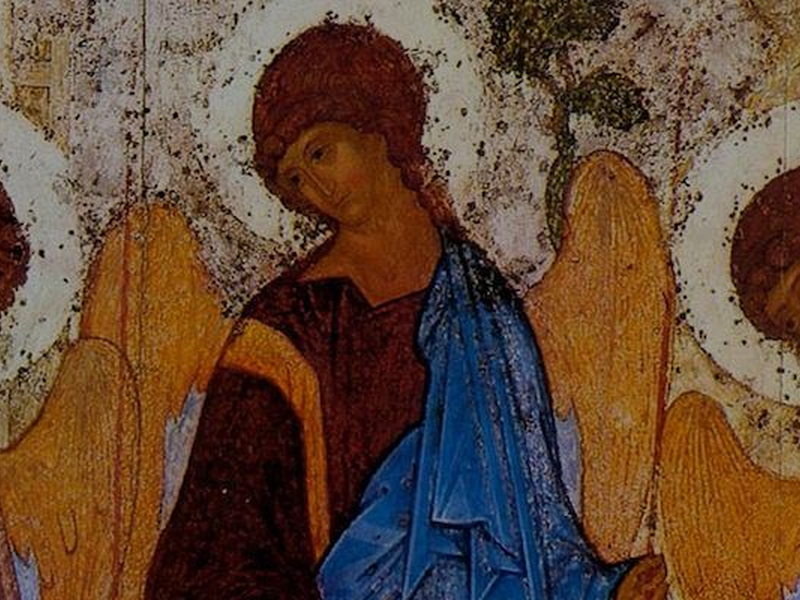
trinity-1-2
Trinity

Are the Divine Persons Persons?

The “personalist” understanding of the Trinity, articulated most influentially in the work of John Zizioulas, has fallen on hard times. Recent scholars have attacked Zizioulas’s idea that Cappadocian Trinitarianism represented an ontological revolution, hammering on the distinction between divine and human personhood. Michel Barnes’s conclusion is the most drastic of…

by Peter LeithartJune 16, 2016
img_4660-2
Architecture

On Biblical Theology

Biblical Theology is often defined as the historical unfolding of God’s revelation, or of God’s revelation and of the history of his covenantal redemption and transformation of humanity and the world. In practice, Biblical Theology is usually broader than this, and also includes the study of literary structure and of…

by James B. JordanJune 14, 2016
laughing_statue_by_xxbobbiie-d5f0meh-2
Humor

Wise Laughter

We are made to be happy. Created to enter into the eternal joy of God, our whole being inclines to that end, but the fallen world has put forth barriers and by our own sin we bar ourselves from that endless delight, and death blinds us to that reality. Yet…

by Remy WilkinsJune 7, 2016
img_7664
Liturgy

Why Theopolis? Take Two

At the end of Revelation, John sees the heavenly city descending to earth. The city shines with the brilliance of God's glory, which lightens the nations, so that kings bring their glory to the city. This is not a vision of the final new heaven and new earth. It's a…

by Peter LeithartJune 2, 2016
trinity-1-2
Attributes of God

How Can We Talk About God?

“No one has ever seen God,” writes John (John 1:18). If this is the case, then how can we speak about God? Some people say we actually cannot. Or at least we cannot speak about God positively, i.e. who He is. We can only say who or what God is…

by Bogumil JarmulakMay 31, 2016

Showing page 130 of 309

See all

Showing page 8 of 43

See all

Persons, Property, Words

Samson Raphael Hirsch’s Horeb is worth reading on any topic – stimulating, eccentric, illuminating, infuriating. His treatment of the eighth commandment brings out several key themes. First, he defines property as “an artificial extension of the body” (227), and since the body is a “tool” for the spirit, so property…

November 20, 2018

Old-New Atheism

John Gray ( Seven Types of Atheism ) says that “Contemporary atheism is a flight from a godless world. Life without any power that can secure order or some kind of ultimate justice is a frightening and for many an intolerable prospect. In the absence of such a power, human…

November 19, 2018

Suffering and Death in Hebrews

Bryan Dyer deploys some sophisticated critical tools to establish the "context of situation" for the book of Hebrews in his Suffering in the Face of Death . He uses the "semantic domain theory" reflected in the Louw-Nida Lexicon to identify the variety of language the writer uses to describe suffering…

November 15, 2018

Liberal Theology, Liberal Politics

In her book on Benjamin Constant, Liberal Values , Helena Rosenblatt examines the intertwining of religious and political concerns in the work of Constant and his lover/collaborator, Madame de Stael. Through his early study of liberal Protestant theologians in Germany, Constant "hit upon what would be a central principle of…

November 14, 2018

Kantian v. Kantian

Gillian Rose ( Hegel Contra Sociology , 21-24) examines how sociology attempts to overcome Kantian problematics, but remains within them all the same. Neo-Kantianism, she argues, "founded two kinds of 'sociology,' two logics of the social: a logic of constitutive principles for the sociology based on the priority of validity,…

November 13, 2018

Male and Female

Barth is no feminist. In his discussion of man and woman (CD 3.4), he insists on the created differences between male and female. Men and women must resist the temptation "to exchange their special vocations, what is required of the one or the other as such" (154). Instead, "each man…

November 13, 2018

Showing page 53 of 2212

Browse by Category

In Medias Res

Your weekly digest for all things Theopolis.

Donate

Theopolis is nearly 100% donor-supported. Consider joining us on our mission.