
Theopolis Logo

Writing

Explore our collection of theological essays, biblical studies, and reflections on faith and culture.

See all
freysteinn-g-jonsson-2baa-syyptk-unsplash
American Religion

Protestantism's Lost Soul

D. G. Hart’s The Lost Soul of American Protestantism vividly clarifies the differences between evangelical and Confessional Protestantism. In part the book is a manifesto for historians of American religion. Hart argues that historians of American Protestantism have operated with a simplistic binary contrast of evangelical/conservative v. liberal/progressive. At best,…

by Peter LeithartAugust 18, 2015
dostoyevsky
Books

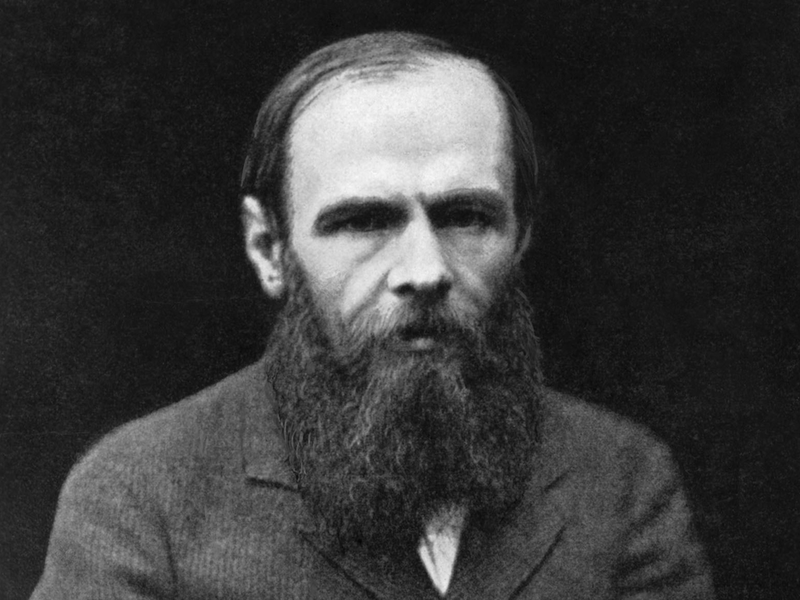
The Idiot and the Limits of Compassion

Dostoyevsky’s novel, The Idiot , like his other major works, is a complex evaluation of the human condition—a juxtaposition of the innate goodness and innate evil that resides within every human heart. There is much one can say about The Idiot . I am no specialist of Russian literature, or…

by Gerald HiestandAugust 13, 2015
same-sex-celebrations-2
Homosexuality

If There is “Natural Law” How Can People Believe in Same-Sex Marriage?

At risk of violating some secret handshake agreement on some important nuance to “natural law,” I will sum up what I understand in my own words. As far as I can tell natural law is supposed to be an area of knowledge that all people should be able to agree…

by Mark HorneAugust 11, 2015
falling-star
Biblical Studies

Cosmic Language, 2

The first installment of this article may be found here . The Image of Man This brings us to a substitutionary atonement which we do understand, the fulfilment of the cruciform Tabernacle in the cross of Christ. Although Jesus’ execution was Physical and Social, it was primarily Personal . Beginning…

by Mike BullAugust 6, 2015
branagh-macbeth
Genesis

Every Noise Appalls

The first two essays in this series drew attention to the structure of the first part of Macbeth and to the way Shakespeare incorporates the Garden of Eden into his story. Macbeth , we saw, is a temptation story in which, compared to the Biblical story, the temptation itself is…

by Ralph Allan SmithAugust 4, 2015
new-jerusalem
Revelation

The Warrior and the City: A Wedding Homily

Revelation 19:6-9 Then I heard something like the voice of a great multitude and like the sound of many waters and like the sound of mighty peals of thunder, saying, “Hallelujah! For theLord our God, the Almighty, reigns. Let us rejoice and be glad and give the glory to Him,…

by Peter LeithartAugust 3, 2015

Showing page 146 of 309

See all

Showing page 8 of 43

See all
Uncategorized

Gone Fishin’

June 24, 2014

Impure Holiness

Isaiah 65 piles up charges of idolatry and impurity against Israel. They are supposed to offer continuous sacrifices, but their sacrifices are a continuous provocation (65:3). They build their altars from bricks rather than from stones, as the law requires (65:3). The sacrificial smoke doesn’t sooth Yahweh but is an…

June 23, 2014

Coding Trance

In an essay at Slate , David Auerbach tells a story about John Harris, a game-programmer: “While working on an 8-bit Atari port of Frogger in the early 1980s, Harris said, “’ glued my hands to the keyboard.’ One day he started programming midafternoon, losing himself in work. The next…

June 23, 2014

Smart Dumb

P oet Kenneth Goldsmith gives a taxonomy of smartness and dumbness. There are various permutations. He prefers dumb, but it has to be smart dumb: “There is dumb dumb and there is smart dumb. There is also smart smart. Dumb dumb is plain dumb and smart smart is plain smart.…

June 23, 2014

Kynics and Cynics

In a 1987 review of Peter Sloterdijk’s Critique of Cynical Reason , Neil Wilson observes that for Sloterdijk “cynicism is enlightenment turned sour: a sourness which results from the self-denial that self-survival in a society dominated by instrumental rationality requires” (55). It is not a new attitude, but an ancient…

June 23, 2014

Physiognamy’s revenge

Peter Sloterdijk distinguishes in his Critique of Cynical Reason (139-40) between the objectifying and distancing aims of Enlightenment thought and the inescapable “physiognomic sense” of life among fleshly humans: “Whereas the process of civilization, whose core is constituted by the sciences, teaches us to distance ourselves from people and things…

June 23, 2014

Showing page 581 of 2212

Browse by Category

In Medias Res

Your weekly digest for all things Theopolis.

Donate

Theopolis is nearly 100% donor-supported. Consider joining us on our mission.