Theopolis Logo

Writing

Explore our collection of theological essays, biblical studies, and reflections on faith and culture.

See all
Deuteronomy

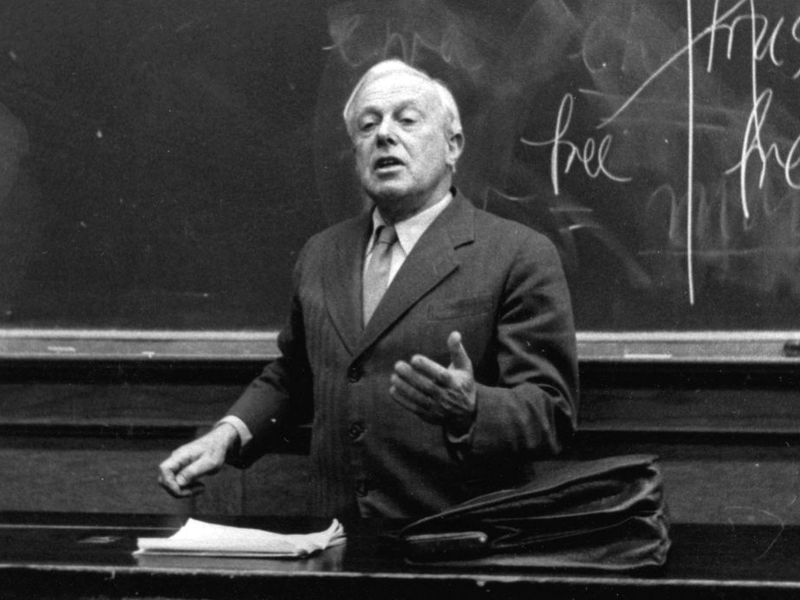
Sex & Power

I recently heard a tape of a discussion among several Christian writers and political thinkers, and one of the participants noted that it seems that some of our greatest leaders have not been sexually faithful men. Indeed, some have been profligate. Thus, the participant argued, it seems that private virtue…

by James B. JordanJanuary 7, 1995
lecture-a-e1547348850342
Biblical Horizons

A Brief Introduction to Eugen Rosenstock-Huessy

Eugen Rosenstock was born in Berlin in 1888, son of a Jewish banker. He converted to Christianity early in life, earned a doctorate in law, and served in the German army in World War I. After the war, he became convinced that Western Civilization was undergoing a great change and…

by James B. JordanJanuary 7, 1995

david-weber-fwuo_zluhnw-unsplash
Biblical Horizons

Passover, Paedocommunion, and Dr. Kenneth L. Gentry

What follows is a brief response to “Tape Set #1: The Passover Argument” in Dr. Gentry's series “Paedocommunion: Faith or Fad?” which purports to be a “reformed response” to those who believe young children should be admitted to the Lord's Table. His sermons are premised on the erroneous notion that…

by Mark HorneJanuary 6, 1995
zoltan-tasi-2pqk8fpok1s-unsplash
John

The Girding of Peter

"Truly, truly, I say to you, when you were younger, you used to gird yourself, and walk wherever you wished; but when you grow old, you will stretch out your hands, and someone else will gird you, and bring you where you do wish to go." Now this He said,…

by James B. JordanDecember 7, 1994
John

Jesus’ Burial Clothes

John devotes much attention to Jesus’ burial clothes. He tells us that Nicodemus brought about a hundred pounds of myrrh and aloes to spice Jesus body, and that He was bound in linen wrappings. We find out that His body and His head were wrapped separately. (John 19:39-40; 20:6-7). When…

by James B. JordanDecember 7, 1994
skyler-gerald-akljfvj5ym4-unsplash
John

Peter as High Priest

The Gospel According to Matthew presents Jesus as a new Moses, which is why there are so many speeches in Matthew and why Matthew focuses on Jesus as Lawgiver. In terms of this, Matthew presents Peter as a new high priest, established by Jesus. The rest of the twelve are…

by James B. JordanDecember 7, 1994

Showing page 274 of 309

See all

Showing page 8 of 43

See all

Circular Evolution

In his Natural History of Religion, David Hume proposes an evolutionary progress from natural polytheism to more developed monotheism. This, he thinks, is the natural and virtually inevitable progress: “As far as writing or history reaches, mankind, in ancient times, appears universally to have been polytheists” and idolaters. It makes…

March 11, 2014

Persistent Protest

Protestant problematics about sacraments still run in the background of early modern debates about religion. In response to evidence of similarities between Jewish and “savage” Indian religion, some early modern thinkers argued that the ritual similarities were marginal to Judaism. Some thought of Jewish ceremonies as a kind of prophylactic…

March 11, 2014

Jubilee: Real or Ideal?

Many scholars have concluded that the Jubilee legislation of Leviticus 25 is an idealized portrait of an institution that Israel never practiced. In a 2003 essay in Vetus Testamentum , Lee Casperson takes issue with this viewpoint: “There are extensive parallels in the ancient Near East, long predating the entry…

March 11, 2014

Reenacted Exodus

Leigh Trevaskis tries to suss out the rationale for sticking Leviticus 24 (menorah, showbread, blasphemy) between Leviticus 23 (Israel’s festival calendar) and Leviticus 25 (Jubilee). He proposes a symbolic solution to the puzzle. He observes that chapter 24 begins with a reverence to “light” (v. 2), alluding back to the…

March 11, 2014

Epistemological Dualism

Esther Lightcap Meek presents the most devastating little critiques of epistemological dualism I’ve ever read near the beginning of A Little Manual for Knowing . Epistemological dualism describes the way we “distinguish knowledge from beliefs, facts from values, reason from faith, theory from application, thought from emotion, mind from body,…

March 11, 2014

Righteous aggressors

Halbertal ( On Sacrifice , 72-3) offers this fine analysis of the self-justificating moves of aggressors: “The mind can play complicated games, and among them is the accusation that an aggressor directs toward his victim for causing him to become violent, which all too easily turns into a justification for…

March 10, 2014

Showing page 663 of 2212

Browse by Category

In Medias Res

Your weekly digest for all things Theopolis.

Donate

Theopolis is nearly 100% donor-supported. Consider joining us on our mission.