Theopolis Logo

Writing

Explore our collection of theological essays, biblical studies, and reflections on faith and culture.

See all
giammarco-zeh-ljawhtg-unsplash
Biblical Horizons

OPEN BOOK: Views and Reviews

Isaac E. Mozeson, The Word: The Dictionary that Reveals the Hebrew Sources of English (Northvale, NJ: Jacob Aaronson Inc., 1995), 310 pp. Reviewed by James B. Jordan. Once there was only one language in the world, the language God spoke to Adam. At the Tower of Babel, there came to…

by James B. JordanJune 28, 1996
tim-wildsmith-j6jv-mkdzqs-unsplash
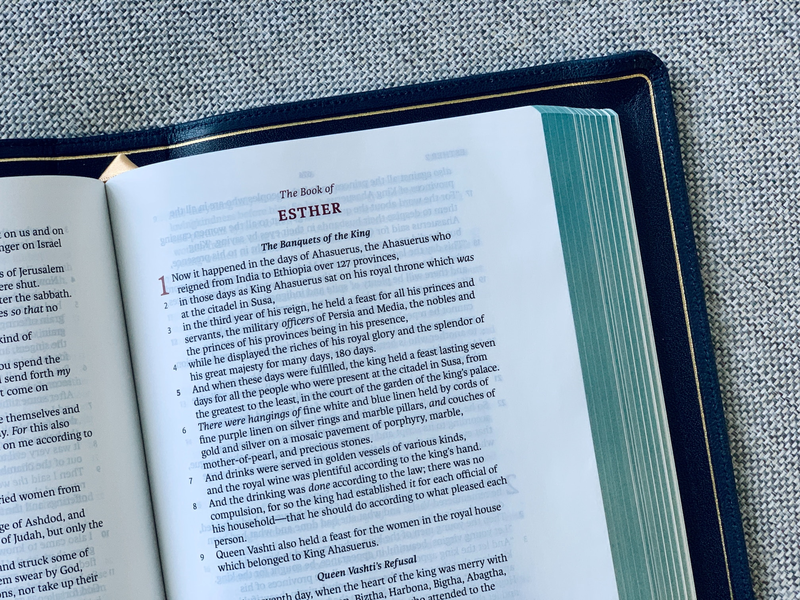
Esther

Esther: Historical & Chronological Comments (IV)

2. The Setting of the Book of Esther A. Xerxes (continued from previous issue) Ezra 6:14 says that the Jews finished building "according to the command of the God of Israel and the decree of Cyrus and Darius and Artaxerxes king of Persia." The problem with this verse is that…

by James B. JordanJune 28, 1996

ales-krivec-4mibe6zg5r0-unsplash
Acts

Jesus and Amalek

This essay goes with our previous study of the Amalek pattern back in Biblical Horizons No. 2. Since many do not have this essay, entitled "The Battle of Gog and Magog," let me cite the relevant paragraphs: Note in Genesis 12-15 that Abram moves into the land after escaping Pharaoh…

by James B. JordanJune 28, 1996
aaron-burden-1ebsmyrau-s-unsplash
Proverbs

The Strange Woman

Proverbs 7:6-23 is one of several passages early in the Proverbs in which Solomon warns his son about the wiles and dangers of the "strange woman." It is certainly quite proper to take these as straightforward warnings against sexual sins, and these are certainly warnings that need to be impressed…

by Peter LeithartJune 27, 1996
jan-kahanek-g3o5ztrk2e4-unsplash
Biblical Studies

Some Observations

1. In Luke 4:20 we read that after Jesus finished reading from Isaiah, "the eyes of all in the synagogue were fixed upon Him." This is usually taken in a psychological sense: They were amazed at Jesus somehow. I suggest that, as always, a merely psychological reading is a modern…

by James B. JordanMay 28, 1996
tim-wildsmith-j6jv-mkdzqs-unsplash
Esther

Esther: Historical & Chronological Comments (III)

2. The Setting of the Book of Esther Up to now we have assumed what we must prove, that the king in Esther is Darius the Great. While Biblical chronologists have usually taken this position, commentators on the book of Esther have often taken others as the king. One view,…

by James B. JordanMay 28, 1996

Showing page 265 of 309

See all

Showing page 9 of 43

See all

Dante's Journey

In the course of a review of Vittorio Montemaggi's Reading Dante's Commedia as Theology , Rowan Williams offers these observations on Inferno and Purgatorio : "There is still a tendency among not very attentive readers – not to mention people who have read almost nothing of the work but have…

September 29, 2017
kelly-sikkema-ggs0_g6wi-i-unsplash
Liturgy

The World Needs the Liturgy

"God's work in history," writes Mark Searle ( Liturgy Made Simple ), "is to gather into one the scattered children of God, to overcome divisions, to provide a place for the homeless and the lonely, to give support to those whose burdens are heavy, and to create an oasis of…

September 29, 2017

Christian Historicism

John Milbank argues in his Beyond Secular Order that " historicism cannot straightforwardly be considered as something specifically modern" (8). In fact, it originates from a Christian insight: "the sense of estranged distance from the past is initially the fruit of the Christian contrast between old and new covenants and…

September 29, 2017

No Thucydides Trap

Last week, I wrote a Firstthings.com column summarizing the argument of Graham Allison's Destined for War , a study of Sino-American relations organized around the concept of the "Thucydides Trap." Allison says that the ancient Greek historian claimed that Athens and Sparta went to war because Sparta was fearful of…

September 29, 2017
Eucharist

Bodies Renewed by Christ's Body

Christine Chaillot has a fascinating summary of the liturgical traditions of the "Ancient Oriental Churches" (Egyptian, Ethiopian, Syrian, Assyrian, Indian) in The Oxford History of Christian Worship . She quotes this Eucharistic hymn from the fifth-century Saint Yazdin (p. 164): "Strengthen, O our Lord, the hands which reach out and…

September 29, 2017

Do Human Beings Create?

In ST I, 45, 5, Thomas Aquinas asks whether God alone creates. His sed contra cites Augustine’s de Trinitate (3.8), where Augustine says that angels cannot create anything. If angels cannot, Thomas reasons, neither can any other creature. He presents several arguments in favor of this conclusion. Creation is, Thomas…

September 28, 2017

Showing page 139 of 2212

Browse by Category

In Medias Res

Your weekly digest for all things Theopolis.

Donate

Theopolis is nearly 100% donor-supported. Consider joining us on our mission.