Theopolis Logo

Writing

Explore our collection of theological essays, biblical studies, and reflections on faith and culture.

See all
giammarco-zeh-ljawhtg-unsplash
Biblical Horizons

OPEN BOOK: Views and Reviews

Isaac E. Mozeson, The Word: The Dictionary that Reveals the Hebrew Sources of English (Northvale, NJ: Jacob Aaronson Inc., 1995), 310 pp. Reviewed by James B. Jordan. Once there was only one language in the world, the language God spoke to Adam. At the Tower of Babel, there came to…

by James B. JordanJune 28, 1996
tim-wildsmith-j6jv-mkdzqs-unsplash
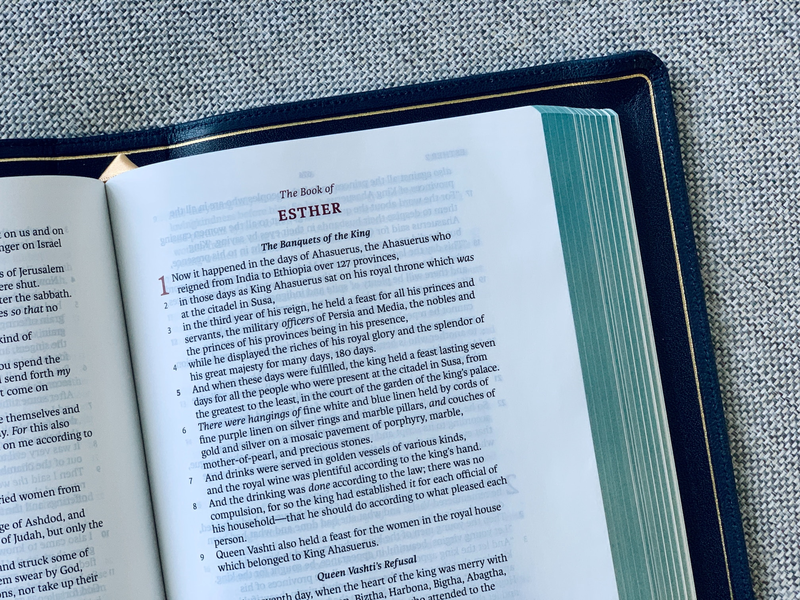
Esther

Esther: Historical & Chronological Comments (IV)

2. The Setting of the Book of Esther A. Xerxes (continued from previous issue) Ezra 6:14 says that the Jews finished building "according to the command of the God of Israel and the decree of Cyrus and Darius and Artaxerxes king of Persia." The problem with this verse is that…

by James B. JordanJune 28, 1996

ales-krivec-4mibe6zg5r0-unsplash
Acts

Jesus and Amalek

This essay goes with our previous study of the Amalek pattern back in Biblical Horizons No. 2. Since many do not have this essay, entitled "The Battle of Gog and Magog," let me cite the relevant paragraphs: Note in Genesis 12-15 that Abram moves into the land after escaping Pharaoh…

by James B. JordanJune 28, 1996
aaron-burden-1ebsmyrau-s-unsplash
Proverbs

The Strange Woman

Proverbs 7:6-23 is one of several passages early in the Proverbs in which Solomon warns his son about the wiles and dangers of the "strange woman." It is certainly quite proper to take these as straightforward warnings against sexual sins, and these are certainly warnings that need to be impressed…

by Peter LeithartJune 27, 1996
jan-kahanek-g3o5ztrk2e4-unsplash
Biblical Studies

Some Observations

1. In Luke 4:20 we read that after Jesus finished reading from Isaiah, "the eyes of all in the synagogue were fixed upon Him." This is usually taken in a psychological sense: They were amazed at Jesus somehow. I suggest that, as always, a merely psychological reading is a modern…

by James B. JordanMay 28, 1996
tim-wildsmith-j6jv-mkdzqs-unsplash
Esther

Esther: Historical & Chronological Comments (III)

2. The Setting of the Book of Esther Up to now we have assumed what we must prove, that the king in Esther is Darius the Great. While Biblical chronologists have usually taken this position, commentators on the book of Esther have often taken others as the king. One view,…

by James B. JordanMay 28, 1996

Showing page 265 of 309

See all

Showing page 9 of 43

See all
Philosophy

The Will Behind the Veil

Julian Young offers a neat summary of the Arthur Schopenhauer (the "first European Buddhist") at the TLS . Schopenhauer's philosophy can be pinpointed by contrast with two better-known thinkers. Against Hegel's fantastic " Bildungsroman , a story of the ever-increasing realization of 'reason' in human affairs," Schopenhauer offered a thoroughgoing,…

September 15, 2017

Toscanini Rules

"How is it possible," asks Terry Teachout , "that a man who made his conducting debut when Grover Cleveland was president should still be sufficiently well known and revered that most of his recordings remain in print to this day?" Teachout thinks that Harvey Sachs's Toscanini: Musician of Conscience comes…

September 15, 2017

Self-Published Borges

The first published book of Jorge Luis Borges, the great Argentinian poet and short-story writer, was Fervor de Buenos Aires . Borges later wrote, “ Fervor de Buenos Aires foreshadows everything I would do afterward.” It was a slapdash production, Borges claimed in his autobiography: “The book was actually printed…

September 15, 2017

Secular Salvation

John Colmer observes in his study of E.M. Forster that Forster's novels transpose Christian terms into a secular key: "a whole set of religious terms - salvation, grace, conversion, transfiguration - become assimilated into an essentially secular vision. . . . Men now seek their happiness on this earth not…

September 15, 2017

Fall of the Creative Class?

Richard Florida's 2002 Rise of the Creative Class was a manifesto for urban hipness. As Joseph Bottum sums up the book , Florida argued that "cities thrive when these creative types are allowed to build the creative economy. Their tolerance for alternative lifestyles and their acceptance of unconventional housing broke…

September 15, 2017

Medieval Tolerance

"Medieval tolerance" sounds like an oxymoron. Everyone knows the medievals were in tolerant. Everyone knows that tolerance was invented in the modern world. Everyone who knows such things is wrong. Istvan Bejczy demonstrates in a 1997 essay that medieval thinkers had a well-developed concept of tolerance. He goes further than…

September 14, 2017

Showing page 144 of 2212

Browse by Category

In Medias Res

Your weekly digest for all things Theopolis.

Donate

Theopolis is nearly 100% donor-supported. Consider joining us on our mission.