Theopolis Logo

Writing

Explore our collection of theological essays, biblical studies, and reflections on faith and culture.

See all
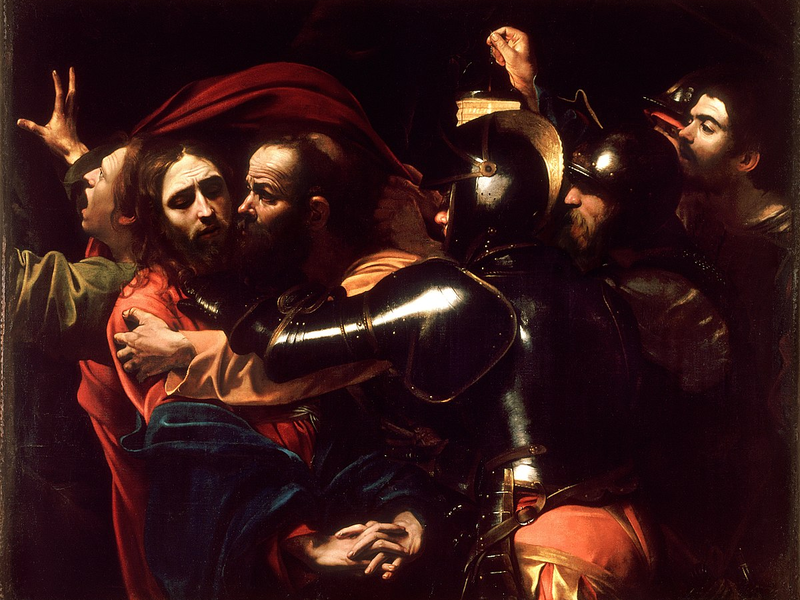
1200px-the_taking_of_christ-caravaggio_c-1602
John

Jesus, David, Adam: A Reading of John 18:1-11

John 18:1-11 appears on the surface to be a straightforward, if somewhat unusual, narrative of Jesus’ arrest by officers of the chief priests and Pharisees accompanied by an apparently large group of Roman soldiers, all of them led by the betrayer, Judas. But there is much more here than what…

by Ralph Allan SmithJuly 3, 2013

taylor-brandon-y8r0rtnriwm-unsplash
American Politics

Not So Special

Why is the US embroiled in the Middle East? There are two primary answers: Oil and Israel. Both are fairly intractable problems, the latter in significant part because of the unique convergence of theology and politics that has forged American policy in the region. Dispensationalists insist that we must bless…

by Peter LeithartJuly 1, 2013
screenshot-2023-09-20-at-11-21-06-am
Hermeneutics

Raven of the Gospel

There’s a common theme that arises in the study of theologians James B. Jordan and Peter Leithart. It is this: Context matters. Details matter. This is God’s Word. The details are not arbitrary “filler” hiding the kernel of truth in the husk of the text. The husk and the kernel…

by Troy GreeneJune 26, 2013
zoriana-stakhniv-puvghybgzn8-unsplash
Anxiety

Marriage and Betrayal

Perhaps the most fearful of all possibilities in the world is the possibility of betrayal on the part of someone who is in a “position of trust.” This, unfortunately, is the first block in what ought to be the foundation of every marriage in the world. Every woman has a…

by Richard BledsoeJune 24, 2013
markus-winkler-aid-xyrtlec-unsplash
Theopolis News

One More Week

Only one more week to register to the Trinity Term class on "How to Read the Bible," taught by James Jordan and Peter Leithart. Sign up today!

by Peter LeithartJune 24, 2013
korney-violin-b6ihcrsxnke-unsplash
Homosexuality

Reorienting our Sex Talk

The way we talk about the world matters. Our doctrine of creation tells us that words do not simply reflect reality. They also shape it and the way we inhabit it. Among the world’s many language groups, the Church is distinct. She is called to name things with Scriptural language,…

by Matthew MasonJune 19, 2013

Showing page 192 of 309

See all

Showing page 9 of 43

See all

Tale of Two Women

In Numbers 12, Miriam and Aaron object to Moses’ Cushite wife. Miriam becomes leprous, is excluded from the camp, and restored on the eighth day. That is to say: The Messiah’s Jewish sister objects to the Gentile bride, and is cast out of the camp, but then she is cleansed…

November 9, 2007

Sacrificial sequence

Hicks again: He organizes his discussion of the New Covenant fulfillment of the sacrificial system in the phrases “life surrendered,” “life transformed,” and “life shared.” Reconciliation is made on the basis of life surrendered, blood shed, but that’s not the end point of the reconciling sacrifice. This enables him to…

November 8, 2007

Burning flesh

FCN Hicks writes in his 1946 book on sacrifice that the burning of an animal on the altar was not destructive but transforming: “The offering is not destroyed but transformed, sublimated, etherealised, so that it can ascend in smoke to the heaven above, to the dwelling-place of God.” He cites…

November 8, 2007
Philosophy

Signs and domination

Only God, Augustine argues in his treatise on music, acts on rational souls directly, “per seipsum.” Human beings operate on one another’s souls through intervening bodies, that is, through the words and other signs. God has arranged the world this way, he says, as a check on human ambition and…

November 8, 2007

Signa data

Many translators and interpreters of Augustine’s de doctrina Christiana translate “signa data” as “conventional signs.” But there’s something to be said for taking the phrase literally (as some commentators do). The difference between naturalia and data, Augustine says, is that the latter occur by the will of a sign-user while…

November 7, 2007
History

Sixteenth-century exchanges

Shakespeare recognized that something new was in the offing, but the actual situation of England and Europe in the sixteenth and seventeenth centuries was far more complicated that Timon of Athens suggests. The gift-society to which Timon is attached was not being completely replaced, nor was the market the main…

November 7, 2007

Showing page 1609 of 2212

Browse by Category

In Medias Res

Your weekly digest for all things Theopolis.

Donate

Theopolis is nearly 100% donor-supported. Consider joining us on our mission.