Theopolis Logo

Writing

Explore our collection of theological essays, biblical studies, and reflections on faith and culture.

See all
tanner-mardis-xuxghzhibn4-unsplash-1-2
Biblical Studies

Tweets-turned-Notes on the Bible’s Chronology

Summary In what follows, I will consider the “year-stamps” employed in Scripture, i.e., statements of the form, “Such-and-such an event took place in the Xth year of Y.” In the process, I will suggest some ways in which the Biblical narrative might relate to events in the extra-Biblical world, though…

by James BejonJuly 16, 2019
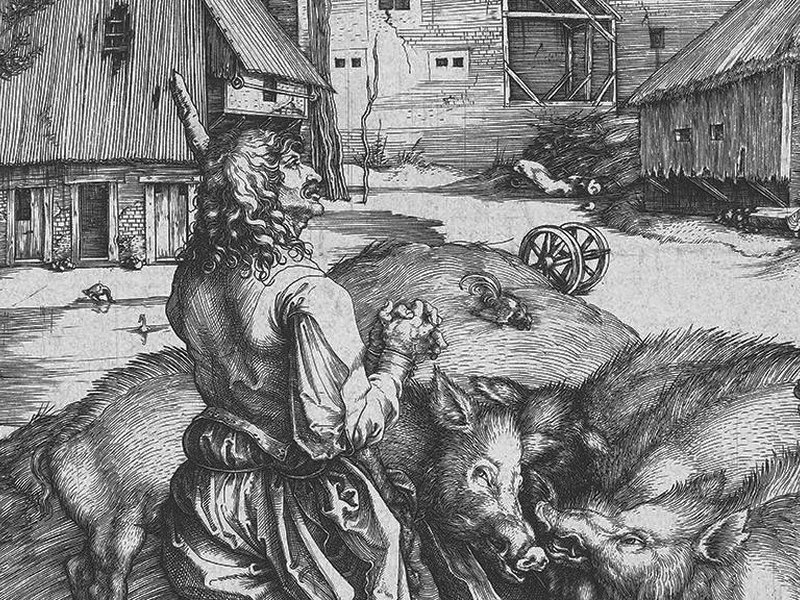
durer-prodigal-son-2
Luke

Perspectives on the Prodigal, (Part 2)

In the first essay on the parable of the Prodigal Son, I suggested that the problems commentators and others encounter in interpreting Jesus three-part parable are not accidental. These are not just problems in our ignorance of cultural background. They are intentional features of the stories —stories designed to poke…

by Ralph Allan SmithJuly 11, 2019
durer-prodigal-son-2
Luke

Perspectives on the Prodigal, (Part 1)

The story of the Prodigal Son is perhaps the most well-known story in the Bible. As others have observed, it may also be one of the most misunderstood. In two short essays, I will point out features of this story that are commonly neglected, aspects of Jesus’ parable that might…

by Ralph Allan SmithJuly 9, 2019
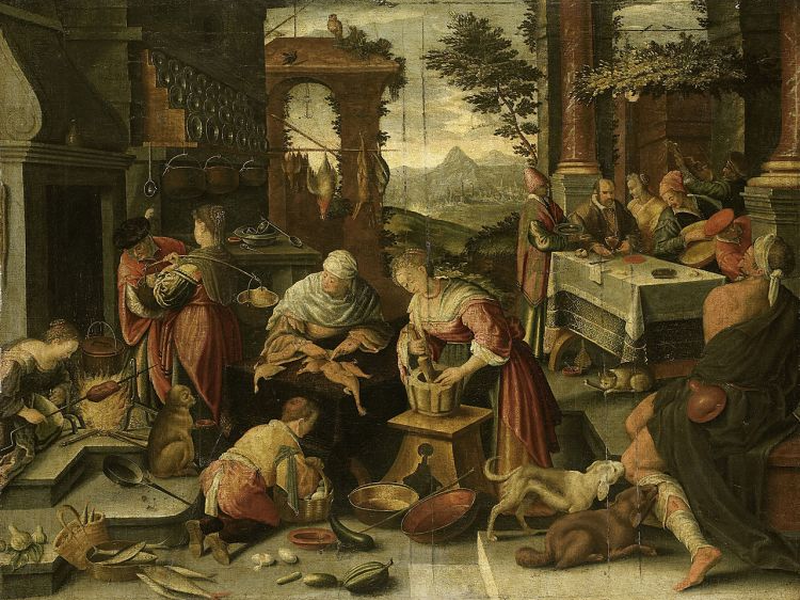
de-rijke-man-en-de-arme-lazarus-by-jacopo-da-ponte-16th-century
Luke

Lazarus and the Rich Man

The parable of Lazarus and the nameless rich man is not an independent story. It is part of a long context that begins in Luke 15:1, where Jesus is eating with tax collectors and sinners and the scribes and Pharisees grumble. In response to their hardheartedness, Jesus tells a three-part…

by Ralph Allan SmithJuly 4, 2019
aaron-burden-uynrnfdkjwg-unsplash
Luke

Everybody has Dropsy - Luke 14:1-24

The Bible is written so that even when a reader cannot pick up on what might be deeper or more detailed aspects of a text, there is virtually always a message to be heard. In the ancient world, where the “reader” of Scripture would likely be a church official facing…

by Ralph Allan SmithJuly 2, 2019
communion
Biblical Theology

Fruit Trees and Grain Plants

The distinction between garden (or vineyard) and field begins in Genesis 2. This relates to the ordering of the formless world. Plants of the field are contrasted with the garden planted by God in Genesis 2:5&8. Later on, under the Old Covenant the Israelites will be required to keep their…

by James B. JordanJune 27, 2019

Showing page 77 of 309

See all

Showing page 9 of 43

See all

Christianity and the Sexual Abuse of Children

I n Destroyer of the Gods , Larry Hurtado reminds us that “in the Roman era the sexual use of children, including young adolescents and also younger children, was widely tolerated and even celebrated lyrically by some pagan writers of the day, such as Juvenal, Petronius, Horace, Strato, Lucian, and…

July 7, 2017

Dechristianization

“O riginally and properly,” writes John McManners ( Death and the Enlightenment ), the term “dechristianization” refers “to the anti-religious manifestations of the French Revolution,” which were “neither homogenous in character nor unambiguous in meaning.” Dechristianization refers in part to administrative, institutional changes: “The transfer to the secular authorities of…

July 7, 2017

Perfect Fear

M ichael Oakeshott ( Hobbes on Civil Association , 38-39) states Hobbes's solution to the dilemma of human violence in evangelical terms. Human existence is plagued by the fear of death, and for Hobbes the only salvation lies in greater fear. The saviour is not a visitor from another world,…

July 7, 2017

Democide

“D uring the first eighty-eight years of [the 20th] century,” writes R. J. Rummel ( Death by Government ) “almost 170 million men, women, and children have been shot, beaten, tortured, knifed, burned, starved, frozen, crushed, or worked to death; buried alive, drowned, hung, bombed, or killed in any other…

July 7, 2017

Microtime

J imena Canales has written a history of A Tenth of a Second . It seems an arbitrary cut-off. Why not 1/100 or 1/1000? After all, we've been able to measure in finer units than 1/10 of a second: “In 1878 Eadweard Muybridge famously photographed running horses galloping in a…

July 7, 2017

Reform of Humanism

W hen the Reformation and humanism are discussed together, the question is typically how the latter helped produce the former. Erika Rummel ( The Confessionalization of Humanism in Reformation Germany ) turns the question around: How did the Reformation change humanism? One effect was in education: Protestant school orders, drawn…

July 7, 2017

Showing page 165 of 2212

Browse by Category

In Medias Res

Your weekly digest for all things Theopolis.

Donate

Theopolis is nearly 100% donor-supported. Consider joining us on our mission.