Theopolis Logo

Writing

Explore our collection of theological essays, biblical studies, and reflections on faith and culture.

See all
31-03-0213
Hermeneutics

Apocalyptic Eyes

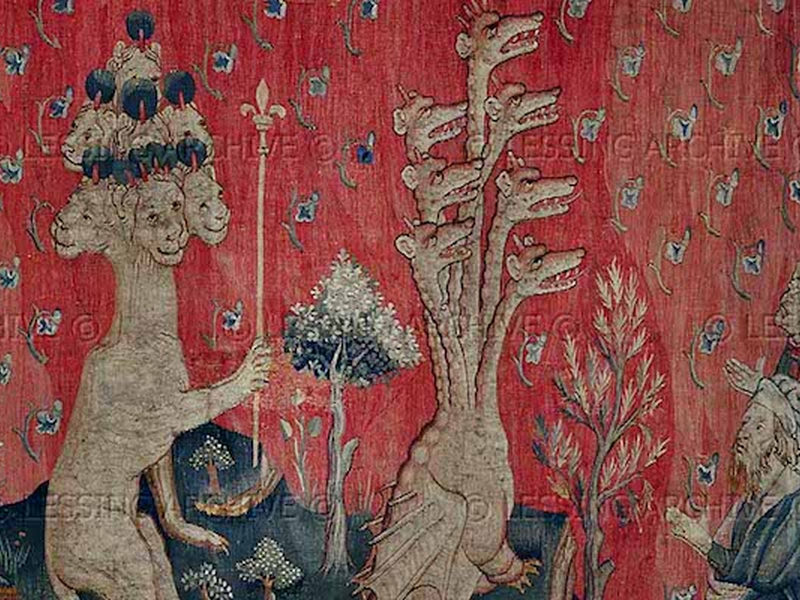
Flying scrolls. Red horses. Beasts coming out of the sea. Winged women. The list goes on. Apocalyptic literature in the Bible is like a cross between science fiction and Marvel comics. And the Bible has a fair bit of this sort of thing. Daniel sees visions in Babylon, Zechariah sees…

by Toby SumpterNovember 4, 2014

bhm-skyline-2
Theopolis News

New Name, New Look

Trinity House Institute has taken a new name, the Theopolis Institute. This striking new name expresses our unique vision and mission and captures the unified purpose behind all our specific programs and activities. We still have Bible, liturgy, and culture in our tagline. We still offer the same courses on…

by TheopolisNovember 4, 2014
istock_000012860926small
Atonement

Not Fearing the Devil

Adam Kotsko offers a socio-political variation on the Christus Victor atonement theory in his 2010 study, The Politics of Redemption: The Social Logic of Salvation . He does this by explaining "the devil" in terms of the Hegelian concept of "objective spirit," Geist . As Kotsko puts it, Geist "refers…

by Peter LeithartOctober 13, 2014
jez-timms-8muutamcwu4-unsplash
Leviticus

The Meaning of Sacrifice

Two factors keep Nahtali Meshel from discussing the meaning of sacrifice until late in his The "Grammar" of Sacrifice . The first has to do with the texts he draws from: "P says little about the meaning of its rituals" (174). The other has to do with the grammatical theory…

by Peter LeithartOctober 8, 2014
jez-timms-8muutamcwu4-unsplash
Leviticus

Praxemics

Chapter 5 of Naphtali Meshel's The "Grammar" of Sacrifice focuses on "praxemics," the physical actions of sacrificial ritual. Praxemes are constituted by six elements: an "atomact," an elementary physical act or gesture; an actor; an object that is acted up; a target for the action and often for the object…

by Peter LeithartOctober 6, 2014
markus-winkler-aid-xyrtlec-unsplash
Leviticus

Jugation and Hierarchy

Two chapters of Naphtali Meshel’s The “Grammar” of Sacrifice cover what he calls “jugation” and “hierarchies.” The first involves the addition of other materials to an animal offering. Jugates include wine, cereal, and oil that are added to the animals (zoemes) that are offered in sacrifice. Some jugates are coordinated…

by Peter LeithartOctober 1, 2014

Showing page 167 of 309

See all

Showing page 9 of 43

See all
Creation

Universal Harmony

I n the course of a discussion of the “harmony” of the economy of grace, the great English Puritan John Owen remarks on the incomprehensible universal harmony of creation ( Doctrine of Justification by Faith , 55) : There is a harmony, a suitableness of one thing unto another, in…

June 23, 2017
Jane Austen

Dear Jane

W e may think that Jane Austen has only recently entered pop culture consciousness. We'd be wrong. Devoney Looser's The Making of Jane Austen traces Austen's fortunes between 1833, when her novels were republished, and 1975, the bicentenary of her birth. Looser examines book illustrations, dramatizations of the plays, political…

June 23, 2017

Beatitude

A s the title suggests, Jonathan Pennington's The Sermon on the Mount and Human Flourishing sees the Sermon on the Mount as Jesus' instruction in a way of virtue and wisdom that leads to flourishing. As Pennington puts it, “Jesus provides in the Sermon a Christocentric, flourishing-oriented, kingdom-awaiting, eschatological wisdom…

June 23, 2017

Genealogy of Rights

I n The Sacredness of the Person , Hans Joas offers an “affirmative genealogy” of the notion of human rights. He traces the historical origins of the concept not, in Nietzchean fashion, to debunk, but to validate. Isolating the origins of a set of cultural values or practices need not,…

June 23, 2017

Ally of Convenience

D avid Goldman argues that Trump sent “a clear message to America’s Muslim clients in Saudi Arabia: No more double games with non-state actors will be tolerated.” The double games have been going on a long time: “Saudi royal family members are funding every radical madrassa in Asia, including those…

June 22, 2017

Sources of “Justification”

I n Paul's letters, the verb “justify” (Gr. dikaioo ) means “acquit, judge favorably,” with overtones of forgiveness and reconciliation. It has an invariably positive meaning. Paul didn't learn to use “justify” that way from ancient or contemporary Greek. As James Prothro explains in a 2016 article, outside the Septuagint…

June 21, 2017

Showing page 170 of 2212

Browse by Category

In Medias Res

Your weekly digest for all things Theopolis.

Donate

Theopolis is nearly 100% donor-supported. Consider joining us on our mission.