
Theopolis Logo

Writing

Explore our collection of theological essays, biblical studies, and reflections on faith and culture.

See all
giammarco-zeh-ljawhtg-unsplash
Biblical Horizons

OPEN BOOK: Views and Reviews

Isaac E. Mozeson, The Word: The Dictionary that Reveals the Hebrew Sources of English (Northvale, NJ: Jacob Aaronson Inc., 1995), 310 pp. Reviewed by James B. Jordan. Once there was only one language in the world, the language God spoke to Adam. At the Tower of Babel, there came to…

by James B. JordanJune 28, 1996
tim-wildsmith-j6jv-mkdzqs-unsplash
Esther

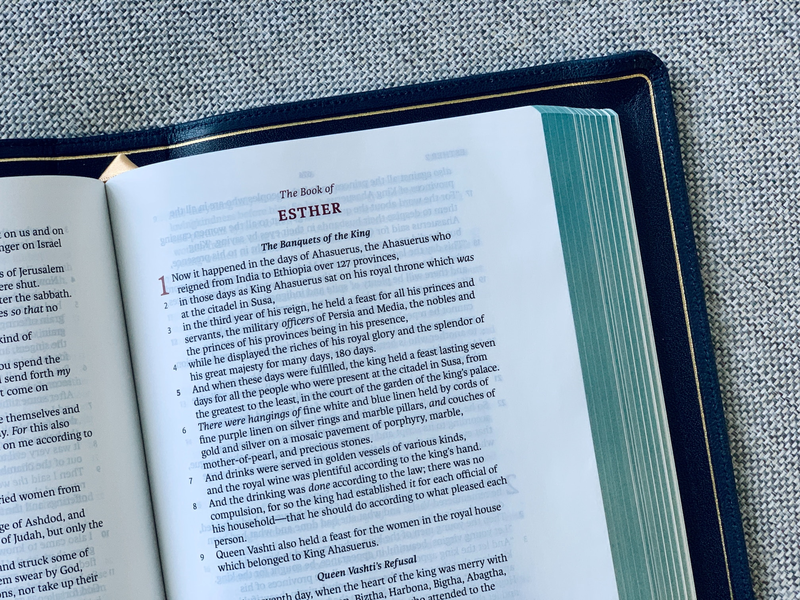
Esther: Historical & Chronological Comments (IV)

2. The Setting of the Book of Esther A. Xerxes (continued from previous issue) Ezra 6:14 says that the Jews finished building "according to the command of the God of Israel and the decree of Cyrus and Darius and Artaxerxes king of Persia." The problem with this verse is that…

by James B. JordanJune 28, 1996

ales-krivec-4mibe6zg5r0-unsplash
Acts

Jesus and Amalek

This essay goes with our previous study of the Amalek pattern back in Biblical Horizons No. 2. Since many do not have this essay, entitled "The Battle of Gog and Magog," let me cite the relevant paragraphs: Note in Genesis 12-15 that Abram moves into the land after escaping Pharaoh…

by James B. JordanJune 28, 1996
aaron-burden-1ebsmyrau-s-unsplash
Proverbs

The Strange Woman

Proverbs 7:6-23 is one of several passages early in the Proverbs in which Solomon warns his son about the wiles and dangers of the "strange woman." It is certainly quite proper to take these as straightforward warnings against sexual sins, and these are certainly warnings that need to be impressed…

by Peter LeithartJune 27, 1996
jan-kahanek-g3o5ztrk2e4-unsplash
Biblical Studies

Some Observations

1. In Luke 4:20 we read that after Jesus finished reading from Isaiah, "the eyes of all in the synagogue were fixed upon Him." This is usually taken in a psychological sense: They were amazed at Jesus somehow. I suggest that, as always, a merely psychological reading is a modern…

by James B. JordanMay 28, 1996
tim-wildsmith-j6jv-mkdzqs-unsplash
Esther

Esther: Historical & Chronological Comments (III)

2. The Setting of the Book of Esther Up to now we have assumed what we must prove, that the king in Esther is Darius the Great. While Biblical chronologists have usually taken this position, commentators on the book of Esther have often taken others as the king. One view,…

by James B. JordanMay 28, 1996

Showing page 265 of 309

See all

Showing page 9 of 43

See all

Sermon notes, Second Sunday After Epiphany

INTRODUCTION John frequently exhorts his readers to love one another (2:10; 3:10, 11, 23), and speaks of God’s love for us (3:1). Here, he connects these two loves inseparably. The noun or verb “love” is used 27 times (3 x 3 x 3) in this chapter, and twice he addresses…

January 8, 2007

Gnostic bodies

Nothing seems as anti-gnostic as the contemporary obsession with bodily perfection. We can remold our bodies in any way we want - tuck in here, enhance there, replant hair and remold biceps, remove wrinkles and signs of aging. In fact, this obsession is completely gnostic. It attempts to side-step the…

January 7, 2007

Eucharistic exhortation, First Sunday After Epiphany

1 John 4:2: Every spirit that confesses that Jesus Christ has come in the flesh is from God. Why do we have this meal? The simple answer is that Jesus commanded it. But why did He command it? After all, aren’t we in the New Covenant, which is a Spiritual…

January 7, 2007

Exhortation, First Sunday After Epiphany

Yesterday, January 6, was Epiphany, the beginning of one of the traditional seasons of the church year. The word “epiphany” means “manifestation” or “revelation.” Advent celebrates the coming of the Lord; Epiphany, His revelation. We need both. If God comes to us, but remains veiled and incognito, we will never…

January 7, 2007
Philosophy

Idealism to Textualism

In a 1980 essay, Richard Rorty offers a quick overview of the development of European thought from idealism through romanticism and pragmatism to what he calls textualism. The two ends of this development, idealism and textualism, are similar in various ways: both are antagonistic toward science, both claim that we…

January 7, 2007
Theology

Theology from the margins

Lubac is by all accounts one of the great Catholic theologians of the past century, and one of the most influential. He never worked on a dissertation, and because of the disruptions of war never went through a great deal of the formal training expected of Jesuits. He was eventually…

January 6, 2007

Showing page 1739 of 2212

Browse by Category

In Medias Res

Your weekly digest for all things Theopolis.

Donate

Theopolis is nearly 100% donor-supported. Consider joining us on our mission.