Theopolis Logo

Writing

Explore our collection of theological essays, biblical studies, and reflections on faith and culture.

See all
screen-shot-2018-02-08-at-9-58-52-am
Epistemology

Seeking Integration in a Fragmented World: Indwelling Polanyian Integration

So far I have claimed that, especially in this era of fragmentation, we seek some way to integrate our lives. I have suggested that the view that modernity holds of what knowledge is has actually been a critical source of the fragmentation we sense in the modern West. Imagining knowledge…

by Esther Lightcap MeekMay 1, 2018

e99a8370-2
Theopolis News

Theopolis Names New Executive Director

The Theopolis Institute has appointed John Crawford as Executive Director. John has been a student in the Junior Fellows Program this year, and proven to be an enthusiastic and articulate advocate of Theopolis's vision. "Theopolis brings a unique, comprehensive paradigm to cultural change - with the Church at the center,"…

by TheopolisApril 30, 2018
screen-shot-2018-02-08-at-9-58-52-am
Art

Artist-Priests in God’s Poetic World

Metaphor is already intrinsic to the Trinity. Jesus is not the Father. And then again, He is indwelt by the Father, and He in turn indwells the Father. “He who has seen Me,” Jesus said, “has seen the Father.” This fundamental is/is not relationship is the relationship of metaphor. A…

by Tim NicholsApril 26, 2018
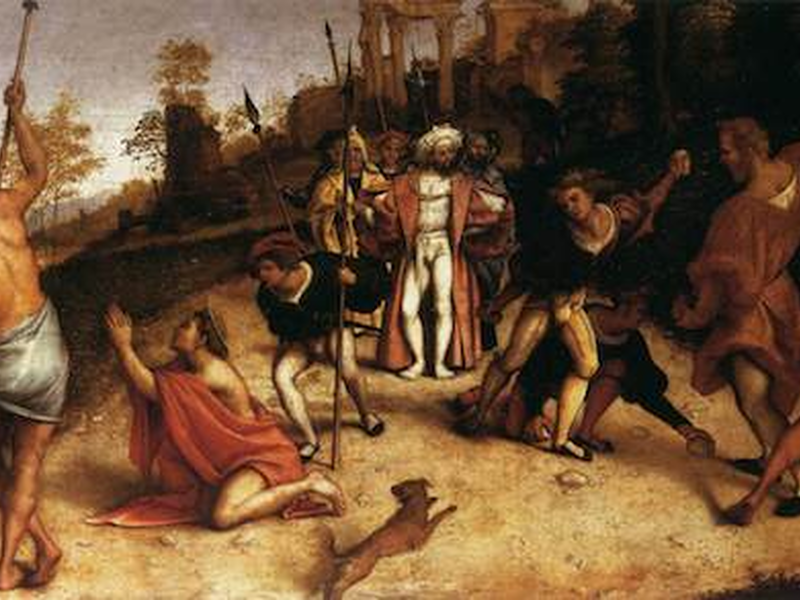
stephen-martyr-lotto
James

Addressees and Author of James

James, a bond-servant of God and of the Lord Jesus Christ, to the twelve tribes in the diaspora, greetings (James 1:1). Though the epistle of James is considered a "general" epistle, the letter originated from particular circumstances that can be discerned from the New Testament. In order to sketch its…

by Peter LeithartApril 24, 2018
sixteen-miles-out-al48tflf4e8-unsplash
Leviticus

Introduction to the Ascensions

Before considering the details of the Leviticus, we must have before us certain matters that have been established in Genesis and Exodus. These are things that we as Israelites already know when we first hear Moses report what God dictated to him in Leviticus. Adam Let us begin with Adam.…

by James B. JordanApril 19, 2018
img_1456
Culture

The Principalities and Powers, (Part 2)

For Part 1 of this series, click HERE . The great question for the emerging East, Asia and other awakening third world areas, for an emerging nation like China is, “what fate awaits them?” They are now emerging from an analogous paganism that the West emerged from centuries ago. Here…

by Richard BledsoeApril 17, 2018

Showing page 95 of 309

See all

Showing page 9 of 43

See all
History

Revolutionary timing

Are we living in a time of world-revolutionary change? Impossible to say, of course, but there might be some hints contained in the developments of the last millennium. Rosenstock-Huessy notes that Western man has been formed by periodic world-historical revolutions since the 11th century: Gregorian (11th), the Reformation (16th), Puritan…

December 29, 2006
History

One world

William Cavanaugh suggests that globalization represents a false catholicity, a unification of the human race organized around consumption and Hollywood blockbusters. That’s certainly one legitimate angle. On the other hand: The wealth of the wicked is stored up for the righteous, and Cain and Nimrod built cities long before David…

December 29, 2006
History

Fallen Soldiers

George L. Mosse’s Fallen Soldiers (Oxford 1990) is a fascinating study of the “Myth of War Experience” that developed between the French Revolution and came to a climax in World War I and its aftermath. Mosse develops a number of intertwined themes: the rise of volunteer armies after the French…

December 29, 2006

Childbirth

Rosenstock-Huessy notes the difference between animal birth and human childbirth, the main difference being that human parents remain with children after the birth: “marriage means to go from the blind act of the moment, through the whole life cycle to its most opposite point the childbirth,” and this shows “that…

December 29, 2006
History

Naming and nationalism

With nationalism at its height in the nineteenth century, the common practice of giving children biblical names was a check on nationalist idolatry, a reminder that the child was part of Christendom, not merely of France, Germany, England, etc. Rosenstock-Huessy puts the point dramatically: “When biblical names disappeared in Europe…

December 29, 2006
Science

Scientific law

In their Science & Grace (Crossway 2006), Tim Morris and Don Petcher helpfully define a law of nature as “God’s sustaining of, or man’s description of, that pattern of regularity that we observe in nature as God works out His purposes towards His own ends in HIs covenant faithfulness, through…

December 28, 2006

Showing page 1746 of 2212

Browse by Category

In Medias Res

Your weekly digest for all things Theopolis.

Donate

Theopolis is nearly 100% donor-supported. Consider joining us on our mission.