Theopolis Logo

Writing

Explore our collection of theological essays, biblical studies, and reflections on faith and culture.

See all
laura-nyhuis-vg_b61t8efs-unsplash
Advent

5 Reasons I Don't Like Advent

First, I love my Christmas songs. This is how I think of it: the season of Advent gets in the way of singing what I want to sing. How can you not listen to Nat King Cole in December? Or Bing Crosby, Harry Connick Jr., and Amy Grant? Even though…

by Caleb SkogenDecember 16, 2021

johnny-cohen-oxoxqlawve0-unsplash
Covenant

Grandparenting and the Transcendent Summons

Introduction Imagine the stereotypical American grandparents. Once you have the outline, start filling in the details. What picture emerges? Maybe something like what Ogden Nash said, “When grandparents enter the door, discipline flies out the window.” Or maybe the oft-repeated assertion that it’s the grandparent’s job description “to spoil the…

by Jason CherryDecember 14, 2021
guillaume-de-germain-z_br8toccpe-unsplash
Deuteronomy

The Audacity of Lament

Hundreds of generations of ancient Israelites grew up as children of Abraham, inheritors of the covenant—the promises of God. These promises were more than nice bumper stickers or framed photos to cover empty space in their homes–these promises were at the heart of their very identity–individually and collectively. Genesis “I…

by Zach MccartneyDecember 9, 2021
fischer-fleet-of-columbus-edit
Hermeneutics

Barren Worlds

Aliens and Sojourners When the question “Is there life on other planets?” is asked, even the best theologians can only reply, “The Bible doesn’t tell us.” Well, in truth, the Bible does tell us, but only if we are paying attention. …and there was not a man to till the…

by Mike BullDecember 7, 2021
vino-li-j4jjsfjkhpi-unsplash
John

Jesus’ Search for a Wife

John runs a theme throughout his gospel that bubbles under the surface—Jesus is searching for, and finding, a wife. John launches into the narrative proper with a statement of where he’s going. “On the third day there was a wedding” (John 2.1) is about as good an example of flash…

by Tim SuffieldNovember 30, 2021
jackson-david-cicbinoyb7u-unsplash

Touch

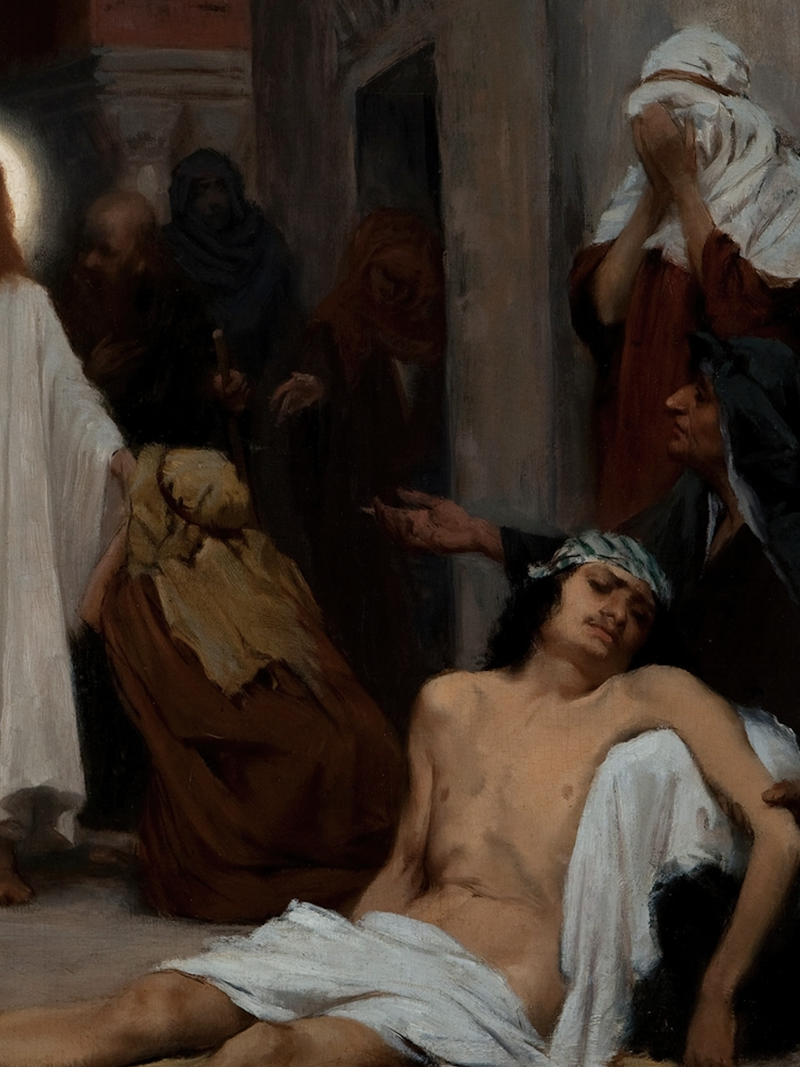
I have come to believe that a great many people are almost too weak to repent in any very open way. There must first be some level of healing. In some cases, including biblical ones, there is not even any evidence of faith on the part of the recipients of…

by Richard BledsoeNovember 23, 2021

Showing page 49 of 309

See all

Showing page 9 of 43

See all

Ahab in Micah

A student, Luke Nieuwsma, pointed out several references to Ahab in the prophecy of Micah. Micah 2:1-2 condemns those who covet fields and take them by violence, as Ahab did to Naboth; 6:15 is an explicit allusion to Omri and Ahab; and the “she” who is trampled like mud sounds…

December 12, 2006

Sermon Notes, Third Sunday of Advent

INTRODUCTION Modern Christians instinctively spiritualize the story of the gospel. When Jesus is called “King of the Jews,” we think that refers to His “spiritual” kingdom. Herod didn’t think so. Herod knew that Jesus’ birth was a threat to his power. THE TEXT “Now after Jesus was born in Bethlehem…

December 11, 2006

Eucharistic meditation, Second Sunday of Advent

Psalm 23:1: The Lord is my Shepherd; I shall not want. At Jesus’ birth, shepherds come to worship Him because He is the chief Shepherd. He is Shepherd Yahweh in human flesh. He is the Shepherd of Israel. He is the Davidic king who will shepherd His people with skillful…

December 10, 2006

Exhortation, Second Sunday of Advent

As we’ll see in the sermon this morning, in the Bible a “shepherd” is a king. Shepherds lead, guide, rule, control, feed, discipline, and judge their sheep. To say that Jesus is the Good Shepherd is to say He’s king of His people, king of all. Jesus’ kingship is not…

December 10, 2006

Lacan’s style again

Terry Eagleton puts it this way: “for Lacan all discourse is, in a sense, a slip of the tongue: if the process of language is as slippery as he suggests, we can never mean precisely what we say, or say precisely what we mean. Meaning is always in some sense…

December 7, 2006

Lacan’s style again

Terry Eagleton puts it this way: “for Lacan all discourse is, in a sense, a slip of the tongue: if the process of language is as slippery as he suggests, we can never mean precisely what we say, or say precisely what we mean. Meaning is always in some sense…

December 7, 2006

Showing page 1754 of 2212

Browse by Category

In Medias Res

Your weekly digest for all things Theopolis.

Donate

Theopolis is nearly 100% donor-supported. Consider joining us on our mission.