Theopolis Logo

Writing

Explore our collection of theological essays, biblical studies, and reflections on faith and culture.

See all
medievalilluminatedmanuscript
Biblical Studies

The Art of Why

“We have a God who hides things because He loves to be sought out, chewed out and found out.” As Christians, we are rightly taught that we must not question God’s Word. The problem is that the Scriptures record many things which appear to have been given to us for…

by Mike BullMay 12, 2015
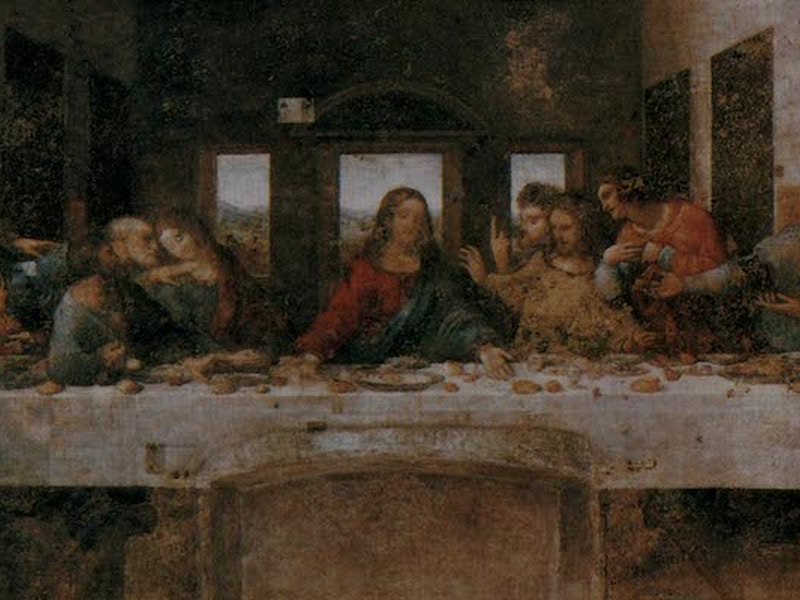
last-supper
Revelation

Eucharistic Harvest

The book of Revelation is a liturgy. John begins “in the Spirit” on the “Lord’s day” (1:10). Jesus appears, and Jesus tells him to record messages to seven churches, words of encouragement and rebuke, like the call to worship and confession at the beginning of a Christian liturgy. In chapter…

by Peter LeithartMay 7, 2015
sunrise-2
Creation

Maker of Heaven and Earth, (Part 5)

In my previous posts, I looked at the theme of creation as it is found in a sequence of psalms devoted to Yahweh’s Kingship (Psalms 93-100). Among other matters, these psalms declare that when the Kingdom of Israel’s God comes, it is the Kingdom of the world’s own Creator .…

by Stephen LongMay 7, 2015
13071-probablyvalentindeboulogne-saintpaulwritinghi-1
Deuteronomy

Paul the Levir

The church in Corinth was a pastoral nightmare. Factionalism, sexual immorality, incipient syncretism, using the church as a stage for self-promotion, and denial of the final resurrection were just some of the problems. In Paul’s first letter to the Corinthian church, he confronts each of these problems directly and in…

by Bill SmithMay 5, 2015
creation-eve
Covenant

Covenant Structure in Genesis 2

The first chapters of the Word of God have a poetic rhythm. This is used to discredit their accuracy as historical narrative, but the truth is that these same rhythms continue far beyond the book of Genesis. In fact, the later texts shed light on the frustratingly succinct account of…

by Mike BullApril 30, 2015
light-bulb
Creation

Must A Light Bulb Be "Oriented Toward Illumination"?

Mr. Martian: What’s that there? Mr. Edison: (Edison holds up a standard, 60 watt lightbulb). It’s a lightbulb. Mr. Martian: A “lightbulb” you say? What exactly is a “lightbulb”? Mr. Edison: A lightbulb is an object used to illuminate a dark area, say a room. It’s made primarily of filament…

by Gerald HiestandApril 28, 2015

Showing page 154 of 309

See all

Showing page 9 of 43

See all
Economics

Rational Actors

Featherstone claims that economics has generally focused on the production rather than the consumption side of things, perhaps because of “the assumption that consumption was unproblematic because it was based upon the concept of rational individuals buying goods to maximize their satisfaction.” Only in the late 19th century was attention…

September 13, 2006
History

Elites and the Market

Cultural elites have, Featherstone suggests, an inherently ambivalent relationship with the market. His argument, if I understand it, goes something like this: Cultural elites want to preserve a monopolization of cultural products. Hence, for instance, peer review of scholarly work; work that hasn’t passed peer review can be dismissed as…

September 13, 2006
History

McDonald’s and Postmodernity

McDonald’s provides a helpful glimpse at the complexities surrounding postmodernity. On the one hand, the global reach of McDonald’s seems a perfect illustration of one part of the postmodern situation - the global diffusion of American culture and tastes, the plasticity and airiness of postmodern culture, the breaching of national…

September 13, 2006
History

McDonald’s and Postmodernity

McDonald’s provides a helpful glimpse at the complexities surrounding postmodernity. On the one hand, the global reach of McDonald’s seems a perfect illustration of one part of the postmodern situation - the global diffusion of American culture and tastes, the plasticity and airiness of postmodern culture, the breaching of national…

September 13, 2006
History

Postmodernism and Globalization

Though often conceived as a crisis within Western civilization, postmodernism, Featherstone argues, is partly impelled by globalization. Globalization, he begins, usually conveys two images - the spread of a single, increasingly uniform culture throughout the world, and the “compression” or layering and juxtaposition of various cultures within a particular location…

September 13, 2006
History

Consumer Culture and Fragmentation

Culture, Mike Featherstone suggests in Undoing Culture , becomes problematic in consumer societies. How? As developed in cultural anthropology, culture is “somehow homologous to the distinctions, differences, and divisions between social groups who unconsciously use culture as relatively fixed markers in status games.” But in consumer societies, there is little…

September 12, 2006

Showing page 1795 of 2212

Browse by Category

In Medias Res

Your weekly digest for all things Theopolis.

Donate

Theopolis is nearly 100% donor-supported. Consider joining us on our mission.