Theopolis Logo

Writing

Explore our collection of theological essays, biblical studies, and reflections on faith and culture.

See all
tanner-mardis-xuxghzhibn4-unsplash-1-2
Biblical Studies

Tweets-turned-Notes on the Bible’s Chronology

Summary In what follows, I will consider the “year-stamps” employed in Scripture, i.e., statements of the form, “Such-and-such an event took place in the Xth year of Y.” In the process, I will suggest some ways in which the Biblical narrative might relate to events in the extra-Biblical world, though…

by James BejonJuly 16, 2019
durer-prodigal-son-2
Luke

Perspectives on the Prodigal, (Part 2)

In the first essay on the parable of the Prodigal Son, I suggested that the problems commentators and others encounter in interpreting Jesus three-part parable are not accidental. These are not just problems in our ignorance of cultural background. They are intentional features of the stories —stories designed to poke…

by Ralph Allan SmithJuly 11, 2019
durer-prodigal-son-2
Luke

Perspectives on the Prodigal, (Part 1)

The story of the Prodigal Son is perhaps the most well-known story in the Bible. As others have observed, it may also be one of the most misunderstood. In two short essays, I will point out features of this story that are commonly neglected, aspects of Jesus’ parable that might…

by Ralph Allan SmithJuly 9, 2019
de-rijke-man-en-de-arme-lazarus-by-jacopo-da-ponte-16th-century
Luke

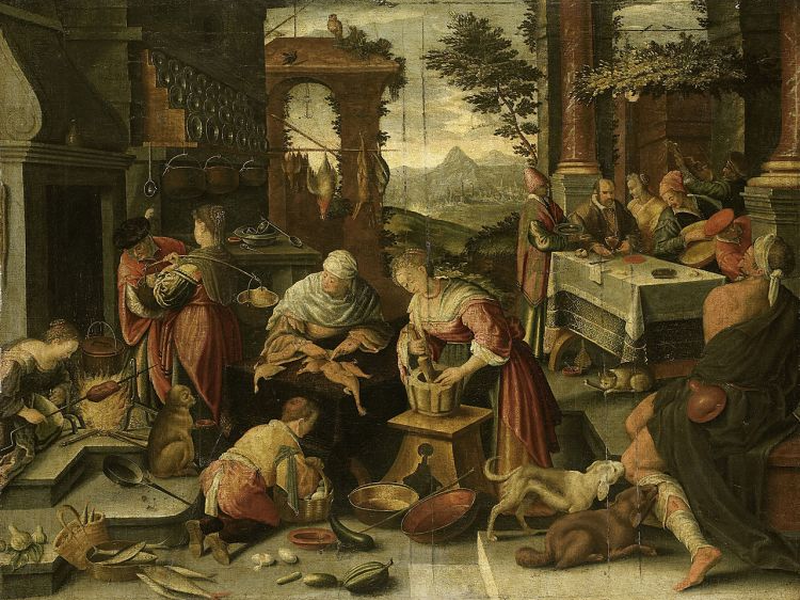
Lazarus and the Rich Man

The parable of Lazarus and the nameless rich man is not an independent story. It is part of a long context that begins in Luke 15:1, where Jesus is eating with tax collectors and sinners and the scribes and Pharisees grumble. In response to their hardheartedness, Jesus tells a three-part…

by Ralph Allan SmithJuly 4, 2019
aaron-burden-uynrnfdkjwg-unsplash
Luke

Everybody has Dropsy - Luke 14:1-24

The Bible is written so that even when a reader cannot pick up on what might be deeper or more detailed aspects of a text, there is virtually always a message to be heard. In the ancient world, where the “reader” of Scripture would likely be a church official facing…

by Ralph Allan SmithJuly 2, 2019
communion
Biblical Theology

Fruit Trees and Grain Plants

The distinction between garden (or vineyard) and field begins in Genesis 2. This relates to the ordering of the formless world. Plants of the field are contrasted with the garden planted by God in Genesis 2:5&8. Later on, under the Old Covenant the Israelites will be required to keep their…

by James B. JordanJune 27, 2019

Showing page 77 of 309

See all

Showing page 9 of 43

See all

Baptismal meditation

Jesus said, Go therefore and disciple all nations, baptizing them in the Name of the Father, and of the Son, and of the Holy Spirit, and teaching them to observe all that I’ve commanded. One of the great sins of Manasseh was an assault on the “Name” of Yahweh. Back…

May 21, 2006

Exhortation, Sixth Sunday of Easter

Easter is about faith and hope. Easter is also about love. The Old Covenant was a covenant of separations. Yahweh separated Himself from His people, enclosed behind a series of veils in inapproachable splendor. Yahweh called Abraham and separated him from the other nations of the earth, and gave Israel…

May 21, 2006

Innocent blood

Manasseh filled Jerusalem with the blood of the innocent; in context, the blood appears to be the blood of prophets (2 Ki 21:10-16). This is one of the continuing charges against Manasseh after Josiah’s reign is over (24:3-4). The blood of the prophets (or, at least, of the innocent) calls…

May 18, 2006

Forgetful

“Manasseh” is derived from a causative form of the verb “forget” - hence, cause to forget. Manasseh causes Judah to forget by liturgical change - rebuilding high places, erecting altars and Asherahs, and so on. Memory is nourished by liturgy; forgetfulness by liturgical perversion.

May 18, 2006

Charnock on Supernatural Salvation

Stephen Charnock argues that salvation must be supernatural because nature is insufficient for the task: “A change from acts of sin to moral duties may be done by a natural strength and the power of natural conscience: for the very same motives which led to sin, as education, interest, profit,…

May 18, 2006

Supernatural

Roger Haight offers this summary of the notion of “supernatural”: “God is not supernatural in himself; he is simply the infinite and transcendent being; he is God. But viewed in relation to the human he is supernatural; that is to say, spiritual union with God transcends human nature and all…

May 18, 2006

Showing page 1840 of 2212

Browse by Category

In Medias Res

Your weekly digest for all things Theopolis.

Donate

Theopolis is nearly 100% donor-supported. Consider joining us on our mission.