Theopolis Logo

Writing

Explore our collection of theological essays, biblical studies, and reflections on faith and culture.

See all
untitled-design
Culture

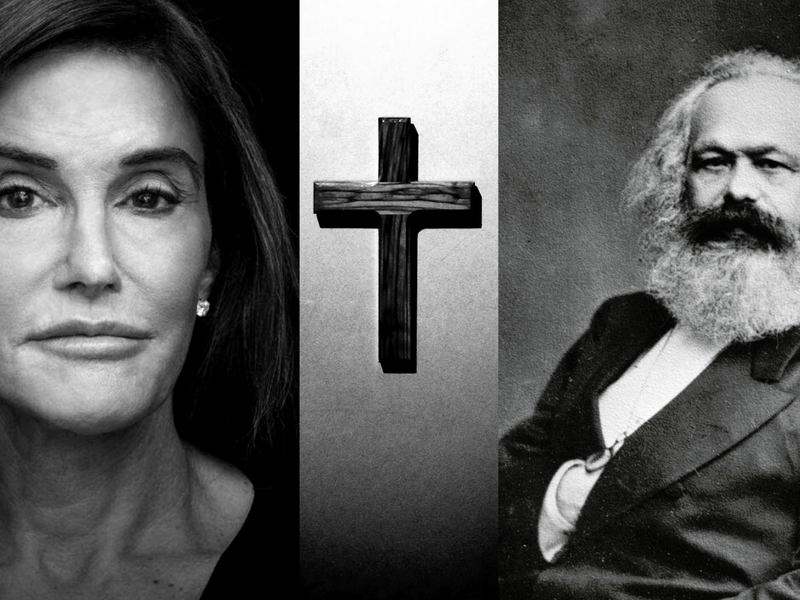
True Humanism: Jesus, Marx, or Jenner?

Many contemporary thought leaders have spoken intriguingly about a future without Jesus or, to be more precise, a future in which the transcendent truths of the Christian faith hold little or no sway over society. More to the point, these thought leaders often pose as anthropologists who find Christianity dehumanizing…

by Bruce AshfordMarch 15, 2022

screen-shot-2022-03-08-at-10-58-44-am
Biblical Theology

Jesus Wept: A Prologomena to a Biblical Theology of Healing

Jeffery Bishop’s magisterial The Anticipatory Corpse concludes with a question: “Might it not be that only theology can save medicine?” 1 To that question I want to give not merely a general affirmation, but a particular affirmation. Not only can “only theology save medicine” but, in fact, only a biblical…

by Mark BriansMarch 8, 2022
kyler-nixon-urkdeazlvtq-unsplash
How to Worship

Songs of Mature Reflection: Toward a Theopolitan Hymnody

John Ahern recently made the case on this site for having shorter hymnals. “ I believe hymnals should be shorter than they are ”, he says. “ Much shorter. 100 hymns at most. ” Swap hymnal for “repertoire”, or “hymns” for “worship songs” and it all still applies. A big…

by Rhys LavertyMarch 1, 2022
psalms
Course Announcement

Regional Course: How to Sing the Psalms

The Psalter is the hymnbook of the church. For too long, the psalter has taken a far-secondary place in the worship of God's people. And when psalms are sung, they are often changed drastically from what the Spirit gave us. In this course, Paul Buckley and Brian Moats will explore…

by Brian MoatsFebruary 28, 2022
beige-and-brown-child-photo-moms-collection-youtube-intro-2
Theopolis News

Jordan Prize Winner

The Theopolis Institute is pleased to announce that Dr. Trevor Laurence is the winner of the 2021 James B. Jordan Prize for outstanding work in biblical theology. Dr. Laurence receives this award for his 2020 Exeter dissertation, “Cursing With God: The Imprecatory Psalms and the Ethics of Christian Prayer.” Laurence…

by Peter LeithartFebruary 25, 2022
48986
Culture

Mark Driscoll, Ergun Caner and the Factions and Fictions of Evangelicalism

In late 2013 two nearly simultaneous events happened in evangelicaldom: Mark Driscoll was publicly accused of “plagiarism” and Ergun Caner was hired as the president of a Christian college. The first appears to be the first domino that would lead eventually to Driscoll resigning as the pastor of Mars Hill…

by John CarpenterFebruary 22, 2022

Showing page 46 of 309

See all

Showing page 9 of 43

See all

Objective/Subjective

McGrath notes that Augustine interpreted the genitive in the phrase “righteousness of God” in Rom 1 objectively, so that it was understood as the righteousness that God gives in saving sinners (in “making” them righteous). Ambrosiaster, as I pointed out in an earliet post, interpreted the genitive subjectively - the…

April 20, 2006

Old Perspective on Paul

Ambrosiaster writes, “Iustitia est Dei, quia quod promisit dedit, ideo credens hoc esse se consecutum quod promiserat Deus per prophetas suos, iustum Deum probat et testis est iustitiae eius” (PL, 17.56b). McGrath explains: “God, having promised to give salvation, subsequently gives it, and as a result is deemed to be…

April 20, 2006
History

Unfinished Reformation

Nevin wrote: “There is more a great deal in Christianity, I firmly believe, more in the idea of hte Holy Catholic Church, than has yet been attained, either in the way of knowledge or in the way of life, by the Protestant Reformation.”

April 20, 2006

Factitive Justification

There was a consensus among the theologians of Trent, McGrath argues, that justification was “factitive,” a view that excluded that “a sinner may be justified solely as a matter of reputation or imputation, while remaining a sinner in fact.” But of course that raises the question, What exactly is a…

April 20, 2006

True Lutherans

McGrath traces the odd development in Lutheran Orthodoxy of the notion that regeneration and faith precede justification in such a way that “where Luther had understood justification to concern the unbelieving sinner, orthodoxy revised this view, referring justification to the believing sinner.” This takes Lutheran Orthodoxy back in the direction…

April 20, 2006

Ontological change

McGrath notes, “While justification was universally understood to involve the regeneration of humanity, the opinion that an ontological change is thereby effected within humans is particularly associated with the period of High Scholasticism and the development of the concept of created grace. The earlier medieval theologians expressed the change effected…

April 20, 2006

Showing page 1854 of 2212

Browse by Category

In Medias Res

Your weekly digest for all things Theopolis.

Donate

Theopolis is nearly 100% donor-supported. Consider joining us on our mission.