Theopolis Logo

Writing

Explore our collection of theological essays, biblical studies, and reflections on faith and culture.

See all
tanner-mardis-xuxghzhibn4-unsplash-1-2
Biblical Studies

Tweets-turned-Notes on the Bible’s Chronology

Summary In what follows, I will consider the “year-stamps” employed in Scripture, i.e., statements of the form, “Such-and-such an event took place in the Xth year of Y.” In the process, I will suggest some ways in which the Biblical narrative might relate to events in the extra-Biblical world, though…

by James BejonJuly 16, 2019
durer-prodigal-son-2
Luke

Perspectives on the Prodigal, (Part 2)

In the first essay on the parable of the Prodigal Son, I suggested that the problems commentators and others encounter in interpreting Jesus three-part parable are not accidental. These are not just problems in our ignorance of cultural background. They are intentional features of the stories —stories designed to poke…

by Ralph Allan SmithJuly 11, 2019
durer-prodigal-son-2
Luke

Perspectives on the Prodigal, (Part 1)

The story of the Prodigal Son is perhaps the most well-known story in the Bible. As others have observed, it may also be one of the most misunderstood. In two short essays, I will point out features of this story that are commonly neglected, aspects of Jesus’ parable that might…

by Ralph Allan SmithJuly 9, 2019
de-rijke-man-en-de-arme-lazarus-by-jacopo-da-ponte-16th-century
Luke

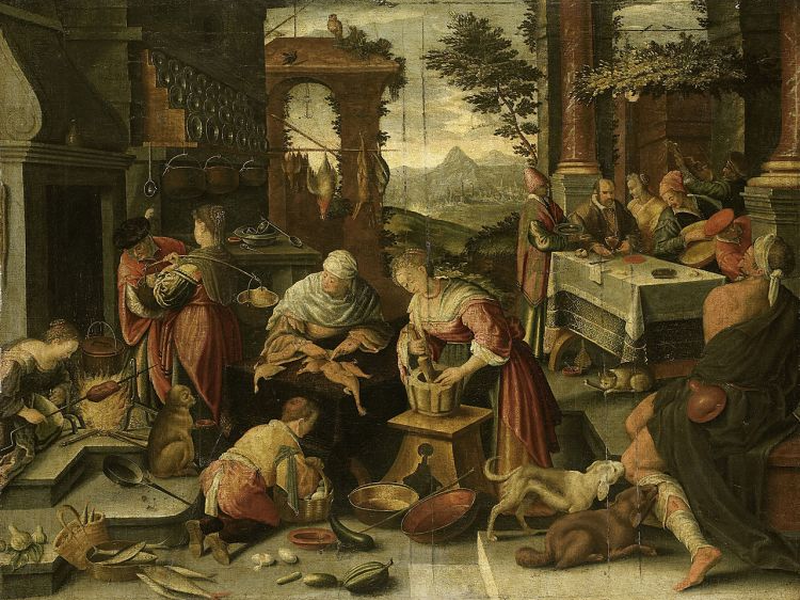
Lazarus and the Rich Man

The parable of Lazarus and the nameless rich man is not an independent story. It is part of a long context that begins in Luke 15:1, where Jesus is eating with tax collectors and sinners and the scribes and Pharisees grumble. In response to their hardheartedness, Jesus tells a three-part…

by Ralph Allan SmithJuly 4, 2019
aaron-burden-uynrnfdkjwg-unsplash
Luke

Everybody has Dropsy - Luke 14:1-24

The Bible is written so that even when a reader cannot pick up on what might be deeper or more detailed aspects of a text, there is virtually always a message to be heard. In the ancient world, where the “reader” of Scripture would likely be a church official facing…

by Ralph Allan SmithJuly 2, 2019
communion
Biblical Theology

Fruit Trees and Grain Plants

The distinction between garden (or vineyard) and field begins in Genesis 2. This relates to the ordering of the formless world. Plants of the field are contrasted with the garden planted by God in Genesis 2:5&8. Later on, under the Old Covenant the Israelites will be required to keep their…

by James B. JordanJune 27, 2019

Showing page 77 of 309

See all

Showing page 9 of 43

See all
Theology

Gift and Causation

Further along his his treatment of de Lubac, Milbank discusses the change in the meaning of causality and divine causality in the medieval period. Drawing on the work of Jacob Schmutz, he gives this account: Prior to 1250, influentia was understood in its etymological sense as a “flowing-in” from God…

April 5, 2006
Theology

Henri de Lubac: A Brief Introduction

INTRODUCTION The French Jesuit theologian Henri de Lubac (1896-1991) was one of the most significant Catholic theologians of the twentieth century, a central figure in the ressourcement movement and the nouvelle theologie movement that inspired the change of atmosphere in the Catholic church leading up to Vatican II. In his…

April 5, 2006

Sermon Outline, Palm Sunday

Much of the following was inspired by a lecture by Dr. David Powlison of the counseling center at Westminster Seminary, Philadelphia. INTRODUCTION As disciples of Jesus, we are all called to take our cross to suffer with Him. He suffered because He provoked murderous hatred from his enemies. Our afflictions…

April 5, 2006
Art

Noah and the Sinners

At the end of his intriguing discussion of Gericault’s painting Scene of Shipwreck, Julian Barnes gives a brief summary of the fortunes of Noah in Western art, which he says change significantly after the Sistine Chapel: “In the Sistine Chapel the Ark (now looking more like a floating bandstand than…

April 2, 2006
Philosophy

Existing

JL Austin once suggested that many people think of existing as something over and above the various activities of a thing, something things do all the time: “like breathing, only quieter - ticking over, as it were, in a metaphysical sort of way.”

March 31, 2006

Aquinas and Cooperation

Exploring George Hunsinger’s criticisms of Thomas’ views on grace, Kerr argues that Thomas does not, as Hunsinger suggests, make human nature “conceptually prior to and independent of divine grace.” Rather “it is by grace that the soul of the sinner is open to God. Paradoxically, fallen human beings are open…

March 31, 2006

Showing page 1863 of 2212

Browse by Category

In Medias Res

Your weekly digest for all things Theopolis.

Donate

Theopolis is nearly 100% donor-supported. Consider joining us on our mission.