Theopolis Logo

Writing

Explore our collection of theological essays, biblical studies, and reflections on faith and culture.

See all
macau-photo-agency-2agj7bq68lk-unsplash
Coronavirus

Does Corona Compassion Kill?

The corona virus hit Western society like a Biblical plague — almost. Biblical plagues were actually much more devastating. Still, as Peter Leithart describes the present situation, it is a judgment from God, because the disease itself together with our political solutions brought about a social situation that fits Deuteronomy’s…

by Ralph Allan SmithMay 26, 2020
dawkins
Theology

Is Theology Useless?

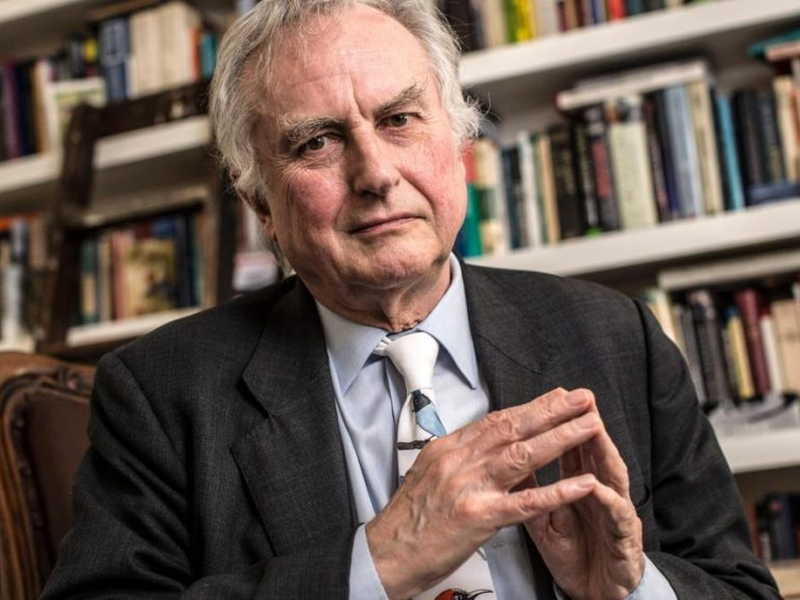
“The achievements of theologians don’t do anything, don’t affect anything, don’t mean anything. What makes anyone think that ‘theology’ is a subject at all?” - Richard Dawkins One cannot be a Christian college president or seminary trustee (your essayist is both) without wondering if Richard Dawkins’s notorious take-down of theology…

by Alexander WhitakerMay 19, 2020
nagesh-badu-nsn5labyy-m-unsplash
How to Worship

How Should Churches Respond to One Another?

Nearly every church that I am aware of has adopted differing practices since the recent virus scare began. Some churches continued to meet during the state lock downs, and other churches left their building empty, meeting online through various video conference technologies. Some churches have gone back to life as…

by Jonah BarnesMay 12, 2020
madhu-shesharam-vbrahouc05w-unsplash
Fear

Fear

Fear is an inseparable companion of human life. We are afraid of illness and death, poverty and cataclysms, rejection and betrayal, failure and shame. We are afraid of the unknown, so in a sense we are afraid of the future and life itself. Unless we live in the illusory belief…

by Bogumil JarmulakMay 5, 2020
stanislav-kondratiev-6po3qfkk7hq-unsplash
Heresy

The Blessing of “Heresies”

In the title above, I put the word “heresies” in quotation marks because I would prefer that the word “heresy” be confined to erroneous beliefs about the Trinity and the Person of Christ, rather than be used broadly to describe any view that might be considered an error. 1 At…

by Ralph Allan SmithApril 30, 2020
olesya-yemets-lyw7pqsp81k-unsplash-2
Fear

On Coping (or not) with a Crisis

I’ve been trying to work out why I’m feeling existentially disconnected from CoV-19-related fears. I’m taking it seriously, but it’s not registering in any deeply personal way. Partly it’s that my routines are largely undisrupted. But as I reflect on people’s reactions I think there’s more, because a lot of…

by Matthew MasonApril 28, 2020

Showing page 67 of 309

See all

Showing page 9 of 43

See all
History

Modernity and antiquity

Kumar suggests that “some of the principal hall-marks of modernity” are already evident in the Christian notions of time and history. Both Christianity and modernity separate time from nature, and humanize time; time is seen by both as “linear and irreversible”; both see history as an Aristotelian drama with beginning,…

February 24, 2006
History

First Modernity

The Latin modernus was coined in the late fifth century, as an antonym to antiquus , and variations of modernus became particularly common after the 10th century. Thus, Krishan Kumar writes, “Modernity is . . . an invention of the Christian Middle Ages,” and was used to emphasize the radical…

February 24, 2006
Philosophy

Computer Communications and the Self

Poster lists four effects that computer communications (email, chat groups, etc) have on the self: “1 they introduce new possibilities for playing with identities; 2 they degender communications by removing gender cues; 3 they destabilize existing hierarchies in relationships and re-hierarchize communications according to criterio that were previously irrelevant; and…

February 24, 2006
Philosophy

Computers, subjects and objects

Descartes famously contrasted the mind (res cogitans) with the external world (res extensa), but Mark Poster suggests that computer writing fudges that distinction: “the computer dematerializes the written trace. As inputs are made to the computer through the keyboard, pixels of phosphor are illuminated on the screen, pixels that are…

February 24, 2006
Media

Community and New Communications

Mark Poster points to a tension between the modern institutions of production and the postmodern technologies of communication, particularly as they impact the formation of the self: “If modernity or the mode of production signifies patterned practices that elicit identities as autonomous and (instrumentally) rational, postmodernity or the mode of…

February 24, 2006
Media

Telephone

Prior to World War I, Telefon Hirmondo, the telephone system of Budapest, was used as a broadcast system, with a published schedule of programs that were restricted to certain classes of people in Hungary. Only later did it develop into a communications system in which everyone could pass information to…

February 24, 2006

Showing page 1878 of 2212

Browse by Category

In Medias Res

Your weekly digest for all things Theopolis.

Donate

Theopolis is nearly 100% donor-supported. Consider joining us on our mission.