Theopolis Logo

Writing

Explore our collection of theological essays, biblical studies, and reflections on faith and culture.

See all
31-03-0213
Hermeneutics

Apocalyptic Eyes

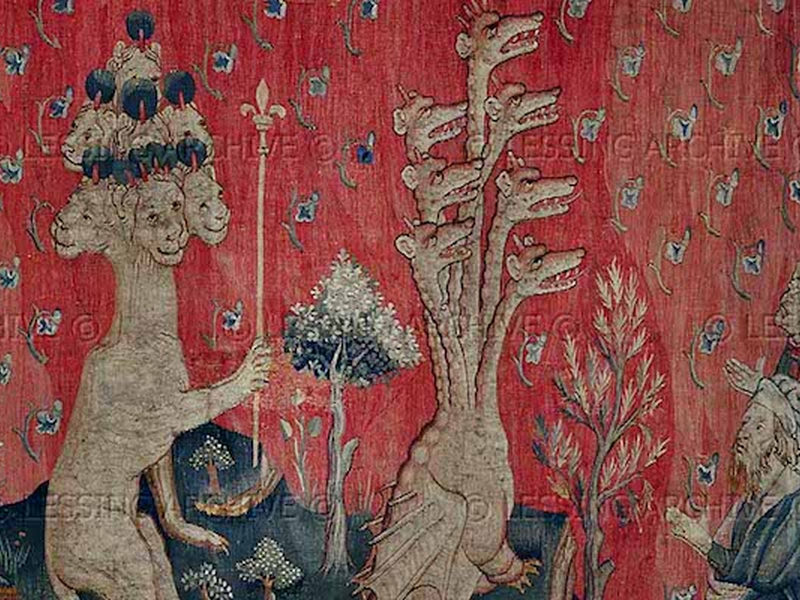
Flying scrolls. Red horses. Beasts coming out of the sea. Winged women. The list goes on. Apocalyptic literature in the Bible is like a cross between science fiction and Marvel comics. And the Bible has a fair bit of this sort of thing. Daniel sees visions in Babylon, Zechariah sees…

by Toby SumpterNovember 4, 2014

bhm-skyline-2
Theopolis News

New Name, New Look

Trinity House Institute has taken a new name, the Theopolis Institute. This striking new name expresses our unique vision and mission and captures the unified purpose behind all our specific programs and activities. We still have Bible, liturgy, and culture in our tagline. We still offer the same courses on…

by TheopolisNovember 4, 2014
istock_000012860926small
Atonement

Not Fearing the Devil

Adam Kotsko offers a socio-political variation on the Christus Victor atonement theory in his 2010 study, The Politics of Redemption: The Social Logic of Salvation . He does this by explaining "the devil" in terms of the Hegelian concept of "objective spirit," Geist . As Kotsko puts it, Geist "refers…

by Peter LeithartOctober 13, 2014
jez-timms-8muutamcwu4-unsplash
Leviticus

The Meaning of Sacrifice

Two factors keep Nahtali Meshel from discussing the meaning of sacrifice until late in his The "Grammar" of Sacrifice . The first has to do with the texts he draws from: "P says little about the meaning of its rituals" (174). The other has to do with the grammatical theory…

by Peter LeithartOctober 8, 2014
jez-timms-8muutamcwu4-unsplash
Leviticus

Praxemics

Chapter 5 of Naphtali Meshel's The "Grammar" of Sacrifice focuses on "praxemics," the physical actions of sacrificial ritual. Praxemes are constituted by six elements: an "atomact," an elementary physical act or gesture; an actor; an object that is acted up; a target for the action and often for the object…

by Peter LeithartOctober 6, 2014
markus-winkler-aid-xyrtlec-unsplash
Leviticus

Jugation and Hierarchy

Two chapters of Naphtali Meshel’s The “Grammar” of Sacrifice cover what he calls “jugation” and “hierarchies.” The first involves the addition of other materials to an animal offering. Jugates include wine, cereal, and oil that are added to the animals (zoemes) that are offered in sacrifice. Some jugates are coordinated…

by Peter LeithartOctober 1, 2014

Showing page 167 of 309

See all

Showing page 9 of 43

See all

Romans 9

Some of this repeats notes from last week, but then moves beyond. WHAT ABOUT ISRAEL? The ringing affirmations of chapter 8, that those who are in Christ cannot be lost to Christ leads directly into Paul?s discussion of Israel in chapter 9. He is not beginning a new topic. He…

May 22, 2005

No God in Israel?

I am indebted to Peter Roise for the following NT Wrightian comments. In the OT, the name “Baal-zebub” occurs only in 2 Kings 1. But the name reappears as a title for Satan in the gospels, when the leaders of Israel accuse Jesus of casting out demons by Beelzebul, the…

May 21, 2005

Ups and Downs

What’s with all the up-down talk in 2 Kings 1? The Angel of Yahweh sends Elijah to “ascend to call” the messengers/angels of Ahaziah (v. 3), and Elijah’s message is that Ahaziah will never “come down” from the bed where he “ascended” (v. 3). That oracle, including the “come down”…

May 21, 2005
Theology

Cusa and Renaissance

I’ve posted a number of times on Cusa in the past, and the following builds on notes and outline that I posted in Febrary 2004. NICHOLAS OF CUSA This is a continuation of the earlier essay on Renaissance and modernity. To keep my assessment of the Renaissance under control, and…

May 20, 2005
History

Renaissance and Modernity

The following is a more extensive version of a post from February 2004, under the same title. INTRODUCTION My thesis is developed over against a widespread conception of the Renaissance as the beginning of the modern world, the beginning of secularism and humanism. I am not an uncritical fan of…

May 20, 2005
Theology

Say it ain’t so, Nicholas

For reasons that I’ll detail in a subsequent post, I’m a considerable fan of Nicholas of Cusa. I was unhappy to come across this from William Cavanaugh: “The origin of the modern concept of religion can be seen clearly in the thought of two fifteenth-century Christian Platonist thinkers, Nicholas of…

May 20, 2005

Showing page 1978 of 2212

Browse by Category

In Medias Res

Your weekly digest for all things Theopolis.

Donate

Theopolis is nearly 100% donor-supported. Consider joining us on our mission.