Theopolis Logo

Writing

Explore our collection of theological essays, biblical studies, and reflections on faith and culture.

See all
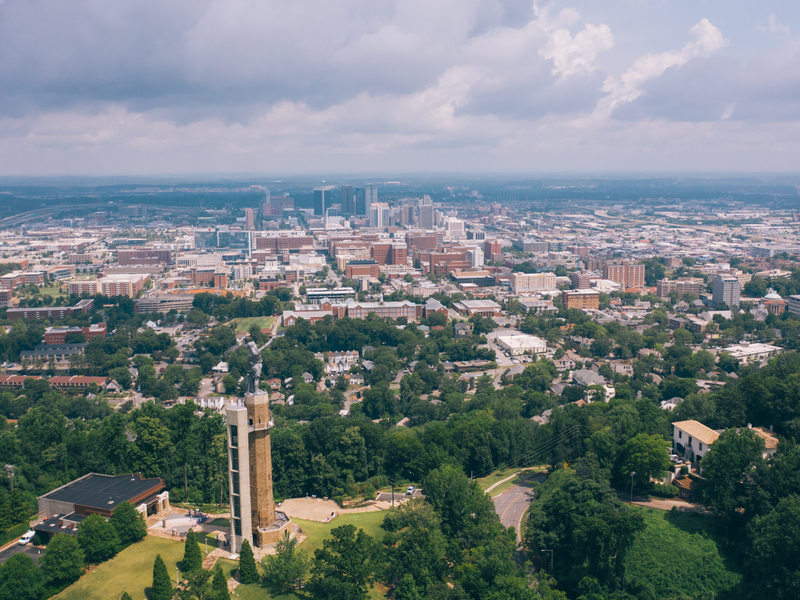
bhm-skyline-2
Ecclesiology

Reformed Catholicity in the Bible Belt

I grew up on the north side of Chicago. My parents were evangelicals and I was raised in the faith. I graduated from a large public high school in which practicing Christians were very few and very far between (though nominal Roman Catholics and Eastern Orthodox were in abundance), which…

by Rich LuskMay 26, 2014

briana-tozour-mrfapsuyy8a-unsplash
Ecclesiology

Reformational Catholicism Now, (3)

During the recent round table discussion on the future of Protestantism , Peter Leithart advocated a much greater degree of unity in the Church than we presently enjoy. Another participant in the discussion wondered aloud how Leithart's vision would be different from the ministerial associations that presently exist in many…

by Tim NicholsMay 21, 2014
karsten-wurth-imegmbunara-unsplash
Ecclesiology

Church Unity Starts at Home

"But he, wanting to justify himself, said, 'And who is my neighbor?' And Jesus said to him, 'First, your neighbors are the people in your church, then the ones with whom you enjoy greatest doctrinal or ecclesiastical commonality, then those with whom you enjoy less commonality.'" -Said Jesus... never Since…

by Joe AndersonMay 19, 2014
sinitta-leunen-dvibhmzsy8e-unsplash
Ephesians

Glory and Unity

A number of years ago, I came across something in the Puritan Thomas Goodwin in regard to John 17:22. Goodwin points out that Jesus prays that they (the disciples) might be given the glory of the Father as a means to an end. The end is unity, and the means…

by Richard BledsoeMay 14, 2014
channel-82-urfja47nuhu-unsplash
Catholicism

Reformational Catholicism Now, (2)

In her prize-winning book, Gilead , Marilynne Robinson uses the pastoral settings of Iowa to challenge ministers to live up to their high callings. One of the most powerful themes in the novel is the pastor’s power to “bless.” The tension in the novel builds as we watch Rev. Ames…

by Tom ClarkMay 12, 2014
e99a1883
Catholicism

Reformational Catholicism Now (1)

One of the few glaring errors of the Protestant Reformers was the failure to welcome children back to the Lord's Table. Something that seems to go along with this was the exclusion of other kinds of Christians, primarily Roman Catholics, from Holy Communion in Protestant churches. Exclusion of Roman Catholics…

by James B. JordanMay 7, 2014

Showing page 174 of 309

See all

Showing page 9 of 43

See all

Structure in 1 Chronicles 26

1 Chronicles 26:1-19 lists the names and positions of gatekeepers at Solomon's temple. The passage is framed by references to the “allotment” or “apportionment” of assignments to Korahites (v. 1) and sons of Korah and Merari (v. 19). Within this frame, the text moves in a complex parallel fashion through…

February 21, 2017

All Great Art Is Praise

“T he art of man is the expression of his rational and disciplined delight in the forms and laws of the creation of which he forms a part.” This is the first thesis of John Ruskin's “All Great Art Is Praise,” in The Laws of Fesole . Rationality is essential…

February 21, 2017

Demonstrative Complications

I n their 1662 treatise on Logic, or the Art of Thinking , Antoine Arnauld and Pierre Nicole question the straightforwardness of the Calvinist logical analysis concerning the Eucharistic “This is my body.” They summarise the argument this way: “Their claim is that in Jesus Christ’s assertion, ‘This is my…

February 20, 2017

Passivity and Freedom

I ngolf Dalferth thinks we are Creatures of Possibility . By that, he means that “we are creatures in the making whose actual becoming depends on possibilities beyond our control that occur in our lives as opportunities and chances that we can neglect and miss or take up and use”…

February 17, 2017

The State after ‘68

A ccording to Pierre Manent ( Beyond Radical Secularism ), May 1968 marked a critical turning point in the political history ofFrance. Despite the persistence of the “Gaullist” party in political power, ‘68 undermined “collective rules, both political and merely social. The citizen of action was followed by the individual…

February 17, 2017

On Separating Church and State

S eparation of church and state, religion and politics, is not “sufficient unto itself,” argues Pierre Manent ( Beyond Radical Secularism ). After all, he points out, citizens are believers, believers citizens, and they don’t cease to be one when they take up the role of the other. Separation “suggests…

February 17, 2017

Showing page 204 of 2212

Browse by Category

In Medias Res

Your weekly digest for all things Theopolis.

Donate

Theopolis is nearly 100% donor-supported. Consider joining us on our mission.