Theopolis Logo

Writing

Explore our collection of theological essays, biblical studies, and reflections on faith and culture.

See all
tanner-mardis-xuxghzhibn4-unsplash-1-2
Biblical Studies

Tweets-turned-Notes on the Bible’s Chronology

Summary In what follows, I will consider the “year-stamps” employed in Scripture, i.e., statements of the form, “Such-and-such an event took place in the Xth year of Y.” In the process, I will suggest some ways in which the Biblical narrative might relate to events in the extra-Biblical world, though…

by James BejonJuly 16, 2019
durer-prodigal-son-2
Luke

Perspectives on the Prodigal, (Part 2)

In the first essay on the parable of the Prodigal Son, I suggested that the problems commentators and others encounter in interpreting Jesus three-part parable are not accidental. These are not just problems in our ignorance of cultural background. They are intentional features of the stories —stories designed to poke…

by Ralph Allan SmithJuly 11, 2019
durer-prodigal-son-2
Luke

Perspectives on the Prodigal, (Part 1)

The story of the Prodigal Son is perhaps the most well-known story in the Bible. As others have observed, it may also be one of the most misunderstood. In two short essays, I will point out features of this story that are commonly neglected, aspects of Jesus’ parable that might…

by Ralph Allan SmithJuly 9, 2019
de-rijke-man-en-de-arme-lazarus-by-jacopo-da-ponte-16th-century
Luke

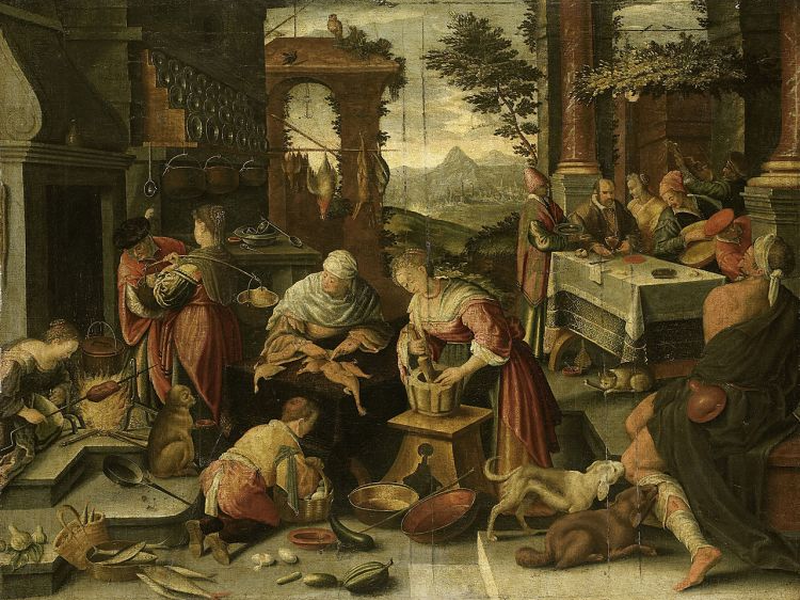
Lazarus and the Rich Man

The parable of Lazarus and the nameless rich man is not an independent story. It is part of a long context that begins in Luke 15:1, where Jesus is eating with tax collectors and sinners and the scribes and Pharisees grumble. In response to their hardheartedness, Jesus tells a three-part…

by Ralph Allan SmithJuly 4, 2019
aaron-burden-uynrnfdkjwg-unsplash
Luke

Everybody has Dropsy - Luke 14:1-24

The Bible is written so that even when a reader cannot pick up on what might be deeper or more detailed aspects of a text, there is virtually always a message to be heard. In the ancient world, where the “reader” of Scripture would likely be a church official facing…

by Ralph Allan SmithJuly 2, 2019
communion
Biblical Theology

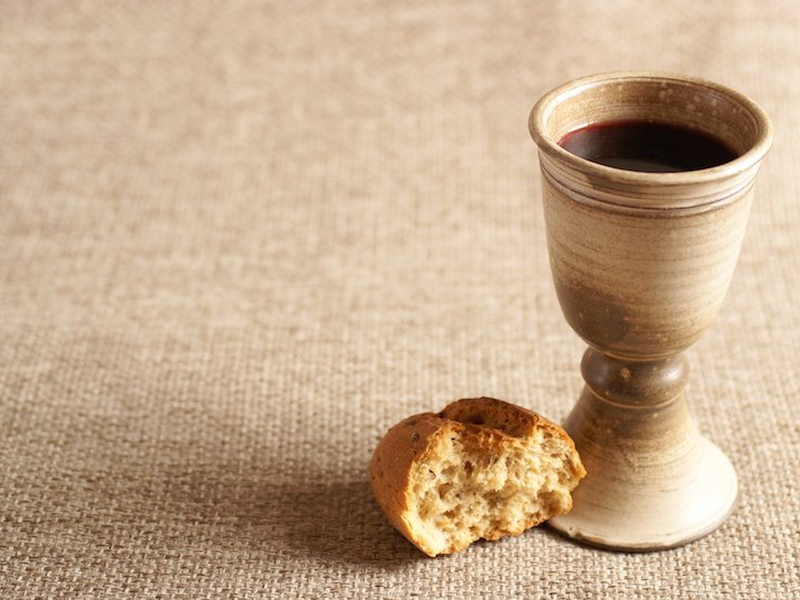
Fruit Trees and Grain Plants

The distinction between garden (or vineyard) and field begins in Genesis 2. This relates to the ordering of the formless world. Plants of the field are contrasted with the garden planted by God in Genesis 2:5&8. Later on, under the Old Covenant the Israelites will be required to keep their…

by James B. JordanJune 27, 2019

Showing page 77 of 309

See all

Showing page 9 of 43

See all

A Few Haiku

her bandanna blue through the cattails by the pond in the green pasture in the pond morning clouds and sun flecks of moonlight like fireflies ?E the ripples of the pond across her chair shafts of sunlight through the lace curtain

April 26, 2004

Exhortation, April 25

Trinity Reformed Church is large enough that it is difficult to know everyone in the church. And now we have been around long enough that it is awkward and embarrassing for us to meet each other. When you introduce yourself and say something like ?Are you visiting??Ethe response might well…

April 26, 2004

Eucharistic Meditation, April 25

Leviticus 22:10-16 In the sermon today, I addressed the some of the challenges and temptations of young adulthood, the priestly stage of life. It is biblically appropriate, as I tried to show, to describe young adulthood in these terms. But we should not let this perspective obscure the more fundamental…

April 25, 2004
History

Making Our Enemies

Lee Harris has some fascinating comments on how the liberal West constructed the Islamic threat in his recent book, Civilization and Its Enemies . Harris points out that the early modern state developed in a kind of Darwinian political world, where only the powerful states could survive. A state was…

April 22, 2004

Freedman Again

Freedman comments, “It may be pure coincidence that the Book of Genesis begins with the words beresit . . . elohim , ‘In the beginning, . . . God . . . ,’ while the book of Ezra-Nehemiah ends with the words elohay letoba , ‘ . . . my…

April 21, 2004

Chronicles and Writings

David Noel Freedman suggests in his book on the unity of the Hebrew Bible a reason for the repetition of the decree of Cyrus at the end of 2 Chron and the beginning of Ezra. He points to certain manuscripts in which Chronicles and Ezra-Nehemiah enclose the Writings: Chronicles at…

April 21, 2004

Showing page 2096 of 2212

Browse by Category

In Medias Res

Your weekly digest for all things Theopolis.

Donate

Theopolis is nearly 100% donor-supported. Consider joining us on our mission.