Theopolis Logo

Writing

Explore our collection of theological essays, biblical studies, and reflections on faith and culture.

See all
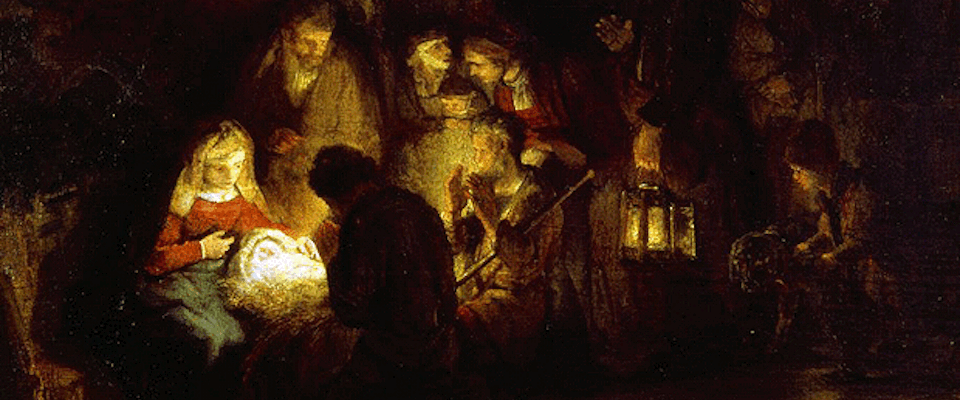
nativity-2
Advent

Joyful Humility

Christmas is a joyful season, but for many it turns into something else. Instead of joy, it is full of disappointment and unhappiness. Instead of an occasion for family fellowship, it becomes an opportunity for opening old wounds, reigniting old arguments, giving new life to rancor that should have died…

by Peter LeithartDecember 19, 2016

sagradafamilia-crop
Biblical Theology

Systematic Typology (Part Five)

The Temple of Time The “covenant-literary matrix” of the Bible is not a pattern imposed upon the text, but the internal logic of its arrangement. This fundamental structure, functioning at multiple levels simultaneously, is a ceaseless reiteration of God’s primary theme. It is an algorithm forged in the furnace of…

by Mike BullDecember 16, 2016
img_1456
Hermeneutics

Exodus in 1 Kings

In the four hundred and eightieth year after the Exodus, Solomon began to build the temple of the Lord in Jerusalem. [1] That the author of Kings should date the start of the building of the temple from the Exodus is noteworthy. In Exodus 15:17, in Moses’ song following the…

by Alastair RobertsDecember 8, 2016
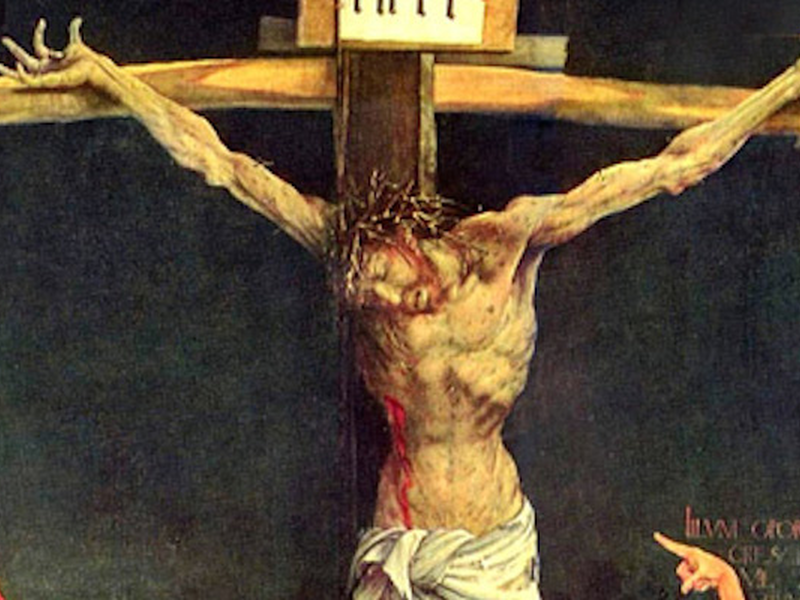
cross-grunwald
Cross

How Mist Gains Weight

Philip Schaff, a German Reformed theologian, states in The Principle of Protestantism that the material principle of Protestantism is “the doctrine of the justification of the sinner before God by the merit of Christ alone through faith.” This is the core message of the Church which leads “to the abandonment…

by Bogumil JarmulakDecember 6, 2016
mountain-top
Biblical Theology

Jesus and Godel's Theorem

“Religion” is an attempt to create or build a tower with a top, or to build a temple that is self-contained. The story of The Tower of Babel in Genesis 11 is the story of mankind’s attempt to create a world that is self-contained and does not need God. All…

by Richard BledsoeDecember 1, 2016
four-evangelists
Matthew

Dating Matthew, (Part 2)

In the first essay in this series, I presented a case for dating Matthew before AD 70, contrary to the present scholarly consensus. In this essay, I intend to present cultural, personal, ecclesiological, and theological arguments for a very early date for Matthew. [1] The cultural argument concerns literacy in…

by Ralph Allan SmithNovember 29, 2016

Showing page 121 of 309

See all

Showing page 9 of 43

See all

Shopping

The Winter 2004 issue of The Wilson Quarterly has several intriguing articles on shopping and the institution of the shopping mall. The articles cover the rise of the shopping, consumer culture; the strategies behind the arrangement of various departments of a mall store; and moral concerns with materialism and hedonism.…

March 10, 2004
Theology

Christianity and the Religions

A review of a new history of modernity in the TLS raises a number of intriguing questions. The author of the volume claims that the age of nations is over, and that history writing has to catch up. History writing is still too much stuck in the rapidly vanishing world…

March 9, 2004
Literature

Milton’s Satan

A student points out a weakness in Stanley Fish ‘s reader-response treatment of Milton’s Satan, the notion that Milton deliberately makes Satan attractive and powerful not because Milton is of the devil’s party but because he is trying to run the reader through the same experience of temptation that Adam…

March 9, 2004
Literature

Milton’s Satan

A student points out a weakness in Stanley Fish ‘s reader-response treatment of Milton’s Satan, the notion that Milton deliberately makes Satan attractive and powerful not because Milton is of the devil’s party but because he is trying to run the reader through the same experience of temptation that Adam…

March 9, 2004
Literature

Short Story: The Accidental Ecumenist

I. Sir Reginald Piddleby-Squeak was in a pickle. The pickle he was in was no ordinary pickle, but a pickle of the most unusual size and sourness, a pickle from which he had no prospects of being rapidly extracted. He expected at any moment that he would begin turning green…

March 6, 2004
Literature

Essay: Introduction to Julius Caesar

Introduction Elizabethans viewed Rome through two historical lenses. On the one hand, Rome was for Elizabethans the great civilization of antiquity. They knew less of Greece than we do, and almost nothing of ancient Egypt or Babylon, much less China. When they traced their cultural genealogy, they traced it back…

March 6, 2004

Showing page 2113 of 2212

Browse by Category

In Medias Res

Your weekly digest for all things Theopolis.

Donate

Theopolis is nearly 100% donor-supported. Consider joining us on our mission.