Theopolis Logo

Writing

Explore our collection of theological essays, biblical studies, and reflections on faith and culture.

See all
hebrew-manuscript-2
John

And the Holy of Holies Became Flesh

And the Word became flesh and tabernacled among us, and we beheld His glory...(John 1:14) Commentaries on John, discussing the Word or Logos in John 1, routinely turn to Greek philosophy and say that John is using a term and at least part of an idea familiar in the ancient…

by James B. JordanMarch 8, 2016

img_4660-2
Contentment

Defining Contentment

Jeremiah Burroughs defines contentment as “that sweet, inward, quiet, gracious frame of spirit, which freely submits to and delights in God’s wise and fatherly disposal in every condition” Contentment is one Christian virtue that Americans have an incredibly hard time understanding and applying. We have such comfortable lives that we…

by Lindsey TollefsonMarch 3, 2016
img_7652-2
Course Recap

Out of Exodus

"The goal I have for myself, my family, and my church is total bible saturation. I expected the Exodus Intensive class to help me with that, but I am shocked just how much it did," said Mark Balthrop, a pastor in Oklahoma City who attended Theopolis' recent course on the…

by Brian MoatsMarch 2, 2016
cross-2
Atonement

Gospel as Atonement Theory

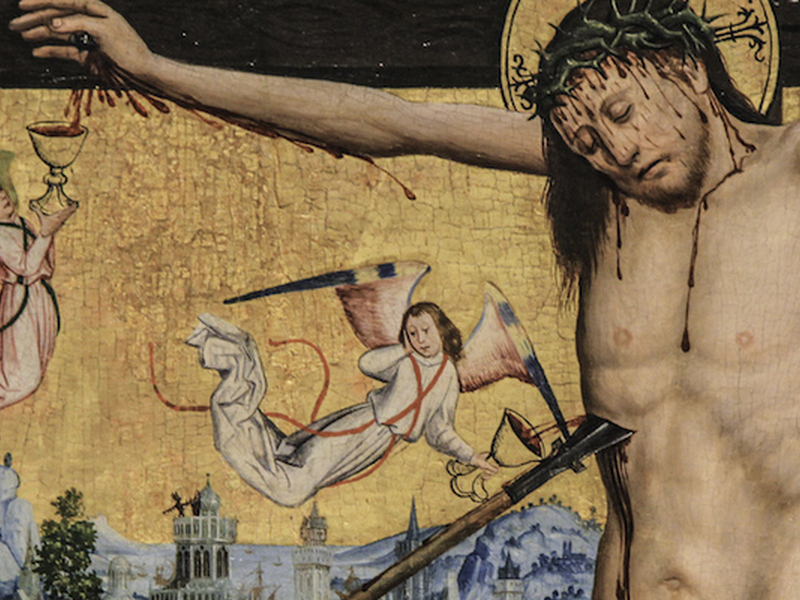
In a characteristically pithy essay, Robert Jenson has decried the “two paired errors” of traditional atonement theory. On the one hand, the cross is separated “from its future, in the resurrection” and, on the other, from “its past in the canonical history of Israel.” For the apostles, crucifixion is “anything…

by Peter LeithartMarch 1, 2016
sailing-shop-storm-crop
Biblical Theology

What is Systematic Typology? - Part One

The Historical-Grammatical Nanny State Typological interpretation is either abused or frowned upon, a domain relegated to mystics and charlatans, where the angels of modern academia fear to tread. But what if the Bible itself contained safeguards against irresponsible flights of fancy? And if it did, what would they look like?…

by Mike BullFebruary 25, 2016
sparkler
Contentment

Beginning Contentment

It is harsh advice for a suffering soul to be told to be content, to be happy, to be delighting in the rough circumstances. Is Christian contentment something we should automatically have as a result of being in Christ? Is it something we do? Is it an action or is…

by Lindsey TollefsonFebruary 23, 2016

Showing page 135 of 309

See all

Showing page 9 of 43

See all

Sacrilege or Exaltation

T he Hebrew word ma’al is a key term in Chronicles. It means “act of unfaithfulness” or “sacrilege,” and is the sin that leads to Saul's fall (he ma’aled a ma’al , 1 Chronicles 10:13) and to the exile of Judah, whose officials and priests ma’aled a ma’al (2 Chronicles…

November 7, 2016
Reformational Catholicism

End of Protestantism

M y End of Protestantism (the book) deals with a number of the questions Doug Wilson raises in his brief review . Here I correct several of Doug’s misrepresentations and clarify some points, but mainly point to fuller discussions in the book. First, on John 17: Doug says that I’m…

November 7, 2016
American Politics

American Prestige in Freefall

W riting in The Australian , Paul Kelly views the state of American politics from Down Under. He gets some things wrong, I think, but he also nails some of the cultural and political toxins of which the 2016 Presidential debate is symptomatic. He lays much of the blame on…

November 4, 2016

Pain and Negation

I n her The Body in Pain , Elaine Scarry describes the “aversiveness” of our experience of pain. By that, she means that pain is sheerly negative, experienced as something set against us. Even though it is in us, it’s not us. Scarry writes: The first, the most essential, aspect…

November 4, 2016

Aging and the Unmaking of the World

A ge obliterates and collapses our world, writes Elaine Scarry in The Body in Pain (32-3): “the body works to obliterate the world and self of the old person. Something of this world dissolution is already at work even in the tendency of those in late middle age, no longer…

November 4, 2016

Divine Sentience

I n several places in Scripture, idols are characterized by their sensory deprivation (Psalms 115; 135). They have eyes but cannot see, ears but cannot hear prayer, noses but cannot smell incense of sacrifice. By implication, Yahweh the living God can do all these things. Elaine Scarry points out (…

November 4, 2016

Showing page 235 of 2212

Browse by Category

In Medias Res

Your weekly digest for all things Theopolis.

Donate

Theopolis is nearly 100% donor-supported. Consider joining us on our mission.