Theopolis Logo

Writing

Explore our collection of theological essays, biblical studies, and reflections on faith and culture.

See all
31-03-0213
Hermeneutics

Apocalyptic Eyes

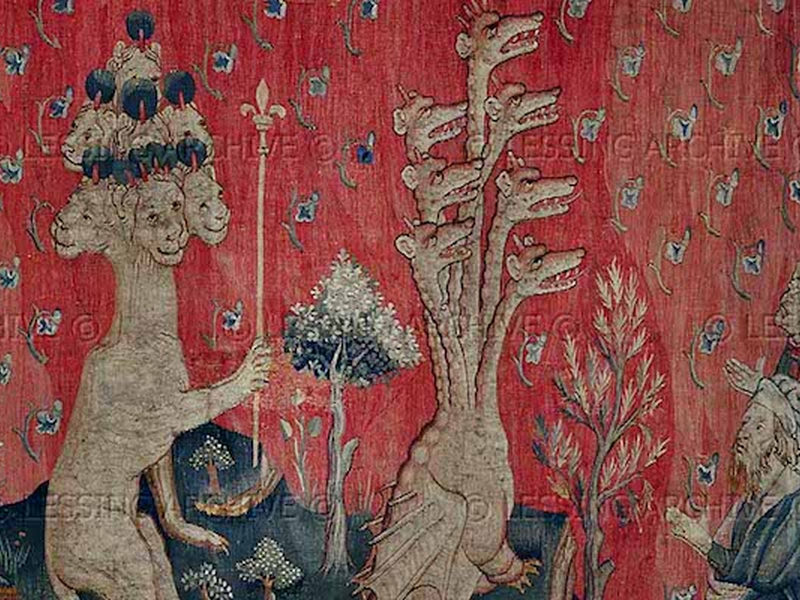
Flying scrolls. Red horses. Beasts coming out of the sea. Winged women. The list goes on. Apocalyptic literature in the Bible is like a cross between science fiction and Marvel comics. And the Bible has a fair bit of this sort of thing. Daniel sees visions in Babylon, Zechariah sees…

by Toby SumpterNovember 4, 2014

bhm-skyline-2
Theopolis News

New Name, New Look

Trinity House Institute has taken a new name, the Theopolis Institute. This striking new name expresses our unique vision and mission and captures the unified purpose behind all our specific programs and activities. We still have Bible, liturgy, and culture in our tagline. We still offer the same courses on…

by TheopolisNovember 4, 2014
istock_000012860926small
Atonement

Not Fearing the Devil

Adam Kotsko offers a socio-political variation on the Christus Victor atonement theory in his 2010 study, The Politics of Redemption: The Social Logic of Salvation . He does this by explaining "the devil" in terms of the Hegelian concept of "objective spirit," Geist . As Kotsko puts it, Geist "refers…

by Peter LeithartOctober 13, 2014
jez-timms-8muutamcwu4-unsplash
Leviticus

The Meaning of Sacrifice

Two factors keep Nahtali Meshel from discussing the meaning of sacrifice until late in his The "Grammar" of Sacrifice . The first has to do with the texts he draws from: "P says little about the meaning of its rituals" (174). The other has to do with the grammatical theory…

by Peter LeithartOctober 8, 2014
jez-timms-8muutamcwu4-unsplash
Leviticus

Praxemics

Chapter 5 of Naphtali Meshel's The "Grammar" of Sacrifice focuses on "praxemics," the physical actions of sacrificial ritual. Praxemes are constituted by six elements: an "atomact," an elementary physical act or gesture; an actor; an object that is acted up; a target for the action and often for the object…

by Peter LeithartOctober 6, 2014
markus-winkler-aid-xyrtlec-unsplash
Leviticus

Jugation and Hierarchy

Two chapters of Naphtali Meshel’s The “Grammar” of Sacrifice cover what he calls “jugation” and “hierarchies.” The first involves the addition of other materials to an animal offering. Jugates include wine, cereal, and oil that are added to the animals (zoemes) that are offered in sacrifice. Some jugates are coordinated…

by Peter LeithartOctober 1, 2014

Showing page 167 of 309

See all

Showing page 9 of 43

See all

Advertising and Alienation

R ay Oldenburg’s The Great Good Place is a brief for the “third place,” a place that is neither home nor workplace, a public place that isn’t political, the cafe, tavern, coffee shop or diner where everyone knows your name. “Third place” designates “a great variety of public places that…

September 30, 2016

Law in Flatland

T homas Friedman announced over a decade ago that The World Is Flat . It’s gotten flatter since. Friedman focused on how technology had dismantled hierarchies in politics, business, production, and distribution. More recently, Gillian Hadfield argues, “ Digitization on a global scale converts objects and actions and ideas into…

September 29, 2016

Levitical Genealogy

The genealogy of the Levites (ch. 6) is at the center of the genealogical section of 1 Chronicles (chs. 1–9). It’s a long and complexly organized passage. In general, it divides into two sections: The genealogies of the priests and Levites (vv. 1–53) and the cities assigned to priests and…

September 29, 2016

Covenant with Strangers

T he Psalm recorded in 1 Chronicles 16 (Psalm 105) exhorts the singers to “remember forever His covenant, the Word He commanded to a thousand generations” (v. 15). The covenant with Abraham and Isaac, confirmed to Jacob and Israel, has to do with the land: “To you I will give…

September 28, 2016

Mouth and Heart

R omans 10:9–10 is arranged in a straightforward chiasm: A. If you confess with your mouth Jesus as Lord B. and believe in your heart that God raised Him from the dead, C. You shall be saved. B'. For with the heart man believes unto righteousness A'. and with the…

September 27, 2016

Covetousness, Idolatry, and Neighborly Economics

W alter Brueggemann sums up the Bible’s perspective on Money and Possessions in six propositions: Money is a gift from God. Wealth is a reward for obedience. Possessions belong to God and are held in trust. Money can be a source of social injustice. Possessions are to be used and…

September 27, 2016

Showing page 249 of 2212

Browse by Category

In Medias Res

Your weekly digest for all things Theopolis.

Donate

Theopolis is nearly 100% donor-supported. Consider joining us on our mission.