Theopolis Logo

Writing

Explore our collection of theological essays, biblical studies, and reflections on faith and culture.

See all
screen-shot-2022-05-12-at-12-07-23-pm
Leviticus

The Theology of the Drink Offering

The drink offering or libation ( nesek ) is mentioned in only three places in the book of Leviticus. When the sheaf of the firstfruits was waved before the Lord, a grain offering was to be burned, along with "its libation, a fourth of a hin of wine [approx. one…

by Peter LeithartJuly 17, 2018

aaron-burden-qjdzyt_k8xg-unsplash
Atonement

Limited Atonement & J. I. Packer

When I became a Calvinist it wasn't long before I learned that John Owen’s The Death of Death in the Death of Christ was regarded as the masterful treatise on what is known as "Limited Atonement"--the "L" in the TULIP mnemonic device for "the five points of Calvinism." This wasn't…

by Mark HorneJuly 12, 2018
30211-bathsheba-800w-tn
Hermeneutics

Bathsheba: The Real Story

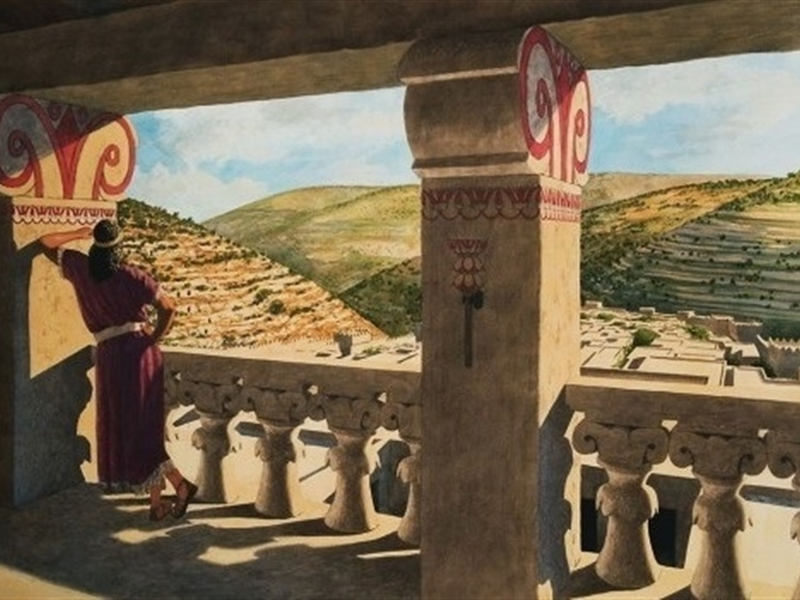
One of the advantages of paying very close attention to the details in the Bible, especially chronological and genealogical details, is that they can shed light on situations that don’t seem to make much sense apart from them. One such situation is that of Bathsheba. It appears that Bathsheba willingly…

by James B. JordanJuly 10, 2018
img_7664
Leviticus

The Oddness of the Feast of Booths

The Feast of Ingathering in the seventh month of the Sinaitic calendar is also called the Feast of Sukkoth, of Booths, also called Feast of Tabernacles. I have usually called it by that last phrase, and it is the most common today; but there is a problem: A tabernacle is…

by James B. JordanJuly 5, 2018
alec-guinness-with-george-lucas
Matthew

A Universe Less Expanded

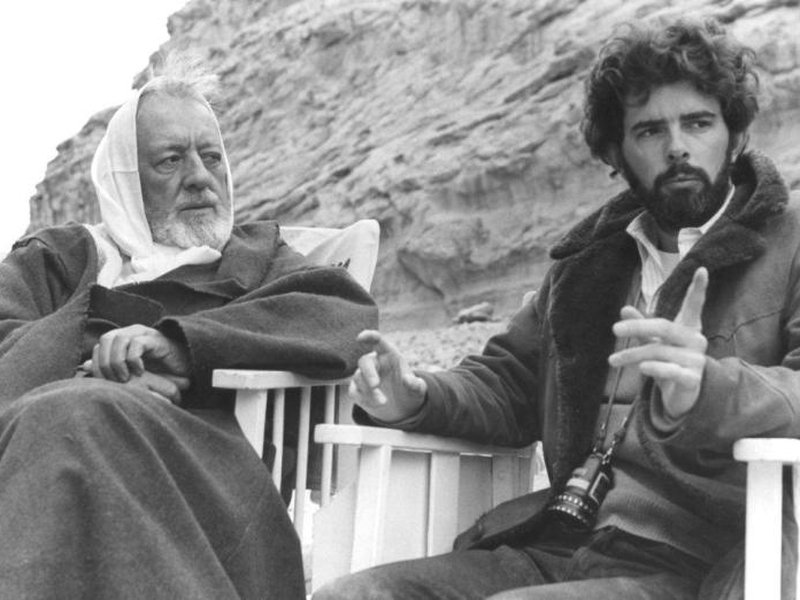
When Matthew’s Gospel was first read aloud to the fledgling Christian congregations, the experience must have been like seeing the words “A long time ago in a galaxy far, far away…” appear afresh on cinema screens in 1999. Yet, unlike The Phantom Menace, the New Testament did not disappoint. Why?…

by Mike BullJuly 3, 2018
screen-shot-2018-06-28-at-9-29-39-am
Art

Seeking Integration in a Fragmented World: Kintsugi Integration

Fragmentation and integration are phenomena which artist Makoto Fujimura feels bodily, and about which he is concerned profoundly. What do these mean for him? How may we draw his insights into this ongoing consideration—itself integrative—of integration in a fragmented world? Thus far I have been acquainting you with matters already…

by Esther Lightcap MeekJune 28, 2018

Showing page 91 of 309

See all

Showing page 9 of 43

See all

Losing Face

In his 2013 book, Saving Face , Stephen Pattison observes that infants very quickly begin to notice and recognize faces, and to imitate the expressions they see. “To be and to become human socially and emotionally,” he writes, “is to engage in real, nuanced, face-to-face visual relations.” When a child…

April 1, 2016

De-Aristotelianizing Plato

Between 1900 and 1960, scholars believed that Plato held to a “cosmological” view of the divine, the notion that gods are “personified forces responsible for bringing order to the sensible world.” Since then, scholars have adopted a “metaphysical” interpretation, arguing that Plato's god is finally a metaphysical principle. So argues…

April 1, 2016

Breaking the Contract

Ryan Leif Hansen ( Silence and Praise ) describes Roman imperial religion as a social contract that bound the gods, the emperor, and the Roman people in a stable, peaceful order: “ Cultic ritual, sacrifice, and the related economic exchange were integral for sustaining the order of the cosmos ,…

March 31, 2016

Son of Pain

Sara Japhet ( I and II Chronicles ) notes the “unusual” structure of the etiological story behind the name “Jabez” in 1 Chronicles 4:9-10. Typically, “an aetiology offers an explanation for a given datum (commonly, but not always, a name) by recounting the causes from which it arose and demonstrating…

March 31, 2016
daniel-james-dhw68hz9kba-unsplash

Sterilizing Marriage

In his powerful manifesto, Nation of Bastards , Douglas Farrow argues that the Kulturkampf in which we find ourselves began in the early part of the 20th century with “the promotion of sterilization, eugenics, and the contraceptive mentality.” In short, it started “as an attack on children,” more horrifically in…

March 31, 2016

Art of Politics

In his reflections on Carl Schmitt, Paul W. Kahn ( Political Theology ) contrasts Enlightenment political rationalism to Schmitt's political voluntarism. Kant stands as the representative of the rationalist tradition: “For Kant, the question of freedom was that of how a subject could determine his own action in a causally…

March 30, 2016

Showing page 304 of 2212

Browse by Category

In Medias Res

Your weekly digest for all things Theopolis.

Donate

Theopolis is nearly 100% donor-supported. Consider joining us on our mission.