Theopolis Logo

Writing

Explore our collection of theological essays, biblical studies, and reflections on faith and culture.

See all
31-03-0213
Hermeneutics

Apocalyptic Eyes

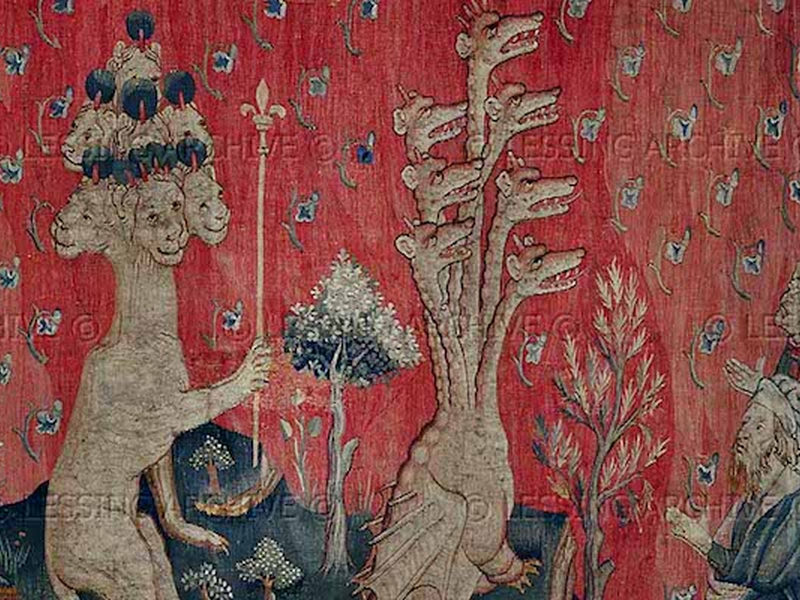
Flying scrolls. Red horses. Beasts coming out of the sea. Winged women. The list goes on. Apocalyptic literature in the Bible is like a cross between science fiction and Marvel comics. And the Bible has a fair bit of this sort of thing. Daniel sees visions in Babylon, Zechariah sees…

by Toby SumpterNovember 4, 2014

bhm-skyline-2
Theopolis News

New Name, New Look

Trinity House Institute has taken a new name, the Theopolis Institute. This striking new name expresses our unique vision and mission and captures the unified purpose behind all our specific programs and activities. We still have Bible, liturgy, and culture in our tagline. We still offer the same courses on…

by TheopolisNovember 4, 2014
istock_000012860926small
Atonement

Not Fearing the Devil

Adam Kotsko offers a socio-political variation on the Christus Victor atonement theory in his 2010 study, The Politics of Redemption: The Social Logic of Salvation . He does this by explaining "the devil" in terms of the Hegelian concept of "objective spirit," Geist . As Kotsko puts it, Geist "refers…

by Peter LeithartOctober 13, 2014
jez-timms-8muutamcwu4-unsplash
Leviticus

The Meaning of Sacrifice

Two factors keep Nahtali Meshel from discussing the meaning of sacrifice until late in his The "Grammar" of Sacrifice . The first has to do with the texts he draws from: "P says little about the meaning of its rituals" (174). The other has to do with the grammatical theory…

by Peter LeithartOctober 8, 2014
jez-timms-8muutamcwu4-unsplash
Leviticus

Praxemics

Chapter 5 of Naphtali Meshel's The "Grammar" of Sacrifice focuses on "praxemics," the physical actions of sacrificial ritual. Praxemes are constituted by six elements: an "atomact," an elementary physical act or gesture; an actor; an object that is acted up; a target for the action and often for the object…

by Peter LeithartOctober 6, 2014
markus-winkler-aid-xyrtlec-unsplash
Leviticus

Jugation and Hierarchy

Two chapters of Naphtali Meshel’s The “Grammar” of Sacrifice cover what he calls “jugation” and “hierarchies.” The first involves the addition of other materials to an animal offering. Jugates include wine, cereal, and oil that are added to the animals (zoemes) that are offered in sacrifice. Some jugates are coordinated…

by Peter LeithartOctober 1, 2014

Showing page 167 of 309

See all

Showing page 9 of 43

See all
Trinity

Contracting the Trinity

Trinitarian theology blossomed in English theology in the post-Reformation period, evidenced by the creative development of the vestigia trinitatis . During the seventeenth century, though, Trinitarian theology began to contract and wither. According to Philip Dixon ( Nice and Hot Disputes ), there were two dynamics at work. First, Trinitarian…

February 25, 2016

Structure in 1 Chronicles

1 Chronicles begins with a list of 13 names, from Adam to Japheth. From Genesis 10, we know that the list is broken into two lists, 10 + 3. The first ten names mark generations from Adam to Noah; the list of three names are all from the same generation,…

February 25, 2016

Economy of Force

Patricia Owens summarizes her recent Economy of Force in a symposium at The Disorder of Things . Her book is a history of modern counterinsurgency, but that history has much broader implications for the history of political thought and scholarship on international relations. As Owens puts it, “The book is…

February 24, 2016

Liturgical Orientalism

Robert Taft ( “Eastern Presuppositions” and Western Liturgical Reform ) credits the Melkite patriarch and bishops with exercising a disproportionate influence on the direction of reform at Vatican II, due to their “remarkable imaginative and universal vision.” They were the first to state that the council should avoid definitions and…

February 24, 2016

Separability and Situatedness

Marcia Pally's Commonwealth and Covenant is a study of the “economics, politics, and theologies of relationality.” She works through these topics using the categories of “separability” and “situatedness.” Separability is “the ability to leave one's place and develop oneself differently from past and neighbors” (3). She thinks that the contemporary…

February 24, 2016

Debtor Nation

“In 2010, Americans had total debt outstanding of $52.4 trillion, more than three-and-a-half times the country's gross domestic product,” writes Rowena Olegario in The Engine of Enterprise (1). Over $13 trillion is household debt, $24.5 is business debt, and 24% or $12.4 trillion is government debt, mostly federal debt. Each…

February 23, 2016

Showing page 317 of 2212

Browse by Category

In Medias Res

Your weekly digest for all things Theopolis.

Donate

Theopolis is nearly 100% donor-supported. Consider joining us on our mission.