Theopolis Logo

Writing

Explore our collection of theological essays, biblical studies, and reflections on faith and culture.

See all
hebrew-manuscript-2
Hermeneutics

The Complexity of Biblical Allusion

There is no question about the fact that the book of Deuteronomy is full of literary allusion. But there is a serious problem, even a paradox, of understanding how that allusion works. To begin with, if we assume that Deuteronomy was written by Moses — with some editorial emendations added…

by Ralph Allan SmithJanuary 23, 2018

bladerunner
Culture

The Artificial Resurrection

Genesis and Genetics in Blade Runner 2049 The power of science fiction, and what’s positive about it, is that you’re able to experience the worst-case scenario without actually having to live it. (Actor Ryan Gosling, who plays Officer “K”) (Warning: The following analysis contains spoilers for both Blade Runner films.)…

by Mike BullJanuary 18, 2018
sixteen-miles-out-d40gdcd_-he-unsplash
Biblical Studies

The Battle of Gog and Magog

The battle of Gog and Magog is found in Ezekiel 38-39. My purpose in this brief essay is to propound an explanation for this passage that I have not encountered in any of my commentaries, but that makes more sense to me than any other. I offer it here in…

by James B. JordanJanuary 16, 2018
resurrection

Deep Hope

I. Varlam Shalamov in Kolyma Tales describes his experience of the Gulag, where he spent more than a dozen of years. In a story titled The Life of Engineer Kipreev Shalamov reflects on the theme of hope in the life of a prisoner: “Hope always shackles the convict. Hope is…

by Bogumil JarmulakJanuary 11, 2018
abraham-defeats-kings-g-jollain-2
Biblical Theology

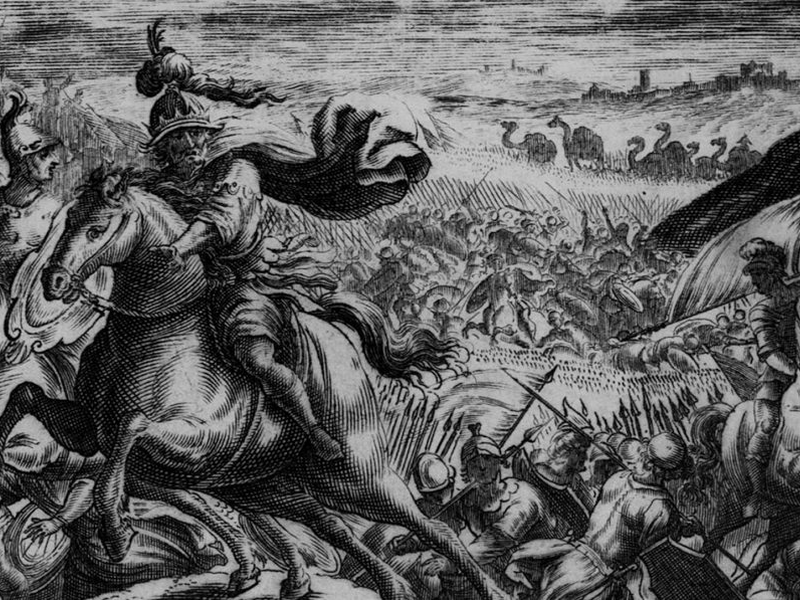
Abram’s 318 Men

Genesis 14:14 says that Abram mustered his trained men, “born in his house,” to rescue Lot, and gives their number as 318. It is clear that the precise number is provided for some reason, but what is it? S. Gevirtz notes that 318 is the sum of all the prime…

by James B. JordanJanuary 9, 2018
tanner-mardis-xuxghzhibn4-unsplash-1
Biblical Studies

The Flying Scroll

And he said to me, "What do you see?" And I answered, "I see a flying scroll; its length is twenty cubits and its width ten cubits" (Zechariah 5:2). Immediately following his vision of the outpouring of the Spirit upon the restoration community (4:1-14), Zechariah saw a flying scroll. The…

by Peter LeithartJanuary 4, 2018

Showing page 100 of 309

See all

Showing page 9 of 43

See all

City of Gems and Song

In her contribution to Envisaging Heaven in the Middle Ages , Beverly Mayne Kienzle summarizes Hildegard of Bingen's understanding of heaven and of the new Jerusalem. For Hildegard, “Jerusalem represents the vision of peace and salvation, the final resting place for those who perform good works in this life.” She…

January 13, 2016

Two Idolatries

In a 1998 article in VT, Giancarlo Biguzzi argues that John describes two different forms of idolatry in the book of Revelation. The first is the traditional idolatry of idols; the second is the beast idolatry that is the focus of the book. John “speaks explicitly of that given to…

January 13, 2016

Superheroes and Modernity

“Faster than a speeding bullet, more powerful than a locomotive, able to leap tall buildings in a single bound.” The comparisons are not random, argues Aldo Regalado in Bending Steel : “By measuring Superman’s powers against those of the bullet, the train, and the skyscraper, these phrases offer clues that…

January 13, 2016

Christless Worship?

In a recent article, Loren Stuckenbruck makes this striking comment about the heavenly worship of Revelation 4: “John’s vision of a ‘Christ-less' worship in chapter 4 is so different from chapter 5; indeed, it is different from the visions described in the rest of the book in which Jesus plays…

January 12, 2016

Rodin and Tradition

The last time we had a Rodin revival was during the 1960s, writes Jed Perl. He seemed to capture the revolutionary 60s “ambiguous, contradictory, and conflicted” relation to tradition. Rodin is enjoying something of a revival again today, and Perl thinks it is for much the same reasons.” Despite his…

January 12, 2016

Writtenness

Near the end of her book on The Heavenly Book Motif , Leslie Baynes notes the “negative attitude about writing that Plato’s Socrates expresses in the Phaedrus ” is absent from early Christianity. For early Christians, “Words are ephemeral and disappear as soon as they are spoken, but writing remains.…

January 12, 2016

Showing page 333 of 2212

Browse by Category

In Medias Res

Your weekly digest for all things Theopolis.

Donate

Theopolis is nearly 100% donor-supported. Consider joining us on our mission.