Theopolis Logo

Writing

Explore our collection of theological essays, biblical studies, and reflections on faith and culture.

See all
evangelists
Matthew

Dating Matthew, (Part 1)

When might the Gospel according to Matthew have been written? Of course, any answer can only be speculation, but that does not mean we are reduced to groundless opinion. In this series of articles I point the way to an approach different from the general consensus among scholars today which…

by Ralph Allan SmithNovember 22, 2016
hebrew-manuscript-3
Hermeneutics

Synopticity, (Part 2)

In my first essay on “synopticity” I offered a rather rough definition of the phenomenon and important, though not exhaustive examples. In this essay, I want to introduce broader aspects of the phenomenon of “synopticity.” The first example that I have in mind is conventional stories, stories of different historical…

by Ralph Allan SmithNovember 17, 2016
screen-shot-2016-03-31-at-9-32-11-am
Ascension

Brexit and the Binding of Satan, Part 4

Since the judgment of Babel was followed by the initiation of the circumcision, the impending end of the circumcision in AD70 explains the significance of the first century miracle of foreign tongues. Except for a few Aramaic “teasers” in the book of Daniel, the Word of God was monolingual and…

by Mike BullNovember 15, 2016
four-evangelists
Hermeneutics

Synopticity, (Part 1)

To the best of my knowledge “synopticity” is not a word used in theology or Biblical studies, but it seems an appropriate word to describe the kind of phenomena associated with the Synoptic Gospels, Matthew, Mark, and Luke. These three Gospels tell essentially the same story with significant — sometimes…

by Ralph Allan SmithNovember 10, 2016
laughing_statue_by_xxbobbiie-d5f0meh-2
Humor

Learning to Laugh

Humor is a funny thing. It is altogether familiar yet also mysterious. What makes us laugh? Why do we find things funny? There are academic fields of study dedicated to discovering what makes things humorous. These academicians even have a journal entitled International Journal of Humor Research . No joke.…

by Bill SmithNovember 8, 2016
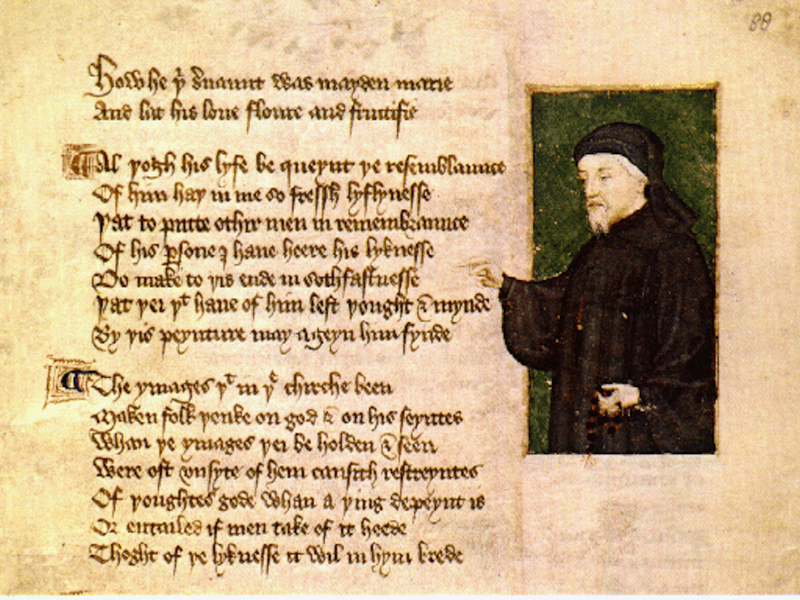
chaucer
Literature

Flawed Means of Grace: Liturgy in The Pardoner's Tale

Out of all the characters in Geoffrey Chaucer’s The Canterbury Tales , the Pardoner has been called the “one lost soul.” The pious Parson, who closes out the collection of tales with a sermon on the seven deadly sins and how a sinner can absolve himself of them, connects the…

by Christian LeithartNovember 3, 2016

Showing page 122 of 309

See all

Showing page 9 of 43

See all

False Prophet

The New Testament contains a number of warnings about false prophets ( pseudoprophetes ), often in “apocalyptic” contexts (Matthew 24:11, 24; Mark 13:22; 2 Peter 2:1; 1 John 4:1). The link between false prophecy and crisis goes back to Jeremiah. As the Babylonian threat against Judah rises, false prophets appear,…

April 21, 2015

Touch Not the Anointed

“Touch not my anointed, and do my prophets no harm.” That is how Psalm 105:15 summarizes the Lord's care of the patriarchs who were wanderers and strangers in the earth. “He permitted no many to oppress them, and he reproved kings for their sake” (v. 14, alluding to Genesis 12…

April 21, 2015

Passover Firstfruits

Psalm 105:36 describes the exodus as the Lord's striking of the “firstborn” of Egypt, “the firstfuits of all their vigor.” Firstborn is firstfruits: It makes obvious sense. And behind the obvious is a link between human and humus , between the fruitfulness of earth and the fruitfulness of the human…

April 21, 2015

A Triad of Trinities

Revelation 12-13 describe draconian and bestial attacks on the saints. The enemies form a triad. Indeed, they form a double triad. First, dragon, sea beast, land beast. Then: Sea beast, land beast, image of the beast. Alternatively, we can see four: Dragon, sea beast, land beast, image of the beast.…

April 20, 2015

Stabilized Passion

In his contribution to Radical Secularization , John Milbank contests Habermas's Kantian notion of public reason, arguing that reason is not “self-grounded” but “inseparable from our affective and elective intuitions concerning the nature of reality. Reason is always conjoined with feeling and can even be considered to be a reflexive…

April 20, 2015

Reckoning Time in Genesis

Jeffery Leonard ends a Review of Biblical Literature (4/15) review of BC Hodge's Revisiting the Days of Genesis with this observation: “While the author does a workmanlike job of demonstrating how various numbers in Gen 1–11 could be interpreted symbolically, it is not at all clear to me that the…

April 20, 2015

Showing page 437 of 2212

Browse by Category

In Medias Res

Your weekly digest for all things Theopolis.

Donate

Theopolis is nearly 100% donor-supported. Consider joining us on our mission.