Theopolis Logo

Writing

Explore our collection of theological essays, biblical studies, and reflections on faith and culture.

See all
paul-2
Romans

Notes on Scary Stuff in Romans 9

What shall we say then? Is there injustice on God’s part? By no means! For he says to Moses, “I will have mercy on whom I have mercy, and I will have compassion on whom I have compassion.” So then it depends not on human will or exertion, but on…

by Mark HorneFebruary 5, 2015
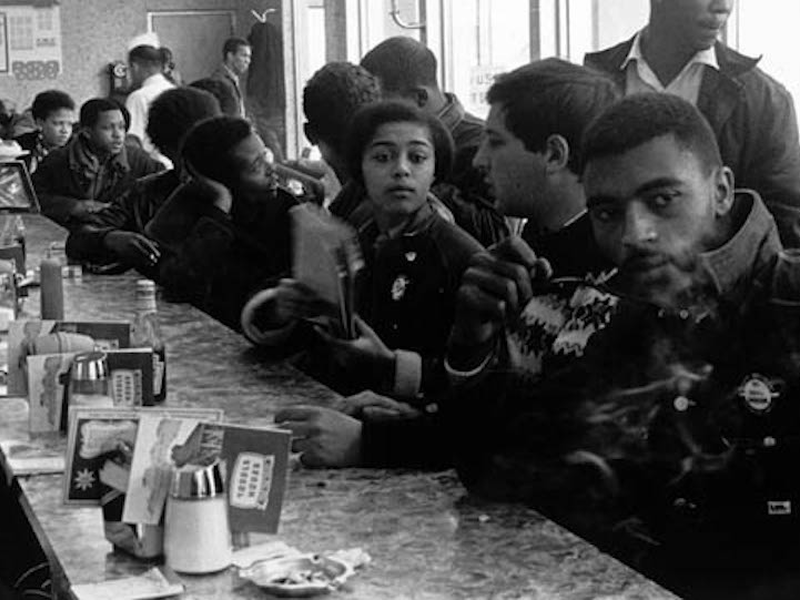
lunch-counter
American Politics

Covenants of Exclusion

A hundred years ago, William Warley signed a contract to buy a house in Louisville, Kentucky from Charles Buchanan, a white man. Before closing the sale, Warley, who was black, learned that the lot was subject to a city ordinance barring blacks from occupying the premises if most of the…

by Brendan O'DonnellFebruary 3, 2015
shakespeare-2
Literature

The Bard and the Book

I concluded the first essay on this topic by saying that I would introduce three books about Shakespeare and the Bible, but I decided to introduce four instead. The three books become four are: Naseeb Shaheen, Biblical References in Shakespeare’s Plays (London: Associated University Presses, 1999) ; Hannibal Hamlin, The…

by Ralph Allan SmithJanuary 29, 2015
augustine-2
Augustine

Augustine on Pagan Virtue

My children attend a classical Christian school, situated in the independent “free church” evangelical tradition. Over the past few years they have been growing in their acquaintance with the world of Homer, Plato, Virgil, and Livy. They enjoy it, and I envy it. The school is a great school. My…

by Gerald HiestandJanuary 27, 2015
prodigal-son
Atonement

The Prodigal and the Cross

The Prodigal Son parable (Luke 15) has been a favorite of liberal theologians for a couple of centuries. It seems to be a parable designed for liberal sensibilities: An indulgent, accepting Father; forgiveness extended without a cross; a surly older brother who might represent the "conservative" face of religion who…

by Peter LeithartJanuary 22, 2015
sky-from-bridge
Ascension

Underground Man, Ascended Man

“I want now to tell you, gentlemen, whether you care to hear it or not, why I could not even become an insect. I tell you solemnly, that I have many times tried to become an insect. But I was not equal even to that. I swear, gentlemen, that to…

by Richard BledsoeJanuary 20, 2015

Showing page 161 of 309

See all

Showing page 9 of 43

See all
Sex

Porneia

In a 2011 JBL article, Kyle Harper examines the usage of the Greek word porneia from its classical uses through the New Testament and into the early church. He hopes to specify its meaning, since the usual English translation as “sexual immorality” is “so vague” that it “inevitable threatens to…

January 14, 2015

Purity and the Other

In his contribution to Purity and the Forming of Religious Traditions , Philippe Borgeaud explores ancient comparative anthropology, the ways in which Greeks used other cultures as “mirrors.” Along the way (269-70), he discusses Porphyry’s De Abstinentia , which he compares to Mary Douglas’s classic Purity and Danger . For…

January 14, 2015
Theology

Passion of Poetry

Sketching a theological account in support of Reformed ressourcement in their Reformed Catholicity , Michael Allen and Scott Swain appeal to the argument of Reinhold Hutter’s Suffering Divine Things . Hutter tries to avoid both a notion of “strict continuation” between the church and the incarnate Christ and a Barthian…

January 14, 2015
Nevin Lectures

Nevin Lectures, 2015

Robert Louis Wilken, noted church historian and Chairman of the Board of the Institute on Religion and Public Life, will deliver the second annual Nevin Lectures on February 20-21, at the Hodges Chapel of the Beeson Divinity School, Birmingham, Alabama. Wilken will give three lectures on “The Catholic Roots of…

January 14, 2015

Baptism and Justification in Christian Tradition

In his study of Justification in Earlier Medieval Theology , Charles Carlson concludes that early medieval commentators on Paul did not give any special attention to justification. For most of the early scholastics, “justification” was a synonym for the remission of sins, and prior to the thirteenth century it was…

January 13, 2015

Priests of Babylon

Ancient Babylonian temples were busy places. There were butchers and cooks for the meat, bakers for the bread and brewers of beer. The temple was supplied by farmers and milkmen, fishermen, oxherds, orchard keepers. Some were specialists in setting the table of the god, and others artisans who work with…

January 13, 2015

Showing page 477 of 2212

Browse by Category

In Medias Res

Your weekly digest for all things Theopolis.

Donate

Theopolis is nearly 100% donor-supported. Consider joining us on our mission.