Theopolis Logo

Writing

Explore our collection of theological essays, biblical studies, and reflections on faith and culture.

See all
tanner-mardis-xuxghzhibn4-unsplash-1-2
Biblical Studies

Tweets-turned-Notes on the Bible’s Chronology

Summary In what follows, I will consider the “year-stamps” employed in Scripture, i.e., statements of the form, “Such-and-such an event took place in the Xth year of Y.” In the process, I will suggest some ways in which the Biblical narrative might relate to events in the extra-Biblical world, though…

by James BejonJuly 16, 2019
durer-prodigal-son-2
Luke

Perspectives on the Prodigal, (Part 2)

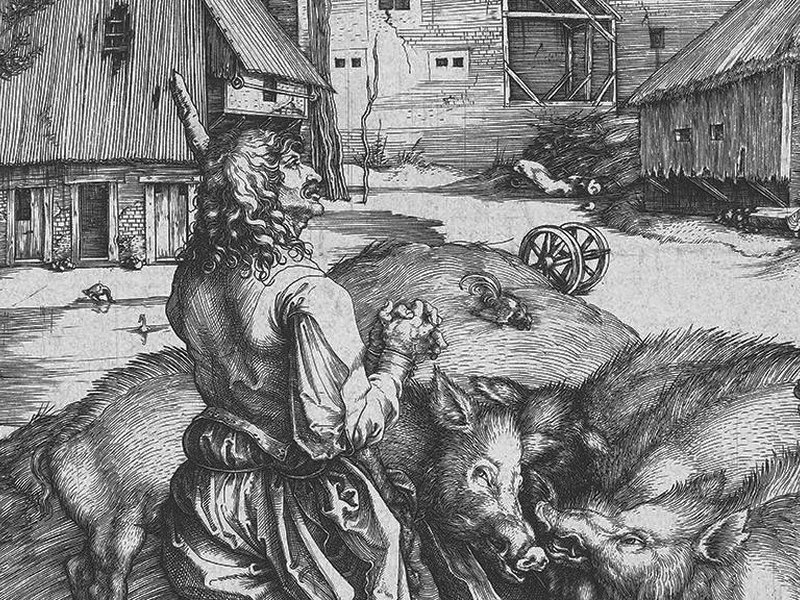
In the first essay on the parable of the Prodigal Son, I suggested that the problems commentators and others encounter in interpreting Jesus three-part parable are not accidental. These are not just problems in our ignorance of cultural background. They are intentional features of the stories —stories designed to poke…

by Ralph Allan SmithJuly 11, 2019
durer-prodigal-son-2
Luke

Perspectives on the Prodigal, (Part 1)

The story of the Prodigal Son is perhaps the most well-known story in the Bible. As others have observed, it may also be one of the most misunderstood. In two short essays, I will point out features of this story that are commonly neglected, aspects of Jesus’ parable that might…

by Ralph Allan SmithJuly 9, 2019
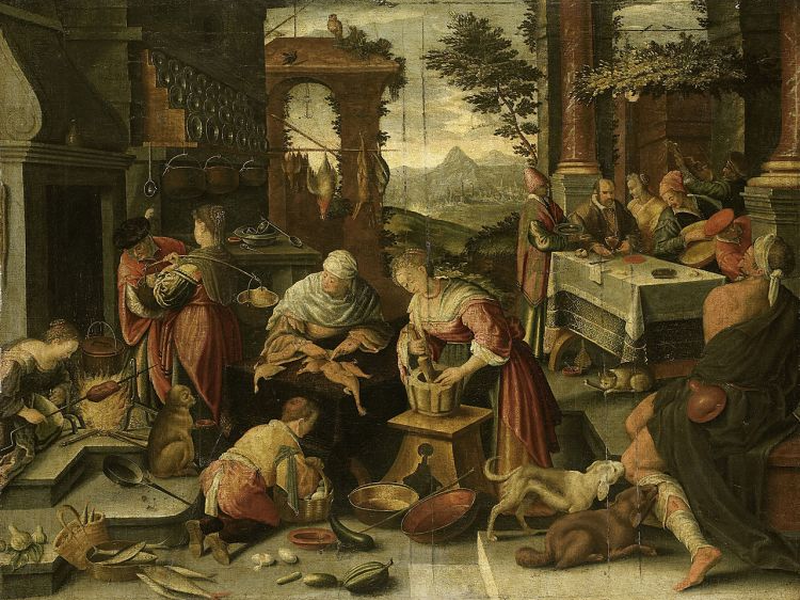
de-rijke-man-en-de-arme-lazarus-by-jacopo-da-ponte-16th-century
Luke

Lazarus and the Rich Man

The parable of Lazarus and the nameless rich man is not an independent story. It is part of a long context that begins in Luke 15:1, where Jesus is eating with tax collectors and sinners and the scribes and Pharisees grumble. In response to their hardheartedness, Jesus tells a three-part…

by Ralph Allan SmithJuly 4, 2019
aaron-burden-uynrnfdkjwg-unsplash
Luke

Everybody has Dropsy - Luke 14:1-24

The Bible is written so that even when a reader cannot pick up on what might be deeper or more detailed aspects of a text, there is virtually always a message to be heard. In the ancient world, where the “reader” of Scripture would likely be a church official facing…

by Ralph Allan SmithJuly 2, 2019
communion
Biblical Theology

Fruit Trees and Grain Plants

The distinction between garden (or vineyard) and field begins in Genesis 2. This relates to the ordering of the formless world. Plants of the field are contrasted with the garden planted by God in Genesis 2:5&8. Later on, under the Old Covenant the Israelites will be required to keep their…

by James B. JordanJune 27, 2019

Showing page 77 of 309

See all

Showing page 9 of 43

See all
Metaphysics

Metaphysics without God

In his monograph on Divine Simplicity , Steven J. Duby discusses the relation between metaphysics and dogmatics. He writes, "In addition to Thomas's metaphysics, the metaphysical works of Bartholomaus Keckermann, Johann Alsted, and Johannes Maccovius provide guidance here. For Keckermann, metaphysics is 'the science of being [ entis ], or…

December 14, 2018

Mammon and Modern Economics

Wesley Bergen's Reading Ritual explores Leviticus through the lens of contemporary popular culture. Instead of treating Leviticus as "religious" ritual in opposition to daily life, he tries to de-de-familiarize Leviticus ritual by finding parallels with contemporary culture. In the first chapter, he examines the ritual dimensions of a meat-packing plant,…

December 13, 2018

Whose Simplicity?

In the third volume of his magisterial Post-Reformation Reformed Dogmatics , Richard Muller offers a helpful summary of pre-Reformation discussions of divine simplicity. Today, simplicity is making a comeback, taken as essential to orthodoxy. Muller's discussion is a healthy reminder that "the doctrine of divine simplicity has not always been…

December 11, 2018

Can We Trust the Gospels?

In Can We Trust the Gospels? , Peter J. Williams, Principal at Tyndale House, Cambridge, doesn't aim to prove that the gospels are true. He wants to show rather that "they can be rationally trusted" (120). If successful, this demonstration is a big deal, as Williams says on the closing…

December 10, 2018

False Answer

Literally, woodenly translated, the 9th Word is: "Thou shalt not answer ( 'anah ) with/against your neighbor a false witness." The verb 'anah is of interest, mainly because it is such an uninteresting word. Of the 300+ times it's used in the Old Testament, the KJV translates it as "answer"…

December 7, 2018

Suffer the Children

Children provide a test case for psychological and epistemological theories. Many theories fail: They do not suffer the little children to come to them. That's part of the point of Vasudevi Reddy's fascinating How Infants Know Minds . The title contains the thesis: Infants know other minds. They don't act…

December 6, 2018

Showing page 51 of 2212

Browse by Category

In Medias Res

Your weekly digest for all things Theopolis.

Donate

Theopolis is nearly 100% donor-supported. Consider joining us on our mission.